


Shana Hale, a Brooklyn mother of two and a technology executive, noticed a mild burning sensation in her chest last summer during her daily walk. The symptoms easily passed because she could still breathe easily and remained active. But as the feeling dragged on, she realized something was wrong.
What followed was a series of decisions shaped by her persistence to be heard and the efforts of cardiologists at NYU Langone Heart Hospital to push past inconclusive results. This subtle symptom turned out to be a warning sign of a severe blockage in one of her heart’s main arteries, leading to life-saving open-heart surgery at NYU Langone Hospital in Brooklyn.
I started to feel a strange feeling in my chest when I was walking on a slope or climbing stairs. It didn’t feel like asthma. It felt different than anything I had experienced before. It wasn’t the typical “crushing” chest pain, but it just didn’t sit well with me. ”
Shanna Hale, Brooklyn-based mother of two and technology executive
During a visit to another health care provider, Hale was reassured that her symptoms could likely be managed in primary care, but she trusted her instincts. With a family history of heart disease and already taking blood pressure medication, she sought professional treatment. Her husband, a longtime patient of Dr. Sharma’s, referred her to Dr. Atul Sharma, an interventional cardiologist and director of the cardiac catheterization laboratory at NYU Langone Hospital in Brooklyn.
Dr. Sharma focused on her story from the beginning. A healthy, very active 43-year-old woman suddenly felt discomfort in her chest with exercise, and the symptoms subsided with rest.
“Despite Hale’s relative youth, the pattern is alarming and cannot be ignored,” Dr. Sharma said. “The story was too disturbing to be easily explained.”
Initial tests, including an electrocardiogram (EKG) and treadmill stress test, revealed no obvious problems. The cardiac structure appeared normal, and although her electrocardiogram showed some changes during exercise, the findings were not dramatically abnormal. For many patients, this is where the evaluation may end.
Instead, guided by her persistent symptoms and shared concerns, Dr. Sharma and Hale agreed to pursue advanced imaging with a coronary CT scan to produce three-dimensional images of her heart arteries.
The results were amazing. Dr. Sharma determined that there was significant stenosis in the left main coronary artery, and when contrast was injected, the artery appeared to nearly disappear. This is consistent with severe occlusion. Further tests in the cardiac catheterization lab confirmed the worst case scenario: more than 95 percent blockage in her left main coronary artery. If the artery becomes completely blocked, the chance of a fatal heart attack is very high.
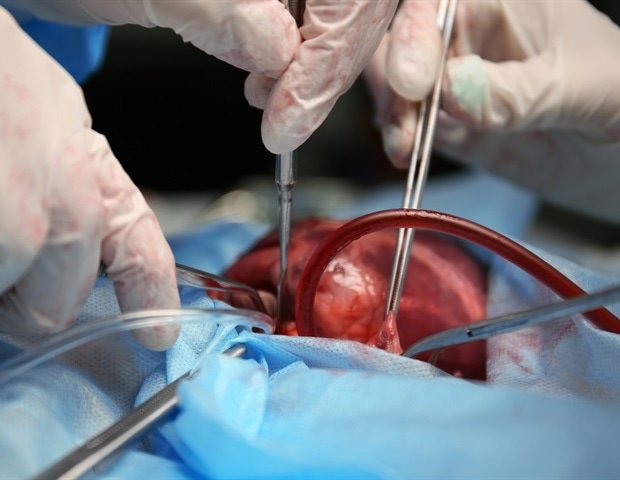
Heart disease remains the leading cause of death in women, and symptoms are often milder or atypical compared to men, so there was no time to waste. She was immediately admitted to the hospital and within days underwent emergency open-heart surgery at New York University Langone Hospital in Brooklyn, where Noritsugu Naito, MD, chief of cardiac surgery, performed a bypass procedure using an artery graft designed for durability and long-term success.
“I was shocked,” Hale said. “I had never even considered the possibility of open-heart surgery, but I also felt this overwhelming sense of gratitude that it had been found in time. It was kismet. I urged him to have it checked, but Dr. Sharma wouldn’t allow it.”
The surgery was successful. She was discharged from the hospital with no permanent damage to her heart muscle and a good prognosis.
“I have two young children, ages 8 and 6. I remember thinking, ‘I’ve been given a second chance. I’m going to see them grow up. After something like this, it’s impossible not to think about the possibility of your own death and how close you were to being taken away.’
Just a few weeks after surgery, Hale is recovering well at home. Her life has definitely changed, but she feels richer in many ways. Her recovery has slowed her down in a good way, allowing her to be more present. Ordinary moments like sharing a meal, sitting at home, and planning for the future now take on new meaning.
Dr. Sharma expects her to return to a fully active life without long-term restrictions within the next few months.
“Medically, her outlook is outstanding,” he said. “The most powerful part of this story is that it started with very subtle symptoms, a patient who listened to his body, and a care team who didn’t stop asking questions until they had answers.”
Her accomplishments strengthen the momentum and clinical excellence of NYU Langone Heart in Brooklyn. NYU Langone Hospital-Brooklyn’s open heart surgery program has been active for just over a year, with approximately 100 procedures performed and excellent patient outcomes. This is proof that this program brings world-class cardiac care closer to patients’ lives.
Just as important as technology and expertise is the time you spend listening.
“The message for clinicians is simple: listen to your patients. Even when initial tests are inconclusive, what the patient tells you can often point you in the right direction,” Dr. Sharma said. “To patients, especially women: Believe in yourself. If something doesn’t feel right, don’t ignore it, even if it seems small, don’t be afraid to ask for another opinion.”
Hale’s story shows how silent warning signs, the sense that something is wrong, can be the first and only opportunity to intervene.
