


A simple five-minute test to address significant delays in endometriosis diagnosis and treatment has been developed by researchers at the University of Queensland.
The Simplifying Factor for Adolescent Endometriosis (SAFE) score uses a questionnaire to identify at-risk patients and expedite referral to a specialist for further investigation.
Professor Gita Mishra AO, director of the UQ Australian Women’s and Girls’ Health Research Center, said the test could avoid years of waiting for a diagnosis.
This test uses six questions to detect girls or young women who are at risk for endometriosis and need further evaluation. ”
Geeta Mishra AO, Professor and Director, Australian Women’s and Girls’ Health Research Center, University of Queensland
Mishra added: “It is difficult to identify which patients should be referred and treated, and improving how we diagnose patients is a key priority.”
“By detecting endometriosis earlier, ideally in adolescents as soon as menstruation begins, we hope this tool will shorten the average six to eight year delay in diagnosis and allow treatment to begin as soon as possible.”
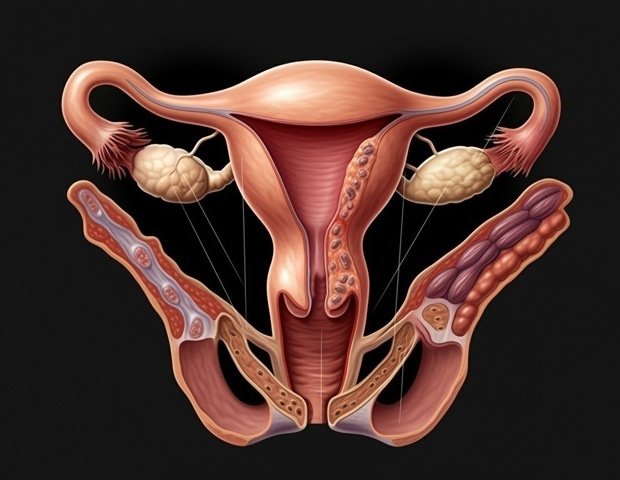
Endometriosis is an often disabling condition in which tissue similar to the lining of the uterus grows outside the uterus.
The disease has no cure and affects up to 11% of Australian women of reproductive age.
Using a questionnaire, we ask young women whether they frequently experience pelvic pain, whether they have ever sought treatment for pelvic pain, whether they have taken pain medication for pelvic pain, whether they have experienced heavy menstrual bleeding or painful periods, and whether they have a family history of endometriosis.
The SAFE score works on a points-based system and helps guide referrals in primary care.
The more risk factors identified, the higher the woman’s score and the more likely she is to have this condition.
The tool was designed using data from more than 9,000 women from the Australian Women’s Health Longitudinal Study, where researchers identified risk factors for endometriosis.
“While this simple tool can be used by women of all ages, we carefully selected age-appropriate questions to target adolescents,” Professor Mishra said.
“Significant delays in diagnosis can be due to unclear symptoms, lack of recognition, misdiagnosis, and normalization of menstrual pain, which impacts quality of life.
“This condition often requires surgery to confirm the diagnosis, but experts are working to change this so that the condition can be seen with ultrasound or MRI.
“We need to be able to detect endometriosis early because our research shows that most women are diagnosed in their late 20s, when they are trying to get pregnant.
“Early diagnosis is very important as it can change the way fertility issues are treated later on.
“The usual treatment method is ovulation induction, but this is not as effective as IVF for women with endometriosis.”
The next step will be to evaluate the tool in a clinical setting to assess its practicality in Brisbane’s GP, endometriosis and pelvic pain clinics and consider whether an app can be developed.
March is Endometriosis Awareness Month, marked yellow internationally.
