

Close Menu

    Subscribe to Updates

    Get the latest creative news from FooBar about art, design and business.

    What's Hot

    Scientists map 239 human-infectious RNA viruses to track future outbreak risks

    April 27, 2026

    Psychological factors predict women’s interest in violent erotica

    April 26, 2026

    Memories of lost freedom spark anger and belief in false conspiracies

    April 26, 2026
    Facebook X (Twitter) Instagram
    Facebook X (Twitter) Instagram
    Health Magazine
    • Home
    • Environmental Health
    • Health Technology
    • Medical Research
    • Mental Health
    • Nutrition Science
    • Pharma
    • Public Health
    • Discover
      • Daily Health Tips
      • Financial Health & Stability
      • Holistic Health & Wellness
      • Mental Health
      • Nutrition & Dietary Trends
      • Professional & Personal Growth
    • Our Mission
    Health Magazine
    Home » News » New cytometer measures cell stiffness to improve disease diagnosis
    Discover

    New cytometer measures cell stiffness to improve disease diagnosis

    healthadminBy healthadminApril 25, 2026No Comments4 Mins Read
    New cytometer measures cell stiffness to improve disease diagnosis
    Share
    Facebook Twitter Reddit Telegram Pinterest Email


    Researchers at Brown University and their collaborators have developed a new method to measure cell properties. They say this is an important advance because accurately measuring changes in cell elasticity can help better understand diseases, diagnose patient symptoms and provide more accurate prognoses.

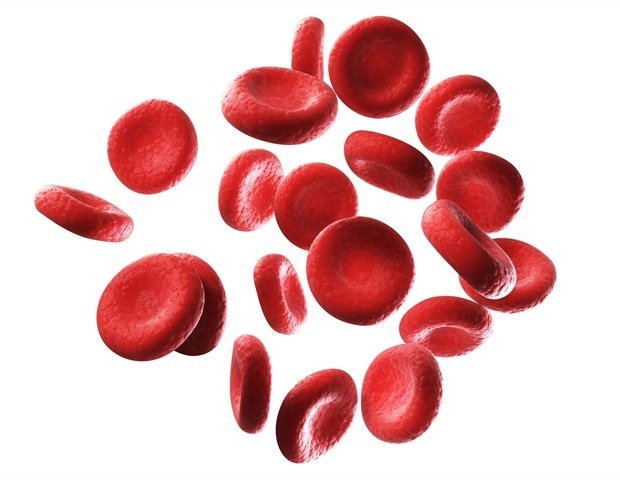
    For example, cancer cells from a tumor typically soften as they become more dangerous and spread more easily, whereas blood diseases such as malaria and sickle cell can harden red blood cells. Mechanical changes at the cellular level are also observed in neurodegenerative, cardiovascular, and chronic inflammatory diseases.

    As detailed in a study in the journal lab on chipThe researchers have developed what they call a “mechanophenotyping cytometer,” a microfluidic device designed to measure the physical size and softness of cells, known as mechanophenotyping.

    Mechanophenotyping is an underutilized tool, said study lead author Dr. Graylen Chickering. candidate in biomedical engineering in the laboratory of Brown University Associate Professor Eric Darling. This is mainly because the measurement technology lags behind other methods of analyzing cell properties.

    Chickering explained that the gold standard for measuring cell softness or hardness is atomic force microscopy. This requires attaching the cells to a surface and examining them one by one with a small indenter.

    This method basically works by poking cells. Imagine seeing a water balloon. It may feel different if you poke the end and center of the balloon. Poking cells is also quite slow, making it difficult to study large numbers of cells in a reasonable amount of time. ”


    Dr. Graylen Chickering Candidate in Biomedical Engineering, Brown University

    Cell travel time: a key measurement

    In developing the new technique, the scientists focused instead on a measurement called time-of-flight, which is the time it takes for a cell to pass through a small channel filled with liquid.

    “The cell is essentially moving from one checkpoint to another, and it takes timestamps from each checkpoint to determine flight time,” Chickering said.

    The researchers determined cell size using existing fluorescence signals from a cytometer, a device that counts and measures cells, and then used a time-of-flight method to determine cell stiffness. Soft cells move towards the center of the channel where fluid moves fastest, while stiffer cells stay at the edges where fluid moves more slowly.

    Chickering said that compared to atomic force microscopy, where experienced scientists can measure one cell every about 30 seconds, the new approach can be used to observe 60 to 100 cells per second, making it possible to observe up to hundreds or even thousands of cells per second.

    “The proof of concept was that Graylen produced data showing that cell particles of different stiffness and different sizes have different correlated flight times, which in theory matched what we expected,” said study author Darling, an associate professor of medicine, engineering and orthopedics at Brown University. “This method was much cleaner and more reproducible than previous methods, which could give different measurements depending on how it was used.”

    The findings are the result of a multi-year collaboration between researchers at the Brown Institute of Biology, Engineering, and Medicine and a team at the National Institute of Standards and Technology (NIST) in Maryland. Darling said Brown provided the ideal synthetic cell-like particles for the experiment, and NIST scientists created the basic design for the cytometer device.

    “We brought polymer cell mimics into the collaboration that served as calibration particles of specific size and stiffness and mapped how these properties affected various metrics recorded from the device,” Darling said. “The NIST cytometer has the unique feature of multiple measurement zones that allow us to quantify the error of each particle flowing through it. This allowed us to show how much biological and technical variation exists in the measurements.”

    Future research will use a mechanophenotyping cytometer to study the mechanical properties of cells from human blood and tissue samples provided by Brown’s clinical partners.

    “We would expect there to be differences between healthy people and people with certain types of diseases, such as cancer,” Darling said. “The ultimate hope is that this type of device can support diagnosis and prognosis alongside existing methods.”

    Funding for this research was provided by the National Science Foundation (grant CMMI 2054193) and the National Institute of Standards and Technology.

    sauce:

    Reference magazines:

    Chickering, G.R. others. (2026). Estimating the elastic modulus of single cells in a serial microfluidic cytometer from time-of-flight and fluorescence signal analysis. lab on chip. DOI: 10.1039/D5LC00930H. https://pubs.rsc.org/en/content/articlelanding/2026/lc/d5lc00930h


    Source link

    Visited 1 times, 1 visit(s) today
    Share. Facebook Twitter Pinterest LinkedIn Telegram Reddit Email
    Previous ArticlePeople view the term “sex worker” much more positively than “prostitute” or “prostitute”
    Next Article Space research accelerates heart disease research and tissue engineering
    healthadmin

    Related Posts

    Scientists map 239 human-infectious RNA viruses to track future outbreak risks

    April 27, 2026

    Experts discuss the benefits and costs of robotic lung transplants

    April 25, 2026

    Demand for pediatric heart transplants increases due to severe donor shortage

    April 25, 2026

    Global debate continues over fair distribution of donor hearts

    April 25, 2026

    Space research accelerates heart disease research and tissue engineering

    April 25, 2026

    Natural compound obaclactone shows potential treatment for rheumatoid arthritis

    April 25, 2026
    Add A Comment
    Leave A Reply Cancel Reply

    Categories

    • Daily Health Tips
    • Discover
    • Environmental Health
    • Exercise & Fitness
    • Featured
    • Featured Videos
    • Financial Health & Stability
    • Fitness
    • Fitness Updates
    • Health
    • Health Technology
    • Healthy Aging
    • Healthy Living
    • Holistic Healing
    • Holistic Health & Wellness
    • Medical Research
    • Medical Research & Insights
    • Mental Health
    • Mental Wellness
    • Natural Remedies
    • New Workouts
    • Nutrition
    • Nutrition & Dietary Trends
    • Nutrition & Superfoods
    • Nutrition Science
    • Pharma
    • Preventive Healthcare
    • Professional & Personal Growth
    • Public Health
    • Public Health & Awareness
    • Selected
    • Sleep & Recovery
    • Top Programs
    • Weight Management
    • Workouts
    Popular Posts
    • the-pros-and-cons-of-paleo-dietsThe Pros and Cons of Paleo Diets: What Science Really Says April 16, 2025
    • Improve Mental Health10 Science-Backed Practices to Improve Mental Health… March 11, 2025
    • How Healthy Living Is Transforming Modern Wellness TrendsHow Healthy Living Is Transforming Modern Wellness… December 3, 2025
    • Kankakee_expansion.jpgCSL releases details of $1.5 billion U.S.… March 10, 2026
    • Healthy Living: Expert Tips to Improve Your Health in 2026Healthy Living: Expert Tips to Improve Your Health in 2026 November 16, 2025
    • urlhttps3A2F2Fcalifornia-times-brightspot.s3.amazonaws.com2Fc32Fcd2F988500d440f2a55515940909.jpegA ‘reckless’ scrapyard with a history of… October 24, 2025

    Demo
    Stay In Touch
    • Facebook
    • Twitter
    • Pinterest
    • Instagram
    • YouTube
    • Vimeo
    Don't Miss

    Scientists map 239 human-infectious RNA viruses to track future outbreak risks

    By healthadminApril 27, 2026

    A new global dataset containing 239 human-infectious RNA viruses shows how animal hosts, vector transmission,…

    Psychological factors predict women’s interest in violent erotica

    April 26, 2026

    Memories of lost freedom spark anger and belief in false conspiracies

    April 26, 2026

    Young people use moral outrage to assert their place in political debates

    April 26, 2026

    Subscribe to Updates

    Get the latest creative news from SmartMag about art & design.

    HealthxMagazine
    HealthxMagazine

    At HealthX Magazine, we are dedicated to empowering entrepreneurs, doctors, chiropractors, healthcare professionals, personal trainers, executives, thought leaders, and anyone striving for optimal health.

    Our Picks

    Young people use moral outrage to assert their place in political debates

    April 26, 2026

    DNA testing of mescal bugs in bottles reveals surprising results

    April 26, 2026

    Public support for transgender women in sports dropped significantly from 2019 to 2024

    April 26, 2026
    New Comments
      Facebook X (Twitter) Instagram Pinterest
      • Home
      • Privacy Policy
      • Our Mission
      © 2026 ThemeSphere. Designed by ThemeSphere.

      Type above and press Enter to search. Press Esc to cancel.