


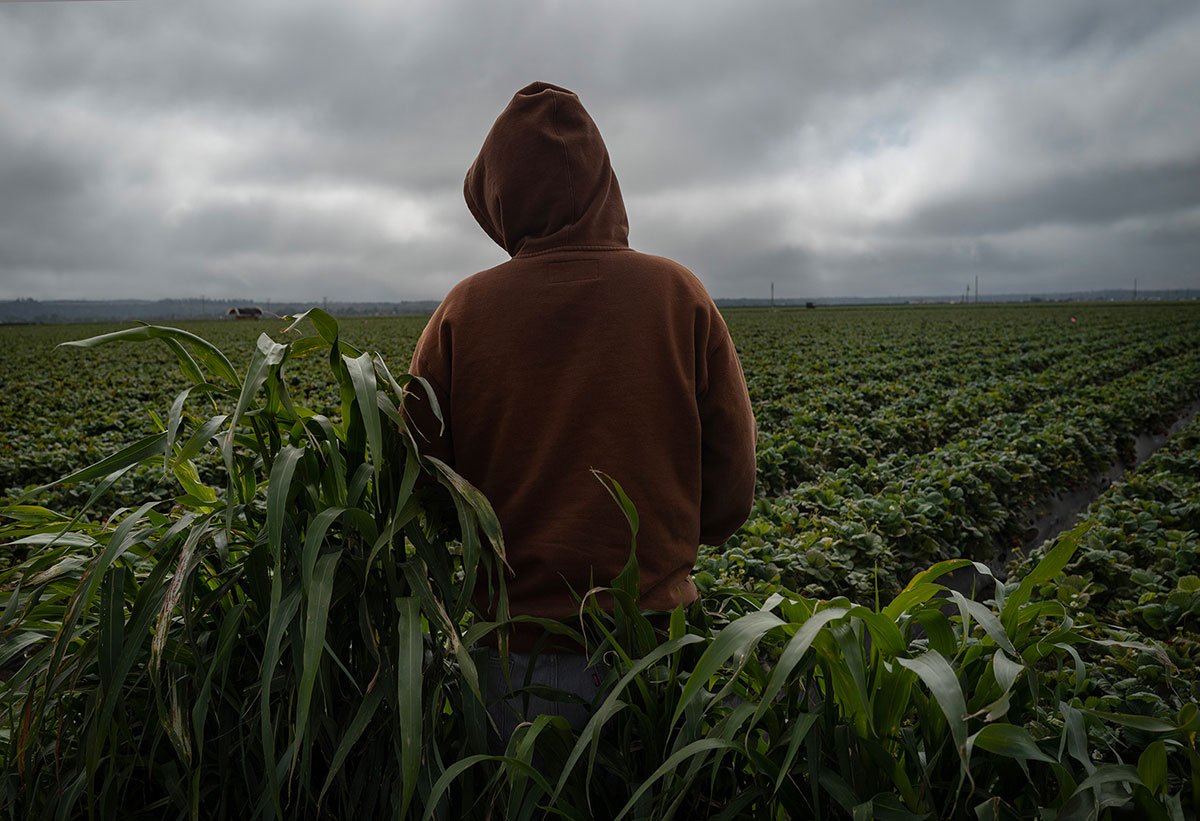
A shy teenager who dreams of becoming a nurse, the teenager has spent the past four years working with her mother and other relatives on a small farm pulling weeds, planting berries and removing old plastic sheets from fields. In 2023, the teenager said he and other workers worked in the fields without pay for more than a month. Some adults complained to their supervisors. “He kept saying, ‘I’ll pay you next week, I’ll pay you next week,'” she said.
On some days, there were no toilets on site and workers were not provided with water or shade, she said. I was finally paid in cash after the job was completed. She wasn’t sure if she received all the money she owed. The fertile area where the mother and daughter work is one of the largest strawberry producing areas in the country. But the mother said abuse and exploitation were commonplace on the job, with workers mistreated because employers knew they wouldn’t get caught. “We tell our bosses, and they say, ‘If you don’t like it, there are plenty of other people who want your job,'” the mother said in Spanish, asking not to be named for fear of retaliation from her bosses.
The superintendent of the Santa Barbara Office of Field Enforcement is responsible for regulating child labor, wage and hour laws within the 2,700 square mile county, where more than 600 agricultural operations operate. Records show the Santa Barbara office conducted an average of only two on-site inspections per year from 2017 to 2024. There were no inspections in 2017, 2018, and 2020.
The agency’s Fresno office is responsible for inspecting work sites spanning more than 5,000 square miles of some of California’s most productive farmland in the central San Joaquin Valley. Records show the Fresno office conducted an average of fewer than four inspections per year from 2017 to 2024, but the region is home to more than 3,000 agricultural employers. There were no inspections from 2021 to 2023.
Emma Scott, an associate professor who heads the food and agriculture clinic at Vermont Law and Graduate School, said the low testing numbers in an area with so many farm workers is “daunting.”
“This is actually quite shocking,” said Scott, who has studied health and safety protections for agricultural workers.
Hundreds of young workers like 17-year-old Brian live in the area served by Field Enforcement’s Fresno office. He and his 16-year-old cousin and 13-year-old brother pick citrus fruits for a piecework wage that is less than minimum wage. The three teens live with four other families in a neighborhood of faded mobile homes, not far from the lush orchards of the San Joaquin Valley’s citrus belt. Brian’s house is on a dirt lot, and in the summer months a few chickens sit next to a table shaded by a large tarp that blocks the sun.
“We tell our bosses[about the abuse]and they say, ‘Even if you don’t like it, there are plenty of other people who want your job.'”
The majority of the nation’s oranges, lemons, and tangerines are grown in these orchards, primarily in Fresno, Tulare, and Kern counties. These three counties will be the nation’s top agricultural producing counties in 2024, with total production reaching $25 billion.
On weekends and during the summer when there is no school, the three teens help Brian’s father pick oranges, lemons, and grapefruit. Jobs are seasonal and depend on which fruit is ready for harvest and how many fruit farmers are willing to hire. If I’m lucky, my family has a few days of work scheduled. Otherwise, I wake up before the sun, eat breakfast, make an egg burrito for lunch, and drive to the orchard to look for work.
Brian and his cousins climb tall ladders, often in triple-digit heat, while carrying large canvas bags containing up to 40 pounds of fruit. The 13-year-old brothers pick up the fruits that have fallen on the ground and help them pack them into wooden boxes. It’s a physically taxing job. “It hurts a lot. My neck hurts, my back hurts, my arms hurt,” said Brian, who has been working in the orchard since he was 13.
The cousin recalled feeling dizzy and nauseous at times. “I have to keep going,” he said in Spanish. “Hour by the Hour” Last year, he was skidded by a small tractor and injured his lower back. However, she kept quiet because she didn’t want to draw attention to her age.
Brian and his cousin are athletic, with broad shoulders and thick biceps, and dream of a life beyond the fields. Brian may join the military. His cousin wants to learn a trade, perhaps welding or construction.
