


Images of turtles entangled in nets and fish suffocated in bags are the most obvious signs that plastic pollution is harming our oceans. But plastic is not only physically bulky, but also dangerous because of the chemicals it contains.
A new study characterized how one of these chemicals, oleamide, alters interactions between the common South Florida octopus (Octopus vulgaris) and its crustacean prey. The study showed that oleamide alters how animals interact with each other, suggesting that plastic chemicals can alter the structure of marine communities. This study Journal of Experimental Marine Biology and Ecology.
read more: Octopuses can change color in milliseconds even if they are color blind
What is oleamide?
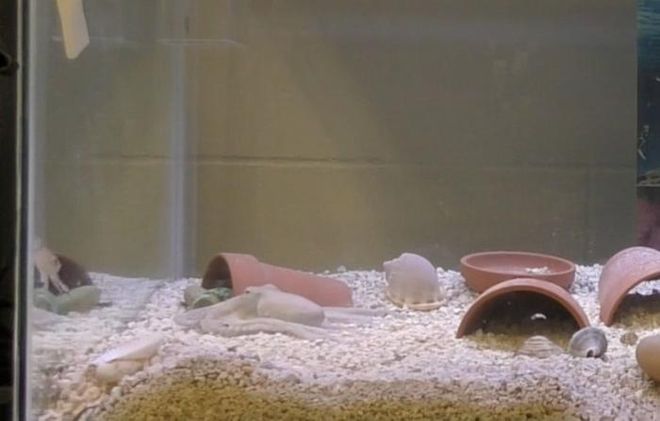
One of the octopuses collected from the test tank study.
(Image courtesy of Florida Atlantic University)
Oleamide is a lubricant used to reduce friction in compounds such as polyethylene and polypropylene. But when these plastics break down, oleamide leaks out. This is a problem for marine life, many of which naturally produce this compound.
The biological form of oleinamide functions as a pheromone in marine organisms such as hermit crabs and is structurally similar to oleic acid. Marine pollution bulletinwhich affects reproduction in other crustacean species. When industrial oleamide reaches these organisms, it can interfere with their natural signaling systems.
“Many species rely on chemical information to detect food, assess predation risk, and balance tradeoffs between foraging and staying safe,” Michael W. McCoy, an oceanographer at Florida Atlantic University and co-author of the study, said in a statement.
Effects of oleamide on octopuses and their prey
In the new study, McCoy and his team examined octopus responses to four prey species: hermit crabs, free-living crabs, snails, and clams.
In a laboratory aquarium, the researchers presented the octopus with unfortunate prey. They monitored the octopus’ interactions during a 90-minute recording session, tracking how close the octopus got to its prey every 30 seconds. They also recorded what the octopuses ate over a 24-hour period. In total, the research team recorded more than 30,000 predator-prey interactions.
If the octopus successfully consumed the prey, the researchers scored the interaction as a “predation success.” The researchers scored the interaction as “nonconsumptive” if the predator failed to capture the prey and quickly grabbed and released it.
The research team investigated how these interactions changed before and after adding oleamide to the aquarium. The researchers noted that the changes were immediate, some of which lasted for more than 72 hours. The octopus increased the number of interactions it had with its prey. Although they did not consume more prey after the addition of the chemical, they did seem to change their preferred menu.
Interfering with predator avoidance by oleamide
Before adding oleinamide to their aquariums, the octopuses in the study showed a preference for crustaceans, choosing free-living hermit crabs over other prey. During and after exposure to oleinamide, octopuses lost their taste for hermit crabs, which became as unpopular as their least preferred prey, snails.
What was particularly surprising to the researchers was how the prey in the aquarium behaved after being exposed to oleamide.
“What was surprising about this study was that when oleamide entered the system, its chemical communication appeared to be disrupted. Even though the octopus became more exploratory and interactions, particularly grasping, increased, the crustacean prey decreased its predator-avoidance behavior. Increased contact with predators usually increases prey defenses. But in the presence of oleamide, none of the expected responses occurred,” McCoy said.
The researchers propose that this chemical may be interpreted by crustaceans as a “foraging” signal, encouraging them to continue exploring their surrounding environment, even if a threatening predator is waving its tentacles nearby. The chemical may also interfere with an animal’s ability to spot or avoid predators.
change the predator-prey relationship
The fact that the octopus did not eat more prey in total suggests that the chemical may have altered the predator’s locomotor or hunting system. The scientists proposed that oleamide may interfere with the chemical cues that octopuses normally deploy to detect nearby prey, and that the increase in non-consumptive interactions may reflect the predator’s efforts to understand its surroundings.
Although the exact mechanism is not clear, these findings suggest that if oleamide has similar effects outside the lab and in the wider ocean, the chemical could change important behaviors in marine animals.
“These changes in predator-prey interactions can have far-reaching effects on marine ecosystems,” study co-author Madeline Hare, now at the University of Colorado Boulder, said in a press release. “By changing how prey respond to predators and increasing non-consumptive interactions, oleamide leaching from plastics can have ripple effects throughout marine communities. It can reshape fabric and abundance, alter feeding dynamics, and influence interaction rates across multiple species, ultimately impacting the structure and function of coastal marine ecosystems in ways we are only beginning to understand.”
read more: Octopuses sense invisible microbial cues to avoid food spoilage
Article source
Discovermagazine.com’s writers use peer-reviewed research and quality sources in their articles, and editors review them for scientific accuracy and editorial standards. Check out the following sources used in this article.
