

Close Menu

    Subscribe to Updates

    Get the latest creative news from FooBar about art, design and business.

    What's Hot

    Pearl Health wins $110 million as investors invest in technology-enabled VBC

    July 10, 2026

    This common insecticide may be quietly killing off future bumblebees

    July 10, 2026

    Weekly Summary: Surgical Safety Technologies rebrands to Ambient. University of California, San Diego establishes Applied Medical Intelligence Institute

    July 10, 2026
    Facebook X (Twitter) Instagram
    Facebook X (Twitter) Instagram
    Health Magazine
    • Home
    • Environmental Health
    • Health Technology
    • Medical Research
    • Mental Health
    • Nutrition Science
    • Pharma
    • Public Health
    • Discover
      • Daily Health Tips
      • Financial Health & Stability
      • Holistic Health & Wellness
      • Mental Health
      • Nutrition & Dietary Trends
      • Professional & Personal Growth
    • Our Mission
    Health Magazine
    Home » News » This common insecticide may be quietly killing off future bumblebees
    Nutrition Science

    This common insecticide may be quietly killing off future bumblebees

    healthadminBy healthadminJuly 10, 2026No Comments3 Mins Read
    This common insecticide may be quietly killing off future bumblebees
    Share
    Facebook Twitter Reddit Telegram Pinterest Email


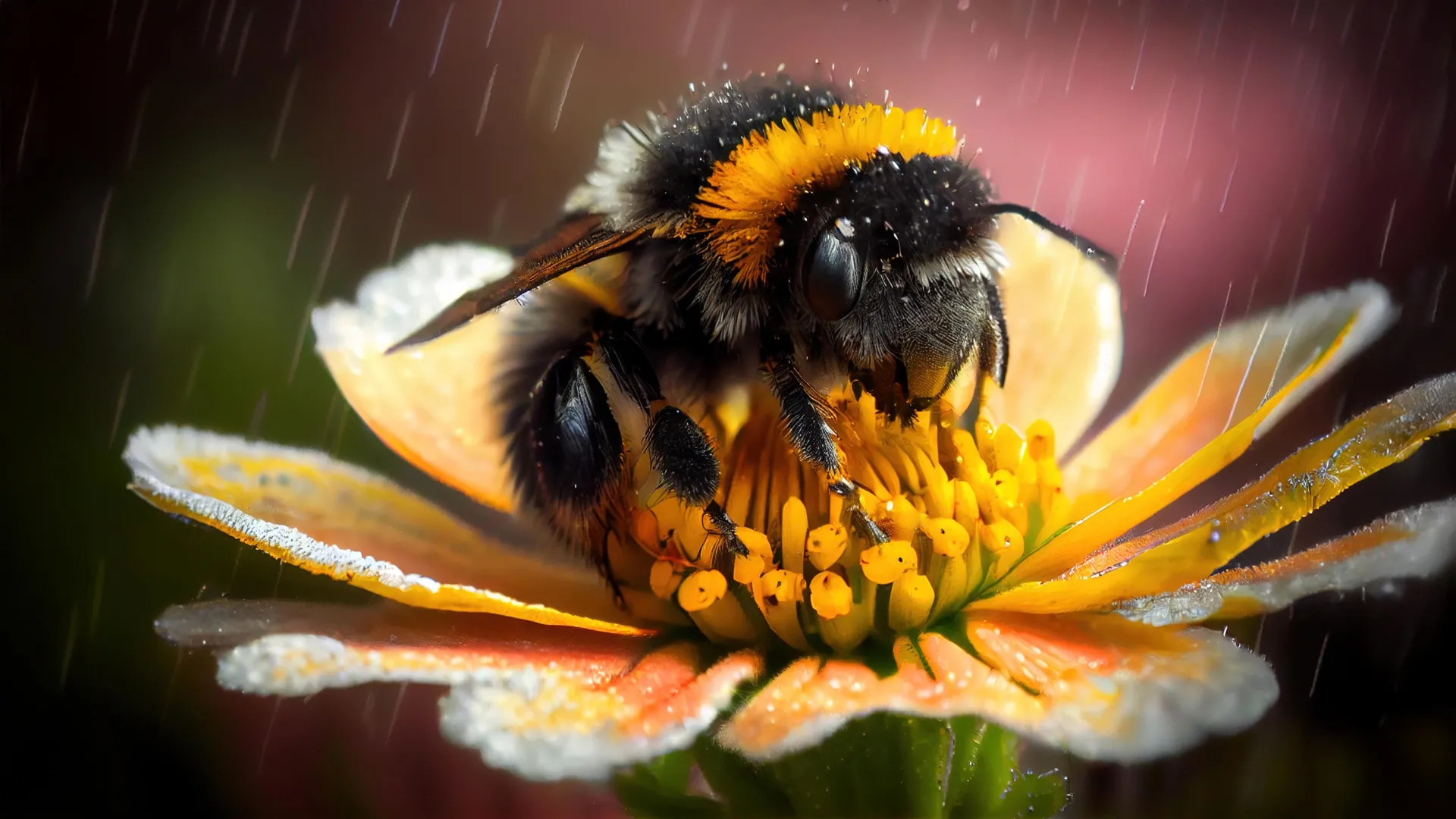
    Bumblebees may be small, only about an inch long, but they play a huge role in global agriculture. Approximately one-third of the world’s food production relies on pollinators such as bees. At the same time, these important insects face increasing pressure from pesticides and other environmental threats.

    Modern pesticides are helping farmers protect crops and increase yields, but some can harm the pollinators that make big crops possible. One such chemical, sulfoxaflor, is a next-generation pesticide introduced in 2013 to control sap-sucking insects such as aphids on crops such as soybeans and corn. Although sulfoxaflor is effective against pests, it is also known to be toxic to bees. Scientists are now discovering how even low-level exposures affect bee reproduction at the molecular level.

    Common pesticides alter gene activity in honey bees

    Georgia Tech researchers found evidence that sulfoxaflor alters both gene activity and reproductive function in bumblebees. In the USDA-funded study, researchers exposed worker bees to low doses of insecticides before looking for changes in gene expression.

    The most significant changes appeared in ovarian tissue, suggesting that pesticides may interfere with the reproductive process. Researchers say these genetic changes could reduce the number of offspring and cause honey bee populations to decline over time.

    To investigate these effects, the researchers flash-frozen bee tissue and analyzed its RNA to measure how gene activity changed after pesticide exposure. They also used computational models to identify the biological systems most affected by the chemicals.

    “What’s interesting about this study is that it links molecular changes in gene expression to real-world effects on individual bees and their colonies,” said Professor Michael Goodisman, from the School of Biological Sciences. “Such relationships are rare and give us a clearer picture of how pesticides affect bees.”

    Balancing pest control and pollinator protection

    The findings highlight an ongoing challenge in modern agriculture to protect crops from destructive pests without harming the beneficial insects that support food production.

    “Pesticides are necessary to control crop pests, but they can also harm important non-target insects like bumblebees,” said Sarah Orr, who led the study as a postdoctoral fellow at Georgia Tech and is now an assistant professor at the University of Tampa. “My goal as a scientist is to identify practical solutions that support pest management while protecting beneficial insects and the food systems that depend on them.”

    Orr emphasized that maintaining a healthy bee population is essential for successful pollination.

    “It takes a lot of bees for successful pollination,” Orr says. “If you don’t leave enough offspring, pollination decreases.”

    Bumblebees face multiple threats

    Pesticides are just one of several challenges affecting bumblebees. Rising temperatures and increasing frequency of heat waves are further increasing stress on pollinators.

    By better understanding how chemicals such as sulfoxaflor affect bee biology, researchers hope to develop farming practices that protect crops while protecting the pollinators on which many food systems depend.


    Source link

    Visited 2 times, 2 visit(s) today
    Share. Facebook Twitter Pinterest LinkedIn Telegram Reddit Email
    Previous ArticleWeekly Summary: Surgical Safety Technologies rebrands to Ambient. University of California, San Diego establishes Applied Medical Intelligence Institute
    Next Article Pearl Health wins $110 million as investors invest in technology-enabled VBC
    healthadmin

    Related Posts

    The biggest problem with solid-state batteries may finally be solved

    July 10, 2026

    Europe’s most active volcano may have a secret origin

    July 10, 2026

    New MRI breakthrough reveals more about the brain and eyes than ever before

    July 10, 2026

    This frog’s bacteria wiped out cancer tumors in mice after a single dose

    July 10, 2026

    The galaxy’s coldest ‘star’ may actually be a giant alien structure

    July 10, 2026

    Scientists debunk the myth of dangerous baby rattlesnakes

    July 10, 2026
    Add A Comment
    Leave A Reply Cancel Reply

    Categories

    • Daily Health Tips
    • Discover
    • Environmental Health
    • Exercise & Fitness
    • Featured
    • Featured Videos
    • Financial Health & Stability
    • Fitness
    • Fitness Updates
    • Health
    • Health Technology
    • Healthy Aging
    • Healthy Living
    • Holistic Healing
    • Holistic Health & Wellness
    • Medical Research
    • Medical Research & Insights
    • Mental Health
    • Mental Wellness
    • Natural Remedies
    • New Workouts
    • Nutrition
    • Nutrition & Dietary Trends
    • Nutrition & Superfoods
    • Nutrition Science
    • Pharma
    • Preventive Healthcare
    • Professional & Personal Growth
    • Public Health
    • Public Health & Awareness
    • Selected
    • Sleep & Recovery
    • Top Programs
    • Weight Management
    • Workouts
    Popular Posts
    • 1773313737_bacteria_-_Sebastian_Kaulitzki_46826fb7971649bfaca04a9b4cef3309-620x480.jpgHow Sino Biological ProPure™ redefines ultra-low… March 12, 2026
    • pexels-david-bartus-442116The food industry needs to act now to cut greenhouse… January 2, 2022
    • 1773729862_TagImage-3347-458389964760995353448-620x480.jpgDespite safety concerns, parents underestimate the… March 17, 2026
    • 1773209206_futuristic_techno_design_on_background_of_supercomputer_data_center_-_Image_-_Timofeev_Vladimir_M1_4.jpegMulti-agent AI systems outperform single models… March 11, 2026
    • 1774403998_image_28620e4b6b0047f7ab9154b41d739db1-620x480.jpgGait pattern helps distinguish between Lewy body… March 24, 2026
    • Leukemia-620x480.jpgBiomimetic platform powers CAR T therapy for… March 9, 2026

    Demo
    Stay In Touch
    • Facebook
    • Twitter
    • Pinterest
    • Instagram
    • YouTube
    • Vimeo
    Don't Miss

    Pearl Health wins $110 million as investors invest in technology-enabled VBC

    By healthadminJuly 10, 2026

    Health tech startup Pearl Health has raised $110 million in a combination of debt and…

    This common insecticide may be quietly killing off future bumblebees

    July 10, 2026

    Weekly Summary: Surgical Safety Technologies rebrands to Ambient. University of California, San Diego establishes Applied Medical Intelligence Institute

    July 10, 2026

    California’s largest lake turns to dust

    July 10, 2026

    Subscribe to Updates

    Get the latest creative news from SmartMag about art & design.

    HealthxMagazine
    HealthxMagazine

    At HealthX Magazine, we are dedicated to empowering entrepreneurs, doctors, chiropractors, healthcare professionals, personal trainers, executives, thought leaders, and anyone striving for optimal health.

    Our Picks

    California’s largest lake turns to dust

    July 10, 2026

    A student’s “K-factor” predicts college GPA beyond SAT scores and personality

    July 10, 2026

    The biggest problem with solid-state batteries may finally be solved

    July 10, 2026
    New Comments
      Facebook X (Twitter) Instagram Pinterest
      • Home
      • Privacy Policy
      • Our Mission
      © 2026 ThemeSphere. Designed by ThemeSphere.

      Type above and press Enter to search. Press Esc to cancel.