


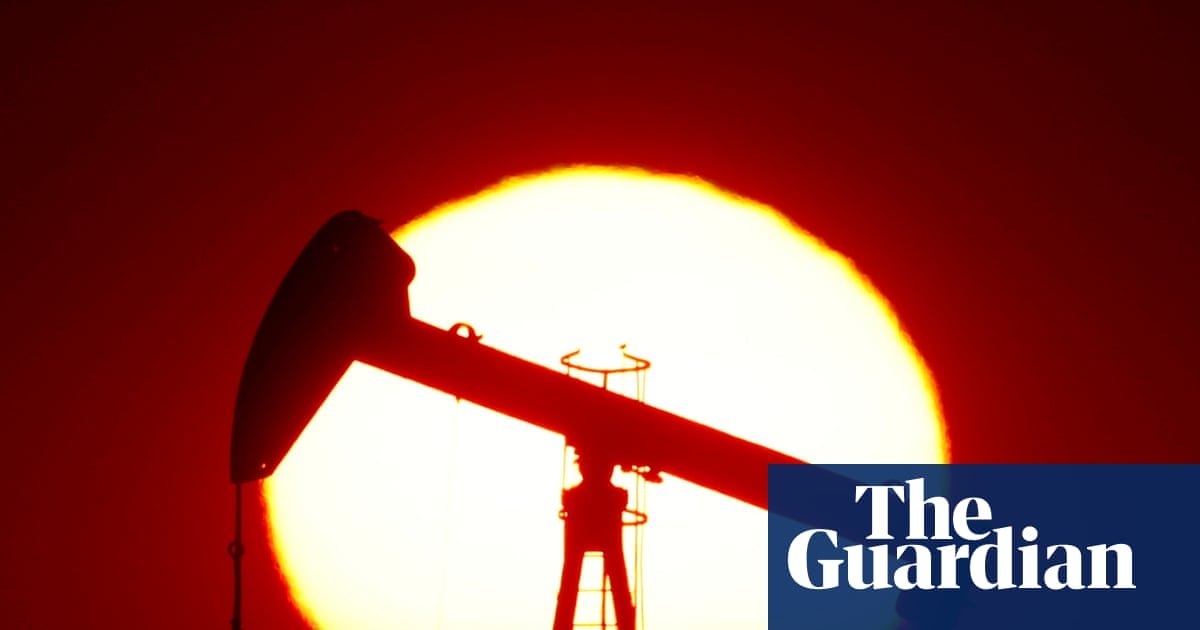
As the world swells with increasingly dangerous heat, why are oil companies allowed to pump out more gasoline without paying the consequences of their greed?
With heat domes burning across much of the Northern Hemisphere, temperature records being broken daily, children dying in locked cars, hospitals filled with heatstroke victims, and emergency services battling wildfires, this question should be on everyone’s mind.
There is no question that oil, gas and coal companies have economic incentives to further disrupt the climate, even though they already bear a disproportionate share of the blame. These perverse incentives will continue unless generous government subsidies are replaced by windfall taxes.
There is an overwhelming scientific consensus that the more fossil fuels are burned, the hotter the Earth gets. The latest investigation into the causes concludes that the “most intense and widespread heatwave ever to affect this large region of Europe” could not have occurred without human-induced climate change.
But the oil giant plans to make the situation even worse. Because more fuel burned means more profit. Profits have soared in recent days thanks to soaring oil prices due to wars in the Middle East, including Iran, which will then lead to a surge in investment in new oil wells.
Oil companies are racing to extract more oil and gas from the ground, according to a new analysis. Shell, ExxonMobil, Chevron and seven other listed companies aim to increase production by an average of 14% between 2024 and 2030, according to the TPI Center for Global Climate Transitions at the London School of Economics and Political Science (LSE).
.
More fuel is the last thing an already overheated world needs. This pushes the planet in the opposite direction to the goals set in the Paris Climate Agreement, which many of these companies have pledged to follow. In order to limit global warming to between 1.5 and 2 degrees Celsius by 2100, oil production will need to be reduced this decade. The currently planned expansion is far worse than the International Energy Agency’s gloomy business-as-usual scenario, which assumes oil and gas production will increase by 5.9% this decade, leading to a catastrophic global temperature rise of 2.9 degrees Celsius by the end of the century.
The IEA could not have stated this more clearly. There can be no new long-term oil and gas exploration and development projects if we are to meet the Paris Agreement goal of keeping global temperature rise below 2 degrees Celsius.
So why are fossil fuel companies planning to supply more fuel than ever before? Because their executives are forced to operate in a different world, where their ethical compass is set more on maximizing shareholder value than on preserving the planet’s habitability. To maintain this perverted situation, investors and media allies have seized power and changed the global climate change conversation.
Six years ago, the oil business was on the defensive. Greta Thunberg and climate strikers were marching against fossil fuels in the streets around the world. Organization of the Petroleum Exporting Countries executives have warned that the protests are the “biggest threat” the industry has ever faced, as oil company executives are challenged at home by their own children. Momentum for change was growing. Many governments had set net-zero decarbonization targets. Financial institutions have committed to more ambitious environmental governance goals.
The movement against fossil fuels, spearheaded by Greta Thunberg, is losing momentum as energy companies pull out. Photo: Paul S. Amundsen/NTB/AFP/Getty Images
Some oil companies (mainly in Europe) have aligned themselves with the Paris Agreement. BP was one of the most ambitious companies at the time, pledging to cut oil and gas production by 40% and increase investment in renewable energy tenfold. Then-CEO Bernard Looney promised that BP would “not only deliver competitive returns, but be a force for good.”
The nice-sounding, distant pledges were never enough to fully align with Paris’ climate change goal of keeping global temperature rise to 1.5 degrees Celsius, as they relied on unproven solutions such as carbon capture and storage, but they helped placate public opinion until climate change campaigners disappeared from the streets. Then, when concrete actions were needed to make even these vague goals a reality, many oil companies began to backtrack.
BP is a great example. Mr. Looney was forced to lay off in 2023, the same year the company watered down its 40% fossil fuel cuts to 25%. Two years later, the company announced a strategic reset that would cut renewable energy investments by $3 billion and increase oil and gas spending to $10 billion annually. Current CEO Meg O’Neill has continued to retreat from low-carbon investments with a “simpler, stronger” strategy, effectively returning to business as usual. Shareholder value is now our priority over social and environmental responsibility. So while the world was on fire and conflicts were escalating, BP’s profits more than doubled in the last quarter.
Skip past newsletter promotions
sign up for sensible
The most important story on earth. Get all of this week’s environmental news – the good, the bad and the important.

After newsletter promotion
There are similar stories elsewhere. The six European oil majors increased their combined profits by 43% over the same period, reaching $22 billion, the highest level since 2022. Most companies have rolled back green energy efforts and ramped up production plans in recent years. Norwegian national oil company Equinor has raised its oil and gas production target by 6% by 2030. Brazil’s Petrobras aims to increase oil supply by 21% by 2030. Almost every country and company seems to be competing to produce that last barrel of oil.
In the United States, by far the world’s largest oil and gas producer, producing more oil and gas than Saudi Arabia and Russia combined, many oil companies have never shown any interest in low-carbon efforts to begin with. With Donald Trump’s administration working in their interests, they have the political cover to increase production by any means necessary (Exxon by a staggering 25% by 2030, Chevron by 15%) and expand their markets. Meanwhile, their investors and supporters are steering Europe in the same direction, either through shareholder activism or by funding far-right politicians and think tanks campaigning against net zero policies.
Pumpjacking of the Bell Ridge oil field in McKittrick, California – Oil prices have soared due to the Middle East conflict. Photo: Tamamario/Getty Images
Add in soaring oil prices, shifting boardroom priorities, state capture, political cover, and cash injections to fill the streets with far-right anti-net-zero activists instead of young climate strikers, and you have all the ingredients for the oil industry to add more fuel to the global fire than ever before. The perfect storm for more extreme storms.
This is a global folly of catastrophic proportions, as a new El Niño has been confirmed and predicted to be one of the most severe in decades. The Amazon is bracing for more fires and drought, without time to recover from the devastation caused by the last El Niño event. El Niño turns normally clear skies in forests to a smoky gray over industrial cities, dries up some of the world’s largest rivers, and causes mass deaths of dolphins and other animals.
In the polar regions, the snow and ice that normally reflects the sun’s heat back into space will melt even more. And other critical components of Earth’s life support systems will also be approaching dangerous tipping points. Catastrophic outcomes are increasingly likely.
It didn’t have to be this way, and it won’t have to be this way in the future. Values must change. We need to change the incentives. Fossil fuels have long been beneficial to humanity, but they must be recognized as poisons. And oil companies must pay the price for backtracking on their promises and prioritizing shareholder dividends over the health of the planet and human well-being.
