


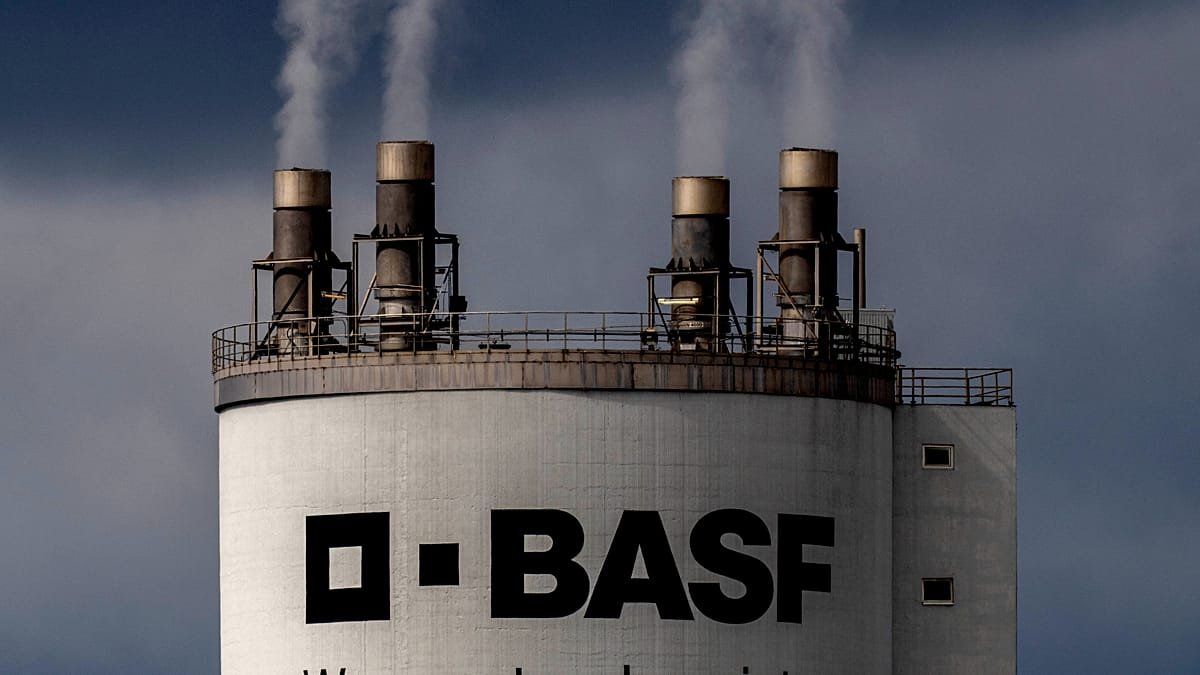
The European Union’s new Critical Chemicals Alliance (CCA), presented as a strategic response to concerns about the resilience and competitiveness of Europe’s industry, has become an industry front pushing for deregulation and less pollution rules, according to a monitoring report published on Monday.

advertisement
advertisement
CCA, which was launched in January 2026 with approval from the European Commission, includes major chemical companies such as BASF, TotalEnergies and Avantium. Officially, it aims to identify chemicals and production sites that are deemed “critical” to Europe’s economy, potentially unlocking billions of dollars in public and state aid in the future.
But new research published by the European Enterprise Observatory (CEO) and the European Environment Agency (EEB) argues that the EU’s competitiveness story in chemical production is overwhelmingly shaped by the very industries the EU is supposed to oversee.
“Since the launch of the Alliance, it has been clear that the European Chemical Industry Council (CEFIC) has taken the lead in this effort, and its industrial sector is indifferent to the risk that this process is unduly influenced by corporate interests,” the CEO-EEB report said.
Benzene, a known carcinogen, dangerous chlorine, petrochemical feedstocks such as ethylene and propylene, and hydrofluoric acid, which is associated with “forever chemicals” or PFAS, are among the “critical molecules” identified by CCA for public investment.
A new 30-page report challenges repeated industry claims that European chemical manufacturers are facing an existential threat due to high energy costs and competition from China. The paper claims that large chemical companies have generated hundreds of billions of euros in profits over the past decade, much of which has been distributed to shareholders rather than being reinvested in modernizing production.
The report adds that generous free carbon allowances under the EU’s carbon market, the Emissions Trading System, already provide significant public support to the chemical industry.
Corporate capture?
The authors recall that CEFIC helped compile the Antwerp Declaration in February, which brought together industry leaders calling for “urgent and bold” action to strengthen the competitiveness of the heavy industry sector.
Companies participating in the CCA manufacture chemicals that may be designated as “critical” or operate production facilities that may later become eligible for public funding.
The report highlights that CEFIC representatives serve as vice-chairs of groups that define key molecules and production sites and as chairs of trade working groups.
Overall, watchdog groups describe the findings as “structural corporate capture” rather than regular lobbying, arguing that public funds should not be given to the industries involved unless stronger conditions are attached and conflicts of interest are resolved.
“My impression, based on the way CEFIC was presented (…) and the structure of the steering committee and working groups, was that there must have been considerable preparatory work behind the scenes involving both DG GROW (the industrial arm of the commission) and CEFIC,” said Tatiana Santos, head of chemical policy at EEB.
“My understanding was that CEFIC was leading the show.”
CEFIC had not responded to a request from Euronews at the time of publication.
Neglected environmental considerations
Although the commission formally chairs the CCA, the report argues that CCA representatives hold key leadership positions across steering committees and working groups, and much of the agenda, governance, and technical work is effectively delegated to industry, while environmental organizations are largely excluded from decision-making.
As a result, the authors argue, important environmental priorities are largely absent from CCAs. Instead of reducing toxic chemicals, reducing dependence on fossil feedstocks, and reducing overall production of petrochemicals and plastics, discussions focus on preserving existing industrial capacity, supporting investment, and deregulation.
The report also warns that climate action being promoted within the CCA, such as carbon capture and certain bio-based solutions, risks prolonging dependence on fossil fuels rather than accelerating true decarbonisation.
Rather than asking which chemicals are economically ‘important’, the authors argue, EU policymakers should ask which chemicals are socially essential – those required for health, safety, important public functions and direct public investment.
“The concept of ‘essentiality’, the social value of chemicals, and the commitment of public funds to the conditions for promoting detoxification are of no concern to the committee, let alone the management of the CCA process,” the report said.
The European Commission had not responded to a request from Euronews at the time of publication.
The European Parliament and the Council of the European Union recently voted to simplify chemical regulations, but this has drawn criticism from green groups who say the new rules conflict with necessary environmental protection and industrial and economic demands.
