


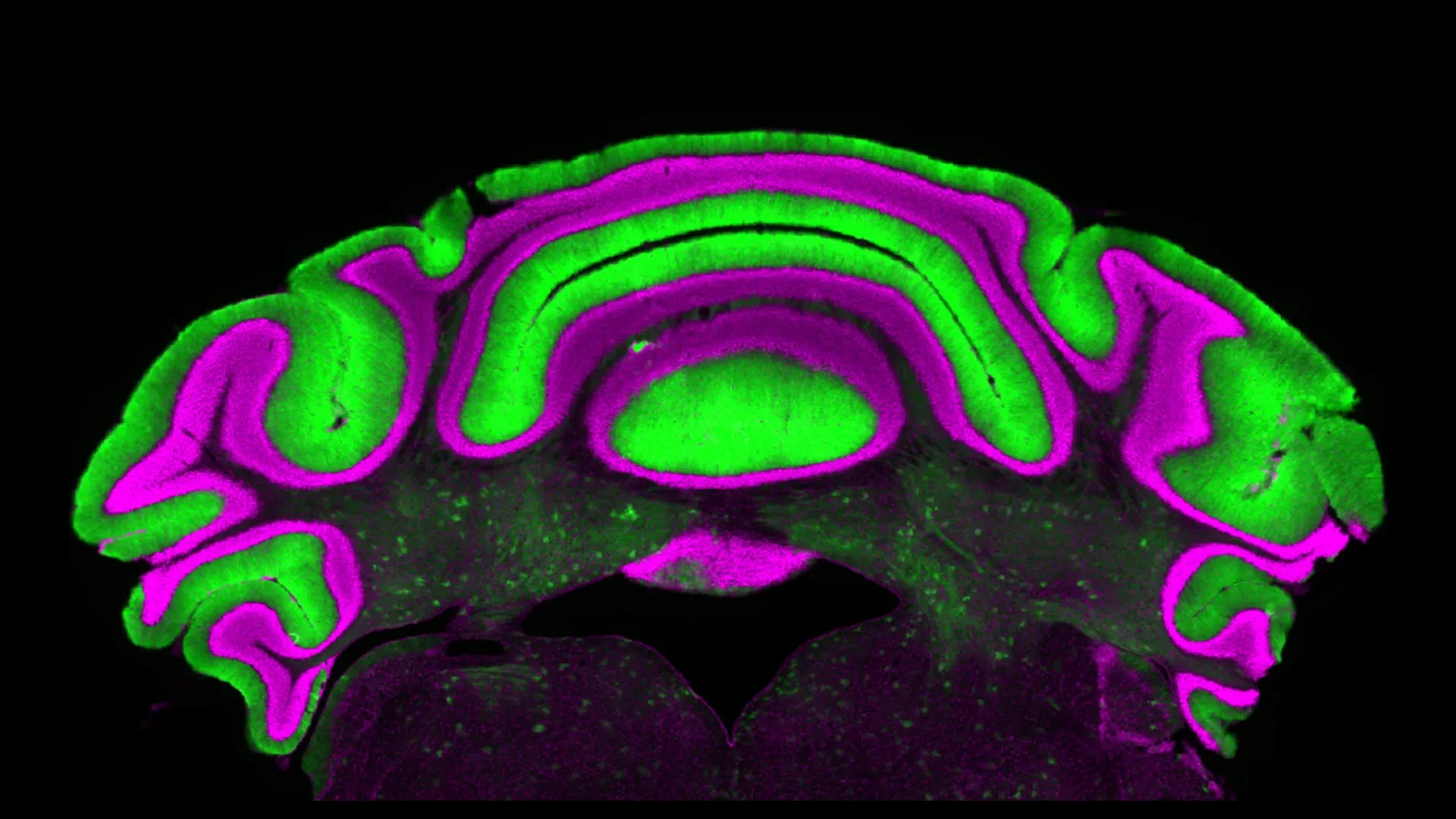
A new study by Virginia Tech neuroscientists at VTC’s Fralin Biomedical Research Institute calls into question long-standing approaches to studying chronic neurological conditions such as dystonia, ataxia, and tremor.
These disorders result from problems in the cerebellum, an area of the brain involved in coordinating movement. When the cerebellum is damaged, symptoms may include painful muscle contractions, abnormal posture, and uncontrollable shaking.
For many years, neuroscientists have focused on the relationship between two types of brain cells in the cerebellum. One group, known as Purkinje cells, suppresses the activity of another group called deep cerebellar nucleus cells. Because of this connection, researchers have generally assumed that observing Purkinje cell activity provides a reliable picture of what is happening in deep nuclear cells.
A new study led by Meike van der Heijden suggests that this assumption may not be true.
Published in physiology journalThis study found that despite a direct anatomical relationship, the activity of one cell type does not reliably predict the activity of the other cell type.
“We found that there is no clear linear relationship between the activity of Purkinje cells and deep nuclear cells, so our predictive ability to monitor one and understand what is happening in the other is very limited,” said van der Heijden, assistant professor at the institute.
Effects on dystonia, ataxia, and tremor
This finding may have important implications for both research and treatment of cerebellar motor disorders.
“The activity of Purkinje cells and deep cerebellar nucleus cells is disrupted in some disease states, and a better understanding of the relationships between these neuron types will ultimately help optimize treatments for diseases such as dystonia, ataxia, and tremor,” said Alyssa Lyon, a doctoral candidate in Virginia Tech’s Translational Biology, Medicine, and Health Graduate Program and lead author of the paper.
One reason Purkinje cells have attracted so much attention is that they are easy to study. They are located in the outer layer of the cerebellum, making them more accessible to researchers. In contrast, deep nuclear cells are located further below the surface of the brain and are more difficult to measure directly.
As a result, many scientists have treated Purkinje cell activity as a useful biomarker of what is happening deep within the cell.
Unexpected results from cerebellar recordings
Under normal circumstances, Purkinje cells suppress deep nuclear cells. Based on that relationship, an increase in Purkinje cell activity is expected to correspond to a decrease in deep nuclear cell activity, whereas a decrease in Purkinje activity is expected to have the opposite effect.
To test that hypothesis, the research team analyzed a database of electrophysiology recordings collected from preclinical models of cerebellar disease.
The results revealed that there was no significant correlation between the activities of the two cell populations.
“I would suggest that if you want to understand how the cerebellum is functioning in disease states, you need to look at deep nucleus neurons, not just Purkinje cells,” said Van der Heijden, a professor who also holds an appointment in Virginia Tech’s Department of Neuroscience.
He added that researchers should also be wary of therapeutic strategies that focus on altering Purkinje cell activity in the hope that deep nuclear cells will respond accordingly.
“This is a warning not only for understanding cerebellar activity in disease, but also for treating these difficult diseases,” said Professor van der Heijden. “You have to be very careful when formulating a hypothesis, and you have to actually conduct experiments to test your hypothesis.”
