


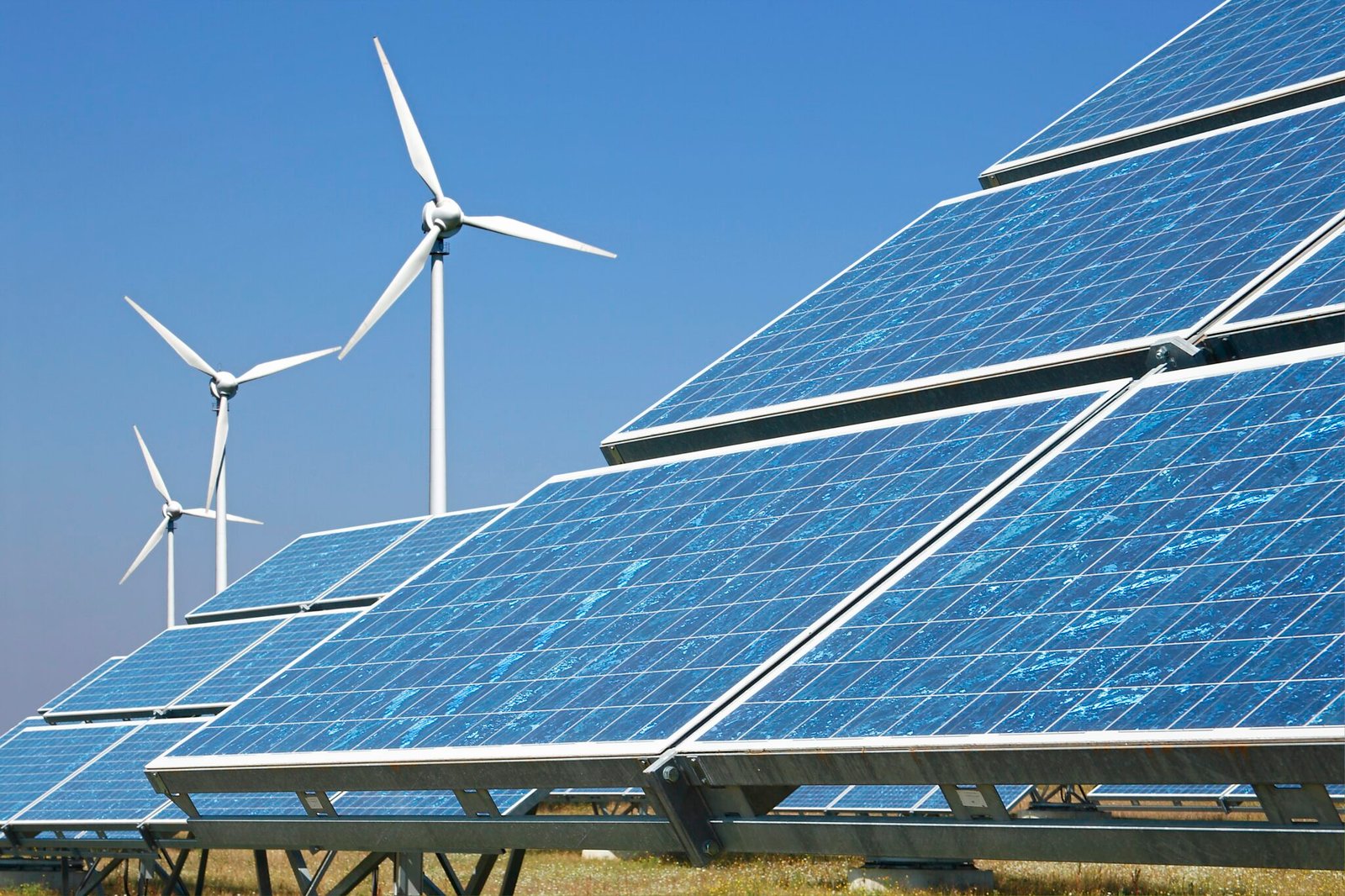
A new study refutes critics’ claims that the solar industry is taking over productive farmland and disrupting agricultural production.
“As you travel through North Carolina, we are occupying some of the best farmland in the state,” North Carolina House Agriculture Committee Chairman Jimmy Dixon (R-Duplin) said during a hearing on the 2025 solar tax credit.
The industry claims the data shows otherwise. According to one study, solar power currently accounts for only 0.24% of North Carolina’s prime agricultural land. report The Solar Energy Industry Association made the announcement last week.
Research shows that other land uses, such as suburban development and recreation, take up far more agricultural land.
Research shows that from 2014 to 2024, suburban development in North Carolina took away 3.6 times as much prime farmland as utility-scale solar projects, 0.87%. Golf courses used 0.28% of the state’s prime agricultural land.
“This map helps provide important context, showing that solar power and agriculture can thrive together,” SEIA President and CEO Tim Pawlenty said in a statement. “Solar power development uses a very small amount of agricultural land compared to many other common land uses, while providing affordable energy, local tax revenue, and reliable income for farmers and landowners.”
According to , North Carolina ranks fifth in the nation for total installed solar capacity. Until then. About 10% of the state’s electricity comes from solar energy, enough to power more than 1 million homes.
On a national level, golf courses used 2.6 times more prime agricultural land than the solar power industry, and suburban sprawl accounted for 5.9 times more than solar power from 2014 to 2024.
Nationally, the analysis found that solar power currently utilizes only 0.04% of the total land area of the United States and 0.07% of the United States’ agricultural land. According to the report, no state has solar power installed on more than 0.5% of prime agricultural land.
Sean Gallagher, SEIA senior vice president of policy, told NC Newsline that when solar developers decide where to locate a project, they look for land close to the grid.
“They need to be able to connect projects to the grid relatively easily and relatively cheaply,” he says. “They are looking for suitable land for their project, and that means land that is the right size, has community support and is available.”
California has the highest overlap between solar farmland and prime farmland in the country at 0.43%. The state has little agricultural land relative to its size, a large number of solar projects, and urban areas could also impact the numbers.
“One of the only forms of power generation that can be installed near populated areas is solar power, because it can be installed on rooftops,” Mr Gallagher said.
North Carolina’s solar power sector at a crossroads with federal funding cuts
Nationally, the federal government is moving away from clean energy sources, including: solar and wind.
The “big, beautiful bill” that President Donald Trump signed last July eliminated the 30% residential solar tax credit for systems installed after 2025, significantly shortening the previous schedule that would have given the credit until 2032.
In August, the Environmental Protection Agency abruptly ended the Solar for All program, which provided $156 million in North Carolina and $7 billion nationwide for solar power projects in low-income areas.
Earlier this year, North Carolina Public Utilities Commissioner Bill Brawley said: instructed Duke Energy halts progress on solar power procurement in 2026. The order does not cancel existing projects, but it means the utility will not add any new projects this year, impacting future solar capacity.
“This has been a difficult year for the solar industry,” Gallagher said.
Despite the headwinds, solar power remains an affordable option that can be added to the grid faster than any other energy source, he said.
“In states like North Carolina, where energy demand is rapidly increasing, solar power and storage are the fastest and most affordable ways to meet that demand,” Gallagher said.
