


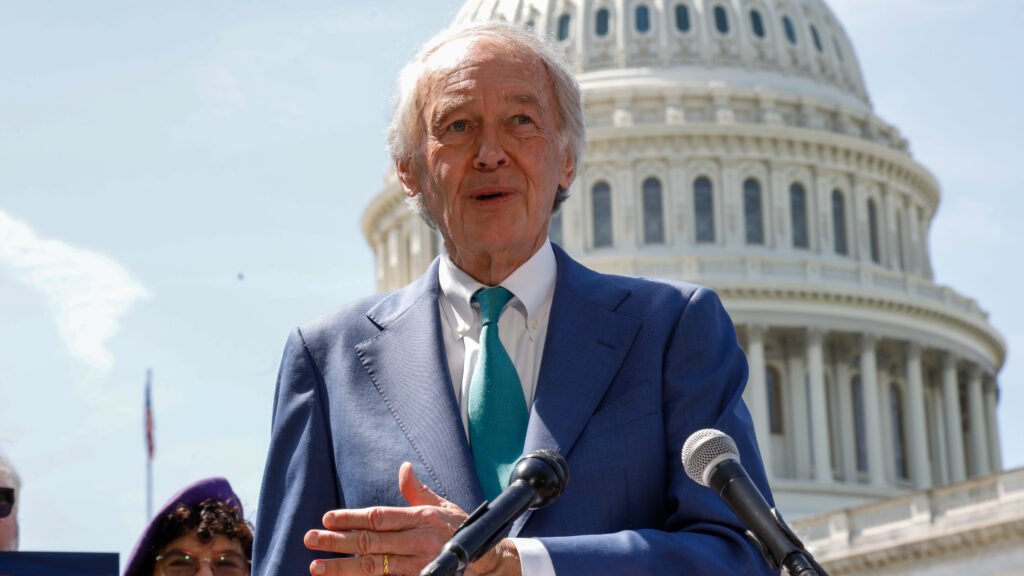
On Thursday, Sen. Ed Markey (D-Mass.) and Sen. Rand Paul (R-Ky.) are introducing an updated version of their bill that would allow physicians board-certified in addiction medicine to prescribe methadone directly to patients and pick it up at pharmacies.
Currently, methadone is available as a treatment for addiction only in about 2,000 specialty clinics. Many of those programs required patients to attend clinics in person each day to receive methadone doses. Federal reforms enacted in 2024 allow these facilities, known as opioid treatment programs (OTPs), to be more flexible with patients, but it remains unclear how meaningfully the patient experience has changed in recent years.
Markey first introduced the bill in 2023. The Senate Health, Education, Labor, and Pensions Committee approved the bill on a bipartisan basis in December of the same year, but there was no full support in the Senate, and the bill failed to gain support in the House.
“For too long, we have locked up methadone, an evidence-based, life-saving drug, far from the many people who need it,” Markey said in a statement to STAT. “The Opioid Treatment Access Modernization Act 2.0 would take a carefully considered step in expanding access to methadone by allowing the nation’s most highly trained addiction physicians to prescribe it and patients to pick it up at pharmacies.”

How the U.S. is blocking the best means to prevent deaths from the opioid epidemic
The new version of the law also allows the Department of Health and Human Services to designate additional health care providers who will be allowed to directly prescribe methadone without requiring further action from Congress.
Methadone is one of only three medications approved by the Food and Drug Administration to treat opioid addiction. Methadone, along with another drug, buprenorphine, has historically been stigmatized because it is itself an opioid. Both drugs prevent cravings and debilitating withdrawal symptoms in people who have previously used heroin or fentanyl by binding to the same brain receptors. However, when administered properly, the drug does not cause a high, but simply helps the patient feel alert and physically comfortable.
As the opioid crisis accelerates, methadone clinics have come under increasing scrutiny for their patient care.
According to a 2024 STAT study, private equity firms have acquired a stake in about one-third of methadone clinics nationwide. Many private equity-backed clinic chains, working with major industry groups representing methadone clinics, launched a lobbying and public relations campaign in 2024 aimed at blocking Markey and Paul’s bill from becoming law.
The American Opioid Dependence Treatment Association, an industry group, led a campaign titled “Programs, Not Pills,” arguing that OTPs do more than just provide drugs, they offer a comprehensive array of services, including methadone administration in addition to counseling.
But patients are increasingly claiming that the treatment they receive at methadone clinics is interfering with their care. Clinics are known to require frequent drug testing, urine sample collection may be observed on camera or in person, and require daily in-person visits to the clinic for months or even years. For patients who ultimately receive take-home medications, some clinics still offer “call-backs,” in which patients are required to show up with their take-home medications several hours in advance to prove that the drugs have not been misused or sold.


STAT Plus: Methadone clinic monopoly: Private equity-backed opioid treatment chain fights calls for reform
Following the STAT investigation, Mr. Markey and Sen. Maggie Hassan (D.N.H.) launched a separate investigation into a private equity firm known to have purchased stock in methadone clinics.
Markey and Paul’s introduction of the bill comes amid a changing political climate surrounding drugs to treat opioid use disorder. In April, the Trump administration sent an open letter to addiction treatment providers warning that drugs should not be used “as a default sentence for a lifetime of drug use.” Before being appointed as the agency’s general counsel, the top official at Health and Human Services was best known in the drug policy world for introducing legislation in West Virginia that would effectively ban methadone treatment altogether.
And last year, Republican lawmakers introduced a bill that would roll back new flexibilities enacted by the Substance Abuse and Mental Health Services Administration in 2024, effectively forcing patients to return to daily methadone clinics and undergo mandatory drug testing, counseling and other potential obstacles at the clinic’s discretion.
The bill already has significant support across the drug policy and recovery advocacy arenas. The list of supporters reviewed by STAT before the bill’s introduction included advocacy groups and medical societies, including Faiths & Voices of Recovery, American Society of Addiction Medicine, Drug Policy Alliance, R Street Institute, and Legal Action Center.
STAT’s chronic health coverage is supported by a grant from. bloomberg philanthropy. our financial supporter It has no role in any of our journalism decisions.
