


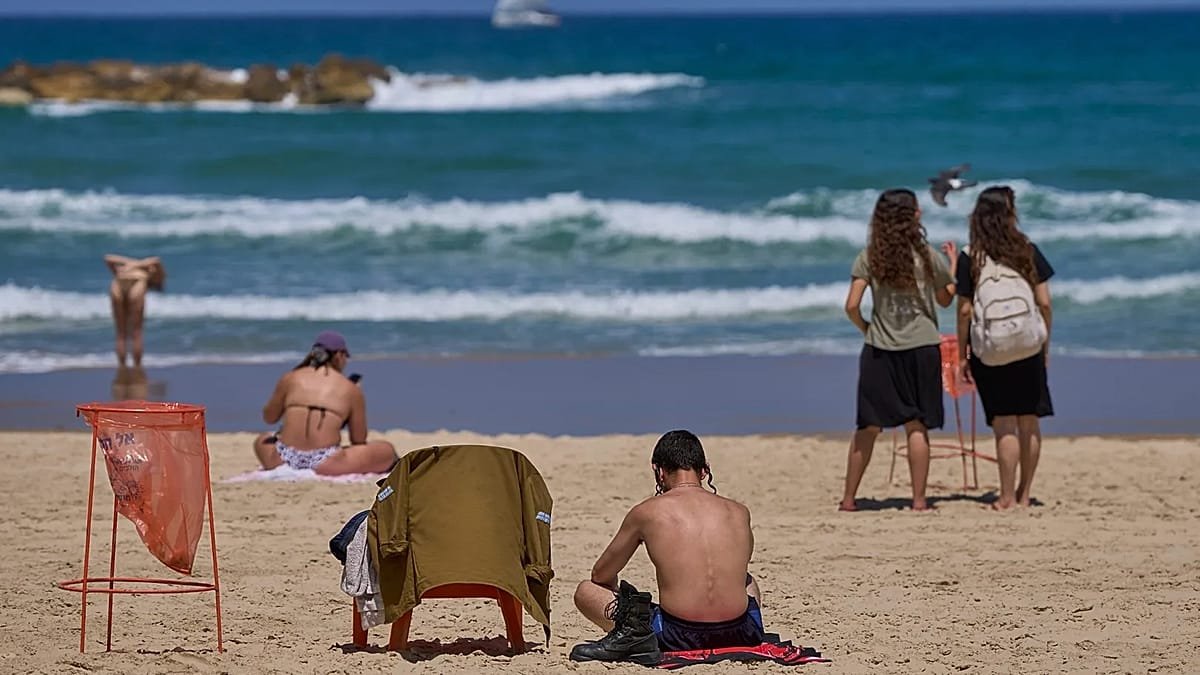
Now that summer has officially begun, millions of tourists are looking forward to their vacation, often heading to the coast to enjoy the beaches. However, this year A long shadow hangs over the tourism industry Bacterial growth in the sea has already forced the closure of several beaches in Spain.

advertisement
advertisement
Indeed, in recent years various parts of Europe’s coastlines have faced pollution and health alerts, restricting access to the sea against the backdrop of rising water temperatures and increased tourism pressure.
“The Mediterranean shows us what a hotter world is like,” he says. Hatim AznageAnalyst for Projects, Climate Action and Energy Resilience at the Mediterranean Union told Euronews. “Countries that share this ocean can choose to share solutions.”
The threat of “flesh-eating bacteria”
Of particular concern is Vibrio bacteria. Commonly known as “flesh-eating bacteria”.aquatic microorganisms that naturally inhabit seawater and brackish waters, especially in areas where rivers meet the sea. According to the European Food Safety Authority (EFSA) (Source in Spanish)Vibrio bacteria are aquatic bacteria found in seafood, and depending on the strain, they can cause everything from gastroenteritis to serious infections and even fatal infections.
The most important species in Europe include Vibrio vulnificus, Vibrio parahaemolyticus, and certain variants of Vibrio cholerae. EFSA warns that these bacteria can cause infections. Ingestion of raw seafood or contact with seawater and open wounds.
“Although Vibrio bacteria are closely related to the bacterium that causes cholera, these two microorganisms cause completely different diseases,” he explains. (Source in Spanish) An organization called Gavi. “In serious cases, Infection can cause necrotizing fasciitisTissue surrounding the wound is rapidly destroyed. The bacteria can also enter the bloodstream and cause sepsis, sometimes requiring the patient to have the affected limb amputated. ”
Additionally, the European Center for Disease Prevention and Control (ECDC) warns: (Source in Spanish) “The risk of Vibrio infection increases throughout the summer season,” especially during heatwaves such as those expected in Europe this June, and in shallow coastal waters. This risk is not only a health issue, but also an ecological one. These bacteria thrive in environments where the natural balance of the marine ecosystem is disrupted.
Mediterranean, climate change ‘preview’
This phenomenon is particularly pronounced in the Mediterranean Sea, which scientists consider one of the regions most vulnerable to global warming. Aznag, a climate and energy policy expert, warns that this phenomenon is not isolated but structural. “It is important to emphasize that” The Mediterranean is not a victim of climate change, but a precursor to it. It is one of the fastest warming oceans on Earth. ”
Analysts believe that rising ocean temperatures and decreasing pollution and salinity in coastal areas will Creates optimal conditions for pathogens to grow. “Higher water temperatures, especially in river estuaries and surrounding lagoons with low salinity, make it easier for pathogens to thrive.”
Recent reports from EFSA and others have warned that “climate change is expected to increase the prevalence of Vibrio bacteria in fish and shellfish globally and in Europe, especially in low-salinity waters and estuaries.” mediterranean, Intense tourism pressure and rapidly rising temperaturesTherefore, it is becoming an important stage in this biological change.
Economic impact hitting tourism industry directly
Vibrio spread exceeds health risks has a direct economic impact. Aznag himself sums it up bluntly: “On our coast, the coastline is not part of the economy. It is the economy.”
Beach closures and mid-season health alerts have a direct impact on beach tourism, one of Europe’s most important economic drivers. “Beach closures come with climate change implications,” the analysts said, also warning of the cost of “reputations that will take years to rebuild.”
The Mediterranean Sea is Most visited tourist destination in the worldthe effects of temporary closures are amplified. Hotels, restaurants, and local economies are directly dependent on the stability of coastlines, which are now threatened by increasingly frequent biological phenomena.
According to EFSA: Rising temperatures and abnormal weather Antibiotic resistance has been detected in some strains, further raising concerns for public health.
Current risks, not future risks
for the mediterranean union (Source in Spanish)the problem no longer belongs to the future of the climate, but to the present. this sea Acts as a global thermometer About what will happen in other regions in the coming decades.
The solution, Aznag argues, is: Commit further cooperation and adopt concerted actionstressed that “compromising on our health or our climate is unacceptable.”
In this context, Vibrio bacteria are not only a growing threat to health, but also an indicator of a rapidly changing marine ecosystem. Or, as Aznag summarized in an interview, “Bacteria are not stories. They are messengers. The story is of an ocean thrown out of balance by heat and pollution.”
