


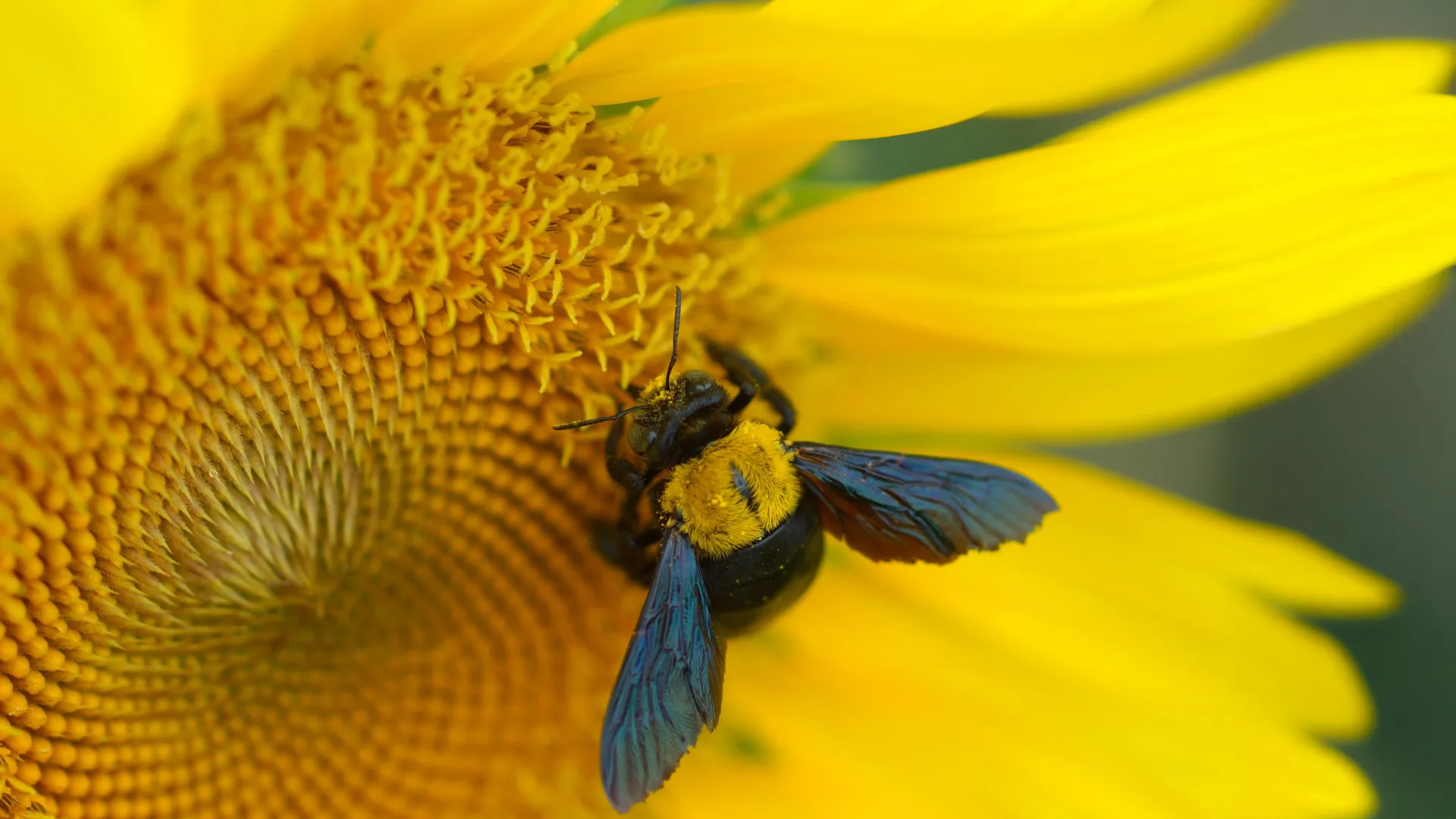
New research suggests that native bee species that nest inside plant stems may face the greatest immediate threat from rising temperatures linked to climate change. In contrast, bees that nest underground appear to be better equipped to avoid dangerous heat.
This study nature communicationsinvestigated the heat tolerance of 95 native bee species found across mainland eastern Australia, from the tropical north to the cool south.
A team of researchers from Macquarie University, the University of Sydney, La Trobe University, Flinders University, the University of Wollongong, the University of Adelaide and the University of Queensland investigated how heat tolerance has evolved in different species of honey bees and assessed how vulnerable they are to a warming climate.
Impact of nesting habits on heat sensitivity
Australia is home to approximately 1,700 species of native bees, and these insects generally fall into three nesting categories. Some make nests in the ground, others use tree cavities such as tree cavities or fallen branches, and still others nest in small holes in plant stems and twigs.
“Bees that nest underground can hide from extreme heat. As a result, they don’t experience as high temperatures as ground-dwelling bees, especially those that live in thin plant stems that offer little insulation from outside heat,” says lead author Dr Carmen da Silva, a research fellow at Macquarie University’s Pollinator Futures Research Center in Sydney.
“Stem-nesting species have the least ability to escape unfavorable environmental temperatures and are likely to be most affected by anthropogenic climate change in the short term.”
The findings indicate that nesting location may play an important role in determining how well different species of bees cope with rising temperatures.
Why is bee survival important?
According to Dr. da Silva, protecting honey bees is important because they play an important role in both natural ecosystems and agriculture.
“Because of their role as pollinators, bees play an important role in ecosystems around the world and are under threat from a warming and drying climate,” Dr da Silva said. “Bees maintain native ecosystems and play a critical role in agricultural crop production. Tropical native bees are important pollinators for crops such as macadamia nuts, avocados, mangoes and lychees.”
Tropical bees face greater climate risks
The researchers also identified patterns related to geography. Bee species living near the equator appear to be more vulnerable to climate change, with tropical honeybees facing the highest overall risk.
Dr Vanessa Kellerman, senior lecturer in La Trobe University’s School of Ecology, Animal and Plant Sciences and lead author of the study, said the results highlight the complexity of predicting which species will be most affected by global warming.
“Predicting which species will be vulnerable to climate change is one of the biggest challenges in ecology,” says Dr. Kellerman. “We found that the most heat-tolerant bee species are not necessarily the safest from global warming, because many of them already live in extremely hot environments.”
In other words, even species adapted to high temperatures may have little room to cope with further warming.
Understanding native bee behavior
Researchers say there is still much we don’t know about Australia’s diverse native bee populations, making research like this increasingly important.
“We still know very little about most of Australia’s amazing native bees,” says co-senior author Dr Ross Gragg, senior lecturer in evolutionary biology in the School of Life and Environmental Sciences at the University of Sydney. “This study helps us recognize that a deeper understanding of native honey bee behavior is key to identifying the greatest threats to wild populations.”
