


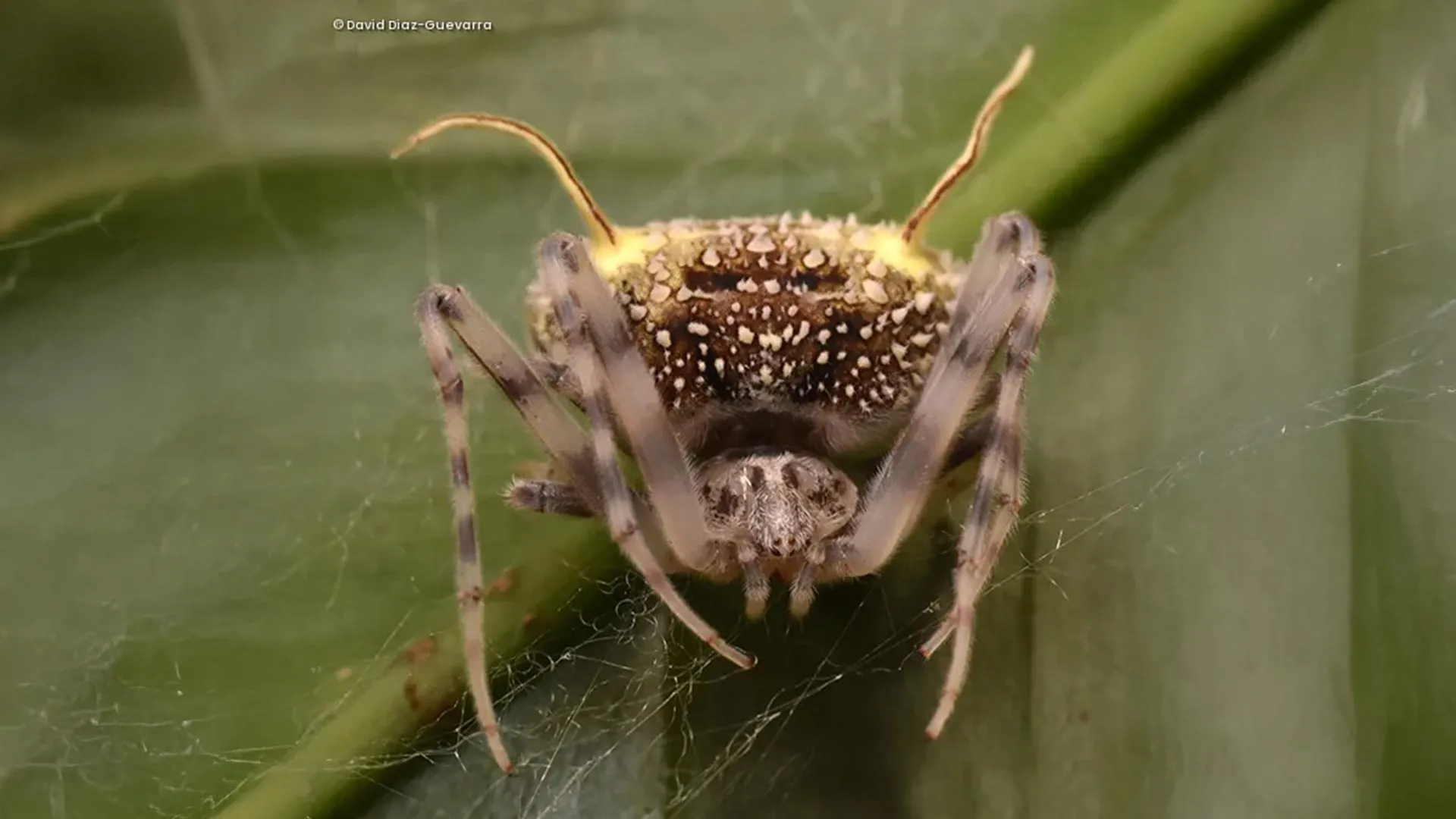
Researchers have identified a remarkable new species of spider disguised as a parasitic fungus in Ecuador’s Amazon rainforest. named species Tachanowskia Waskarepresents the first known example of a spider that mimics the appearance of a fungus that infects spiders. The discovery was made by an international team of scientists, including researchers from the Leibniz Institute for the Analysis of Biodiversity Change (LIB), and the results were published in the journal zoo animals.
The spider was discovered in the Llanganates-Sangay Corridor, a region of the Amazon in Ecuador known for its extraordinary biodiversity. During a nighttime field trip, researchers initially mistook the animal for a mushroom, highlighting just how convincing its disguise was.
a spider that looks like a fungus
Tachanowskia Waska closely resembles the fruiting bodies of fungi of this genus Giberlagrows parasitic on spiders. This spider has elongated structures extending from its abdomen that are pale in color and look like fungal growth.
That behavior strengthens the illusion. The spider remains motionless on the underside of the leaf. Giberla Fungi are common.
Researchers say this combination of appearance and behavior indicates a highly specialized adaptation. By blending into their surroundings, which predators are likely to ignore, spiders can reduce their chances of being eaten. This disguise could also be useful in catching prey by remaining unnoticed until the appropriate moment.
First known example of this kind
According to the study, this is the first recorded case of a spider mimicking a parasitic fungus that infects other spiders. Scientists say the discovery provides valuable insight into how mimicry evolves and the ecological functions these adaptations may serve.
genus Takuzanowska It is still poorly understood and considered rare. This group of spiders is rarely encountered in the wild, so much of their ecology is still a mystery.
Nadine Dupelle from LIB Hamburg Nature Museum contributed to the research by examining reference specimens from scientific collections and helping to classify the new species.
Citizen science led to the discovery
The story began with a post on the citizen science platform iNaturalist. What observers initially believed to be a mushroom was later recognized by users as a spider, prompting further scientific investigation.
This case highlights the growing role of citizen science in biodiversity research and species discovery.
“Such discoveries demonstrate the value of scientific collections. They allow us to classify new species and compare them with historical specimens. Combined with international cooperation and citizen science, they open new opportunities to study biodiversity,” explains Nadine Duperret.
The discovery also serves as a reminder of how much remains unknown about life in tropical ecosystems. Scientists say this highlights both the immense biodiversity of rainforest regions and the importance of international cooperation and new data sources in advancing our understanding of the natural world.
