


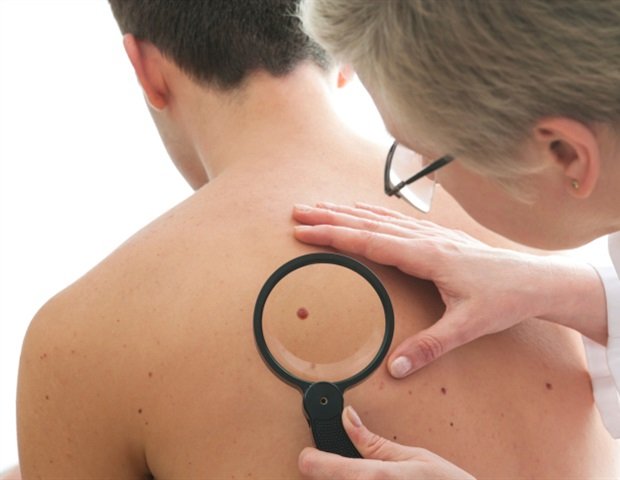
Florida’s year-round sunshine and exposure to intense ultraviolet (UV) rays have resulted in one of the highest burdens of skin cancer in the nation, with older adults bearing the brunt of the burden. A new study from Florida Atlantic University’s Charles E. Schmidt School of Medicine reveals that melanoma, the deadliest of skin cancers, continues to disproportionately affect older Floridians, with persistent disparities in both diagnosis and mortality rates among genders, races, and ethnicities.
The findings provide one of the most comprehensive recent assessments of skin cancer trends among Floridians age 65 and older, as the Sunshine State has the second-highest rate of melanoma in the nation.
FAU researchers conducted a population-based analysis of skin cancer incidence and mortality among adults age 65 and older in Florida using data from the CDC’s WONDER (Wide Wide Online Data for Epidemiological Research) database. The study looked at diagnoses from 2018 to 2021 and deaths from 2018 to 2023, and analyzed trends by age, gender, race, and ethnicity. Basal cell carcinoma and squamous cell carcinoma were excluded to focus on melanoma and other less common but clinically aggressive skin cancers.
The result is Journal of Geriatric Oncologyrevealed a consistent and striking pattern. Across all years analyzed, older men in Florida experienced approximately twice as many skin cancer-related deaths as women. Although morbidity and mortality patterns remained relatively stable over time, gender-based gaps persisted throughout the study period.
Researchers believe this difference is due to a complex combination of factors, including lower rates of sun protection behaviors and skin self-examination among men, higher cumulative lifetime UV exposure in Florida’s high-risk environment, and emerging evidence suggesting that biological sex differences in immune system function may influence cancer progression and survival outcomes.
Racial and ethnic disparities were also significant. Non-Hispanic populations had significantly higher skin cancer diagnosis and mortality rates than Hispanic populations, and melanoma and other skin cancers occurred most frequently among white residents.
But researchers caution that these patterns may reflect real differences in risk and a combination of structural and social factors, including differences in access to dermatological treatments, differences in health literacy, and differences in how and where skin cancer is detected and diagnosed.
The study also suggests that the observed decline in incidence in a given year may reflect disruptions in screening, diagnosis, and reporting during the COVID-19 pandemic rather than a true decline in disease burden. Across multiple categories, incidence was lowest in 2020 and then rebounded in 2021, coinciding with pandemic-related disruptions in health care access and cancer detection.
Taken together, our findings suggest that skin cancer in Florida is caused not only by UV exposure, but also by behavioral patterns, biological factors, and persistent gaps in prevention and early detection, especially in older men. ”
Lea Sacca, Ph.D., senior author and assistant professor of population health, Schmidt School of Medicine
This study shows that these disparities are consistent in both morbidity and mortality, highlighting the uneven burden of disease across Florida’s aging population and the need for more population-tailored and individualized prevention strategies.
“Men appear to account for a disproportionate share of both illness and death, which may reflect differences in preventive behaviors, health-seeking patterns, and perhaps underlying biological susceptibilities that require further investigation,” Professor Sacca said. “These differences cannot be fully explained by UV exposure alone and point to a combination of behavioral and biological factors.”
Increased UV exposure in Florida likely increases the risk of melanoma across the state, but researchers note that this does not fully explain why certain groups experience significantly worse outcomes.
“The patterns we’re seeing indicate missed opportunities for prevention and early detection,” Sacca said. “Improving awareness of skin cancer risks, encouraging regular skin exams, and expanding culturally responsive education are important steps to reducing these disparities and improving outcomes across the state.”
As summer begins, temperatures rise, and beach season is in full swing, the combination of high UV exposure, an aging population, and lack of preventive care make this a particularly pressing public health concern, researchers highlight. They added that stronger public health messaging, earlier screening, and targeted support are essential to reducing the burden of largely preventable cancers among Florida’s rapidly growing elderly population.
sauce:
florida atlantic university
Reference magazines:
Srivastava, M. Others. (2026). Skin cancer trends in the Sunshine State: A continuing concern for older Americans. Journal of Geriatric Oncology. DOI: 10.1016/j.jgo.2026.103005. https://www.sciencedirect.com/science/article/abs/pii/S1879406826001591?via%3Dihub
