

Close Menu

    Subscribe to Updates

    Get the latest creative news from FooBar about art, design and business.

    What's Hot

    New fentanyl vaccine stops deadly overdose before it starts

    June 13, 2026

    Dark energy overcomes major challenges as the universe continues to accelerate

    June 13, 2026

    Parkinson’s disease drugs may reduce anhedonia in treatment-resistant depression

    June 13, 2026
    Facebook X (Twitter) Instagram
    Facebook X (Twitter) Instagram
    Health Magazine
    • Home
    • Environmental Health
    • Health Technology
    • Medical Research
    • Mental Health
    • Nutrition Science
    • Pharma
    • Public Health
    • Discover
      • Daily Health Tips
      • Financial Health & Stability
      • Holistic Health & Wellness
      • Mental Health
      • Nutrition & Dietary Trends
      • Professional & Personal Growth
    • Our Mission
    Health Magazine
    Home » News » New hydrogen advances convert waste heat into clean fuel
    Nutrition Science

    New hydrogen advances convert waste heat into clean fuel

    healthadminBy healthadminJune 2, 2026No Comments4 Mins Read
    New hydrogen advances convert waste heat into clean fuel
    Share
    Facebook Twitter Reddit Telegram Pinterest Email


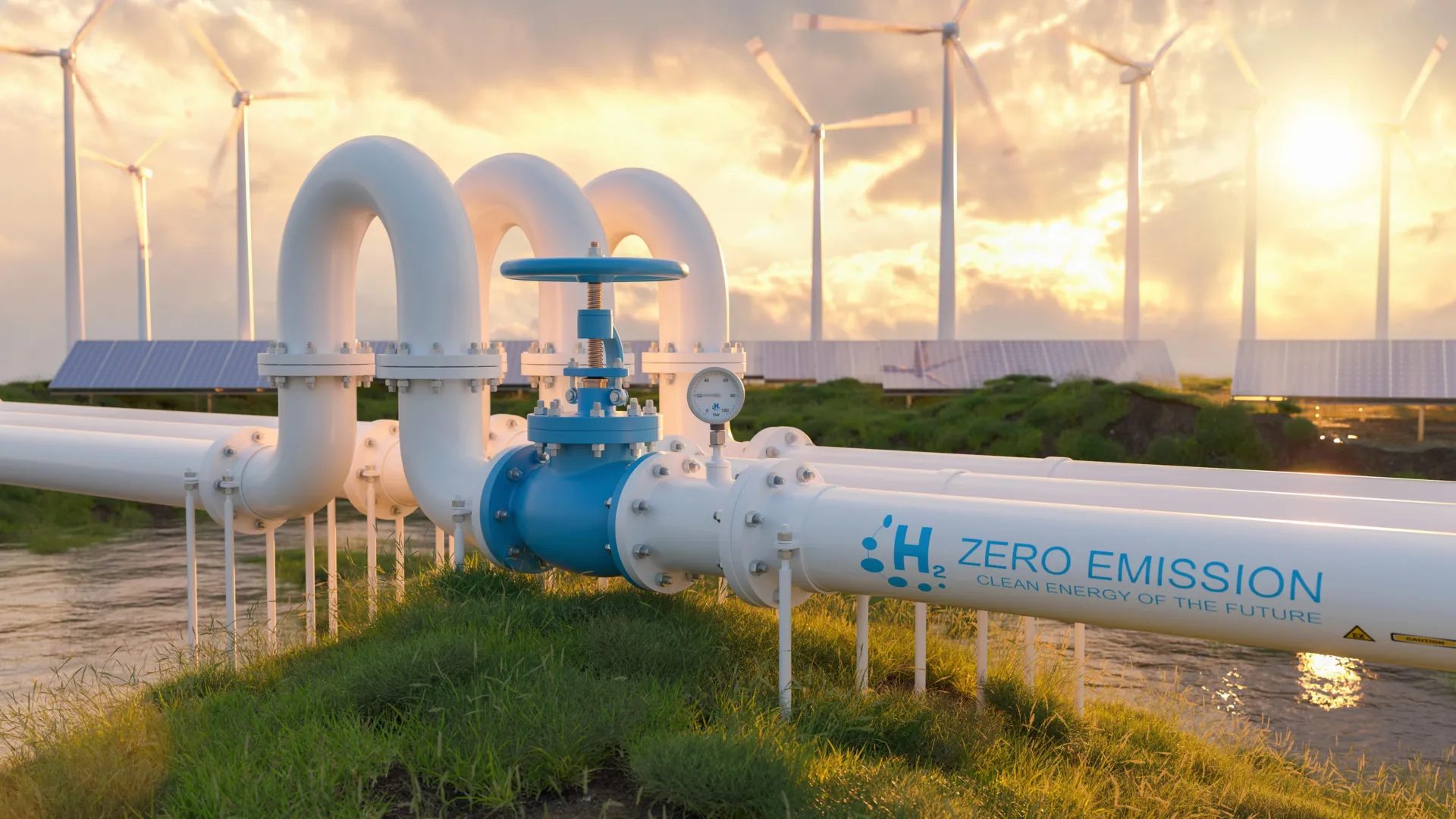
    Researchers at the University of Birmingham have developed a new low-temperature approach to hydrogen production that could make the clean fuel cheaper and more practical. This technology can be used both in large centralized facilities and in small local systems that utilize waste heat from major industrial activities.

    Hydrogen is the most abundant element in the universe and is widely recognized as an important source of clean energy. When used as fuel, it only produces water and heat, not carbon dioxide and other pollutants associated with fossil fuels. Hydrogen can also power fuel cells that produce electricity. Despite these benefits, approximately 95% of today’s hydrogen production still relies on fossil fuels.

    New catalyst significantly lowers hydrogen production temperature

    One promising method for producing hydrogen is thermochemical water splitting, a process that uses a catalyst to separate water into hydrogen and oxygen. Existing thermochemical systems require very high temperatures. Water splitting typically occurs at 700-1000 °C, while catalyst regeneration steps often require temperatures of 1300-1500 °C before starting another production cycle.

    A research team led by Professor Yulong Ding from the University of Birmingham’s School of Chemical Engineering has shown that these temperatures can be significantly lowered using perovskite catalysts.

    According to the survey results published in International Journal of Hydrogen EnergyThe new catalyst produced significant amounts of hydrogen at temperatures between 150 and 500 °C. It can also be regenerated at temperatures ranging from 700 to 1000 °C, about 500 °C lower than current approaches.

    Professor Ding said, “The low temperature of the entire process has the potential to produce hydrogen close to renewable energy power plants, and basic industrial sectors such as steel, cement, glass, and chemicals have abundant waste heat, which could be used as heat input for low-temperature hydrogen production. If hydrogen is used locally, it can overcome the obstacles of storage and transportation, making hydrogen fuel intake possible without the need for expensive infrastructure.”

    Potential cost advantages over green and blue hydrogen

    The researchers also conducted a preliminary economic analysis. Their results suggest that water splitting using the new perovskite catalyst could produce hydrogen at a lower cost than both green hydrogen (produced from water by electrolysis) and blue hydrogen (produced from methane by capturing and storing carbon).

    The economic benefits appear to be particularly large in regions where renewable electricity is relatively cheap, including countries such as Australia.

    This project was carried out in cooperation with Beijing University of Science and Technology (USTB). The University of Birmingham is currently working to commercialize the technology in the UK and Europe. University of Birmingham Enterprise has filed a patent application covering the use of BNCF catalysts for low-temperature water splitting and is seeking partners to help further develop the technology.

    Why thermochemical water splitting is important

    Although hydrogen is the most abundant element in the universe, pure hydrogen gas is rare on Earth. Instead, hydrogen usually exists in combination with other elements, most often in water and hydrocarbon fuels such as natural gas, coal, and oil. To produce hydrogen, these compounds must be broken down.

    Currently, the mainstream production method is steam reforming, which separates hydrogen and methane. This process accounts for almost half of the world’s hydrogen production. However, they also produce CO2, which limits their environmental benefits unless carbon capture and storage systems are added.

    Electrolysis is a cleaner alternative because it uses electricity to split water into hydrogen and oxygen. Still, it remains more expensive than methane-based production and currently supplies only about 4% of global H2 demand.

    Other new approaches rely on light-driven reactions to produce hydrogen from water. Although promising, these photonics technologies are still in their infancy and face efficiency, scalability, and cost hurdles.

    How perovskite catalysts work

    Perovskites are materials with a lattice-like structure that absorbs oxygen into its skeleton and helps break down oxygen-containing compounds.

    The Birmingham team focused on a particular group known as BNCF perovskites, which are made from barium, niobium, calcium, and iron. These materials are relatively abundant, do not require complex manufacturing processes, and do not contain toxic components.

    Researchers have discovered that BNCF perovskites can absorb oxygen at much lower temperatures than previously thought. Of the materials tested, the version known as BNCF100 performed best.

    This study showed that BNCF100 can be regenerated at lower temperatures than existing water-splitting catalysts while continuing to produce hydrogen for 10 production cycles. X-ray diffraction analysis showed little structural change of the material during testing, indicating strong stability.

    Professor Ding said: “Our research reveals a catalyst that can produce significant yields of hydrogen at relatively low temperatures. Preliminary techno-economic studies also show that it is cost-effective compared to established blue and green pathways for hydrogen production.”


    Source link

    Visited 8 times, 1 visit(s) today
    Share. Facebook Twitter Pinterest LinkedIn Telegram Reddit Email
    Previous ArticleMedicaid work requirement rules released by President Trump’s CMS
    Next Article New photovoltaic chips could accelerate AI and quantum computing
    healthadmin

    Related Posts

    New fentanyl vaccine stops deadly overdose before it starts

    June 13, 2026

    Dark energy overcomes major challenges as the universe continues to accelerate

    June 13, 2026

    Giant underground neutrino detector brings scientists closer to solving neutrino puzzle

    June 12, 2026

    Scientists discover surprising link between cancer and Alzheimer’s disease

    June 12, 2026

    These tiny holes could change the way the world purifies water

    June 12, 2026

    Stanford University scientists have made a major breakthrough in regenerating lost cartilage and reversing arthritis.

    June 12, 2026
    Add A Comment
    Leave A Reply Cancel Reply

    Categories

    • Daily Health Tips
    • Discover
    • Environmental Health
    • Exercise & Fitness
    • Featured
    • Featured Videos
    • Financial Health & Stability
    • Fitness
    • Fitness Updates
    • Health
    • Health Technology
    • Healthy Aging
    • Healthy Living
    • Holistic Healing
    • Holistic Health & Wellness
    • Medical Research
    • Medical Research & Insights
    • Mental Health
    • Mental Wellness
    • Natural Remedies
    • New Workouts
    • Nutrition
    • Nutrition & Dietary Trends
    • Nutrition & Superfoods
    • Nutrition Science
    • Pharma
    • Preventive Healthcare
    • Professional & Personal Growth
    • Public Health
    • Public Health & Awareness
    • Selected
    • Sleep & Recovery
    • Top Programs
    • Weight Management
    • Workouts
    Popular Posts
    • 1773313737_bacteria_-_Sebastian_Kaulitzki_46826fb7971649bfaca04a9b4cef3309-620x480.jpgHow Sino Biological ProPure™ redefines ultra-low… March 12, 2026
    • pexels-david-bartus-442116The food industry needs to act now to cut greenhouse… January 2, 2022
    • 1773729862_TagImage-3347-458389964760995353448-620x480.jpgDespite safety concerns, parents underestimate the… March 17, 2026
    • 1774403998_image_28620e4b6b0047f7ab9154b41d739db1-620x480.jpgGait pattern helps distinguish between Lewy body… March 24, 2026
    • 1773209206_futuristic_techno_design_on_background_of_supercomputer_data_center_-_Image_-_Timofeev_Vladimir_M1_4.jpegMulti-agent AI systems outperform single models… March 11, 2026
    • the-pros-and-cons-of-paleo-dietsThe Pros and Cons of Paleo Diets: What Science Really Says April 16, 2025

    Demo
    Stay In Touch
    • Facebook
    • Twitter
    • Pinterest
    • Instagram
    • YouTube
    • Vimeo
    Don't Miss

    New fentanyl vaccine stops deadly overdose before it starts

    By healthadminJune 13, 2026

    Fentanyl has become one of the most deadly drugs in the United States. Each year,…

    Dark energy overcomes major challenges as the universe continues to accelerate

    June 13, 2026

    Parkinson’s disease drugs may reduce anhedonia in treatment-resistant depression

    June 13, 2026

    Research reveals that we unconsciously filter emotionally negative words

    June 13, 2026

    Subscribe to Updates

    Get the latest creative news from SmartMag about art & design.

    HealthxMagazine
    HealthxMagazine

    At HealthX Magazine, we are dedicated to empowering entrepreneurs, doctors, chiropractors, healthcare professionals, personal trainers, executives, thought leaders, and anyone striving for optimal health.

    Our Picks

    Research reveals that we unconsciously filter emotionally negative words

    June 13, 2026

    Gut microbiota may determine the severity of bone loss in primary hyperparathyroidism

    June 13, 2026

    Novel metal-free prodrug reduces cancer spread in preclinical models

    June 13, 2026
    New Comments
      Facebook X (Twitter) Instagram Pinterest
      • Home
      • Privacy Policy
      • Our Mission
      © 2026 ThemeSphere. Designed by ThemeSphere.

      Type above and press Enter to search. Press Esc to cancel.