


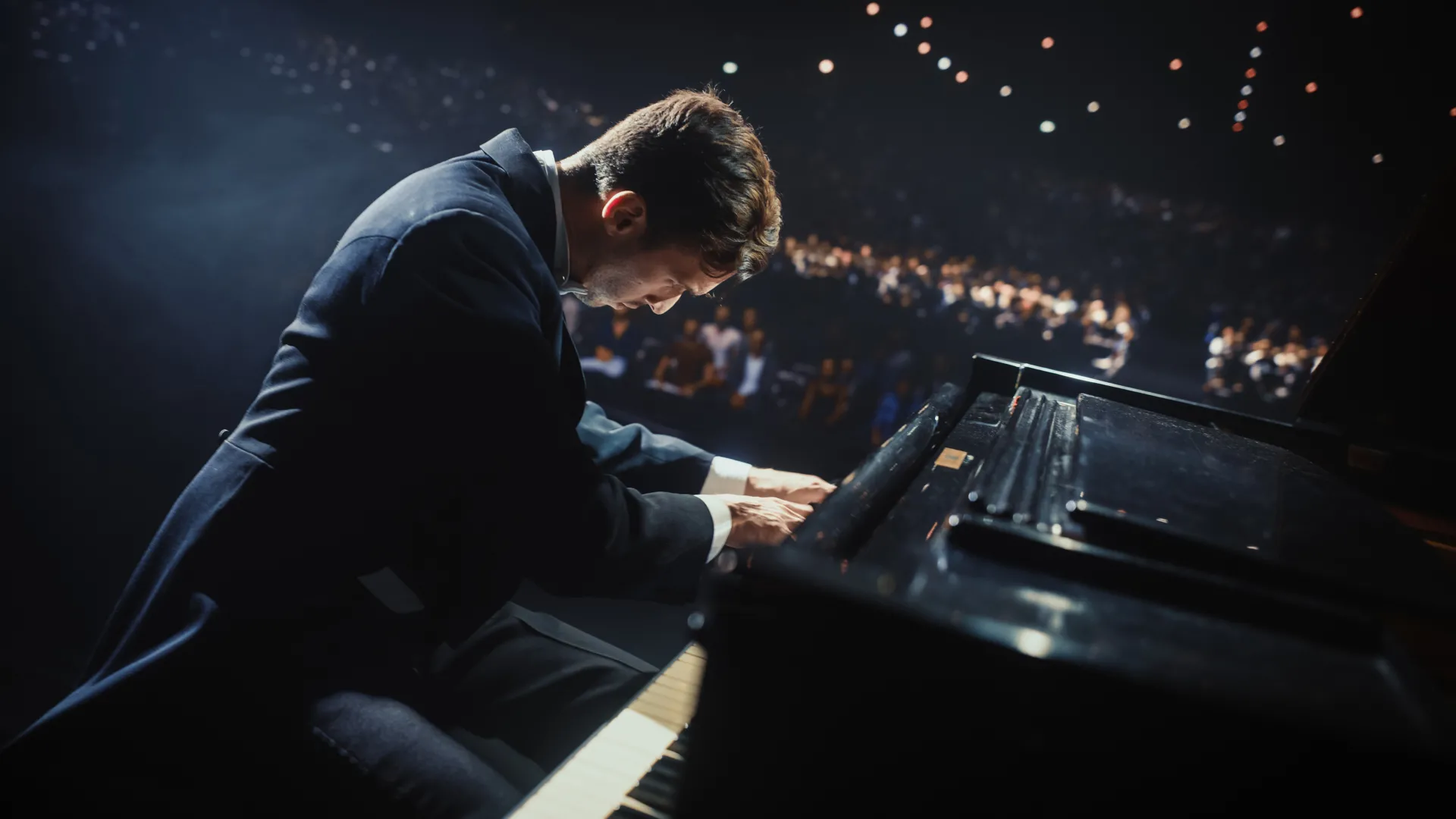
For generations, pianists and music teachers have argued that the performer’s touch can change the character of a piano’s sound. Skeptics argued that when a piano hammer strikes a string, the resulting tone is determined almost entirely by the instrument itself. Now, a large-scale scientific study has provided the clearest evidence yet that pianists can actually shape the tone of a piano with just touch.
Dr. Shinichi Furuya of the Neuro Piano Research Institute and researchers from Sony Computer Science Laboratories Inc. used ultra-high-speed sensing technology to uncover the hidden movements behind expressive piano playing. Their findings were; Proceedings of the National Academy of Sciences (PNAS), suggesting that subtle movements of a pianist’s fingers and hands influence how listeners perceive qualities such as brightness, weight, and clarity of notes.
100 years of debate about piano sound
The question of whether pianists can really change the timbre by touch has been debated since the early 20th century. Musicians often describe tones as warm, dark, bright, or heavy, but many scientists believed that these differences were primarily psychological or caused by changes in volume or timing rather than touch itself.
A new study questions that assumption.
Using a custom-built non-contact sensing system called HackKey, the research team recorded the movement of all 88 piano keys at a rate of 1,000 frames per second with fine spatial precision. We asked 20 internationally acclaimed pianists to play notes while intentionally creating contrasting tones, such as bright and dark, light and heavy notes.
Results showed that listeners consistently perceived the intended timbre. This also applies to people without musical training. Professional pianists who took part in listening tests were particularly sensitive to the differences.
Movement hidden behind musical expression
The researchers found that only a small number of highly precise movement features were strongly related to perceived timbre changes. These include slight variations in acceleration, timing, and synchronization between hands.
One particularly important finding is that changing the characteristics of a single movement can reliably change the way listeners describe a sound. This provided direct evidence that touch itself plays a causal role in shaping timbre, rather than simply accompanying other musical effects such as volume or tempo.
The study explained that these subtle gestures are part of common motor skills developed through years of advanced piano training. According to the researchers, this means that the artistry behind piano tones is not just metaphorical or subjective. It is based on measurable physical acts.
As Dr. Furuya explained, this work helps bring long-standing artistic intuition into the realm of science. The findings confirm what many pianists have believed for decades, while also providing a clearer understanding of how skilled movement creates emotional and aesthetic experiences in music.
Why the survey results matter beyond music
Its influence extends far beyond the concert hall.
The research team believes that these findings could ultimately revolutionize music education by making expressive techniques easier to teach and visualize. Future training systems may be able to show students the precise body movements associated with a particular tone, rather than relying solely on vague instructions like “play warmly” or “use a light touch.”
This discovery could also have implications for rehabilitation science, neuroscience, robotics, and human interaction with computers. The study highlights how advanced motor control can shape perception itself and provides clues about how the brain integrates movement and sensory experience.
Researchers in related fields are already exploring technologies inspired by expressive musical performance. Recent research in artificial intelligence and music technology has focused on building systems that can model timbre, generate realistic piano movements, and reproduce subtle expressive nuances in performance.
Some scientists believe this could eventually lead to more expressive digital musical instruments, smarter training tools, and even rehabilitation systems that use musical movement to improve dexterity and coordination.
science of creativity
This research also contributes to expanding scientific efforts to understand creativity itself.
For decades, research on perception in music has focused primarily on measurable elements such as pitch, loudness, and rhythm. Timbre has been much more difficult to study because it requires a higher level of sensory interpretation and emotional response.
By identifying specific physical movements associated with timbre perception, the researchers opened the door to studying how artistic expression emerges from the interaction between the body, brain, and sound.
This research is part of a broader movement also known as “dynaformics,” the science of music performance. Proponents believe it could ultimately help musicians train more efficiently, avoid injury and overcome the physical limitations that come with years of intense practice.
The excitement associated with this discovery goes beyond simply solving an ancient musical mystery. It reveals that some of music’s emotional power can come from movements so small that they’re almost invisible, but precise enough for human listeners to feel the difference.
