


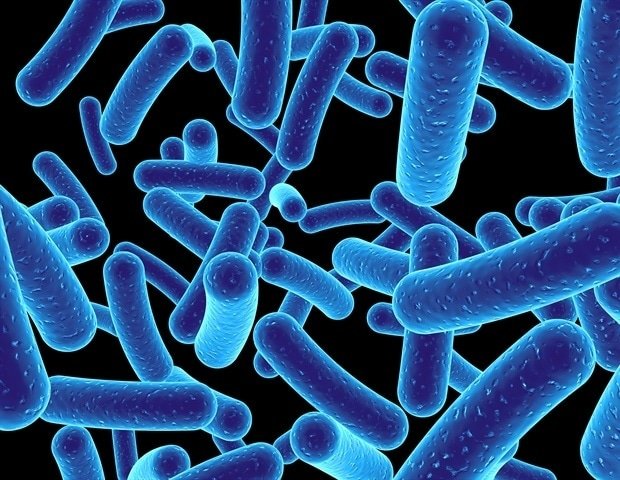
Researchers have discovered how acids on the surface of bacteria give these microorganisms their characteristic “stick” shape by repelling enzymes that turn cylindrical cells into shape-shifting clumps.
The survey results are natural microbiologyprovides new understanding of how bacteria control their growth and provides insight into the nature of early life on Earth. The study also points to a strategy to overcome antibiotic resistance by targeting wall teichoic acids, mysterious molecules that coat the surface of certain bacteria.
Bacteria exist in many different shapes, but the most common are rod-shaped bacteria. The shape of bacteria is medically important because the cell wall (the hard exoskeleton of bacteria) determines the shape of the cell and is the target of front-line antibiotics.
“The shape of bacteria determines how they grow, how they divide, and how they interact with their environment,” said Felix Barber, who led the study as a postdoctoral fellow in New York University’s Department of Biology and is now an assistant professor at Ohio State University. “It’s important to understand the factors that create the shape of bacteria, because those factors are also the ones we want to suppress with antibiotics.”
Bacillus subtilis (Bacillus subtilis) is a bacillus that occurs naturally in the soil and intestines. Probiotics, or “good bacteria,” are considered Bacillus subtilis It is used to make a variety of foods and useful products, including the Japanese delicacy natto, antibiotics, hyaluronic acid used in skin care, and agricultural products to promote plant growth and fight crop diseases.
cell wall of Bacillus subtilis Other Gram-positive bacteria are composed of two components. Peptidoglycan is a layer of sugars and amino acids synthesized primarily by clusters of proteins called rod complexes, and long polymer molecules called wall teichoic acids. Research shows that when teichoic acids are removed, Bacillus subtilis As the cells grow, they lose their rod-like shape and become irregularly shaped clumps. However, rather than dying, they grow slowly and steadily in this alternative state.
It has been known for decades that removing teichoic acid from bacilli causes the cells to clump, but we didn’t know why. Our study resolved the long-standing question of how teichoic acids promote rod shape in these bacteria. ”
Enrique Rojas, associate professor of biology at New York University and senior author of the study
To study the role of teichoic acids in bacterial cell walls, the researchers used a microscope equipped with a special laser that can track individual molecules. They also used a microscopic piping system called microfluidics to capture bacterial cells and remove their teichoic acids, while monitoring the movement of proteins that build cell walls.
“We have developed a method to perform chemistry on the surface of living cells and simultaneously observe intracellular biology, which we call ‘in situ biochemistry,'” Rojas said.
The researchers found that removing Bacillus subtilis’ cell wall teichoic acids rapidly shuts down the bacillus complex, simultaneously releasing the activity of an enzyme called PBP1. PBP1 normally plays a minor role in cell wall synthesis by repairing mistakes made by the bacillus complex. This explains why the cells formed into small clumps. This is because the rod complex strengthens the cell wall along its periphery, essentially surrounding the cell in a rod shape, whereas PBP1 synthesizes peptidoglycan in random directions, resulting in the blob shape.
The next big question was how teichoic acids regulate proteins. Because PBP1 was thought to repair holes in the cell wall, the scientists wondered whether it might take over the rod complex when teichoic acid depletion exposes the hole in the cell wall. To test this, they collaborated with Zarina Akbari, a PhD student in Rojas’ lab and co-author of the study, to develop a new method to measure cell wall porosity at nanoscale resolution. The researchers found that nanometer-sized holes appear within minutes when teichoic acid is depleted.
“Our research addresses the fundamental function of teichoic acids. Teichoic acids pave the cell surface of cells, preventing rod complexes from falling into holes in the cell wall and preventing PBP1 from overreacting to small defects left by rod complexes,” Professor Rojas said.
Amorphous growth was not only promoted by PBP1 but also required the enzyme. In bacteria lacking it, when teichoic acid is depleted, the cell wall becomes thinner, the number of cell wall pores increases dramatically, and cell growth ceases completely, although the rod-shaped shape of the bacteria remains intact. In addition to PBP1, the researchers found that teichoic acid-free cell growth also requires a second enzyme, LytE, which chops the cell wall and is required for rod-shaped growth.
“Our findings revealed that wall teichoic acid-free growth is promoted by the combination of PBP1 and LytE. This means that teichoic acid regulates both cell wall synthesis and degradation.” Bacillus subtilis. “The cells have a completely different growth mode that is promoted by accessory enzymes, such as a backup plan when treated with drugs that inhibit teichoic acid synthesis,” Barber said.
The study provides clues about how Earth’s first bacteria, which probably did not have a distinct shape, thrived.
“for Bacillus subtilisamorphous growth requires much less protein than rod-like growth. Therefore, cells lacking teichoic acids may serve as a model for simpler progenitor cells. “The same fundamental principles underlying the growth of teichoic acid-free cells may have been involved in the growth of early blocky life forms on Earth,” Barber said.
This discovery may also have implications for many other bacteria. Bacillus subtilis. for example, listeria monocytogenesanother rod-shaped Gram-positive bacterium and a common culprit in food poisoning, also loses its shape when teichoic acids are depleted. Studies have also shown that it inhibits teichoic acid synthesis in methicillin-resistant patients. Staphylococcus aureus (MRSA) – the most notorious antibiotic-resistant bacteria – using FDA-approved antiplatelet drugs can resensitize you to antibiotics.
This research was coauthored by Zhe Yuan, Jacob Biboy, and Waldemar Vollmer and was supported by the National Science Foundation (2047404) and the National Institutes of Health (R35GM143057).
sauce:
Reference magazines:
Barber, F. and others. (2026) Wall teichoic acids regulate peptidoglycan synthesis to maintain rod-like shape. Bacillus subtilis. Natural microbiology. DOI: 10.1038/s41564-026-02368-6. https://www.nature.com/articles/s41564-026-02368-6
