


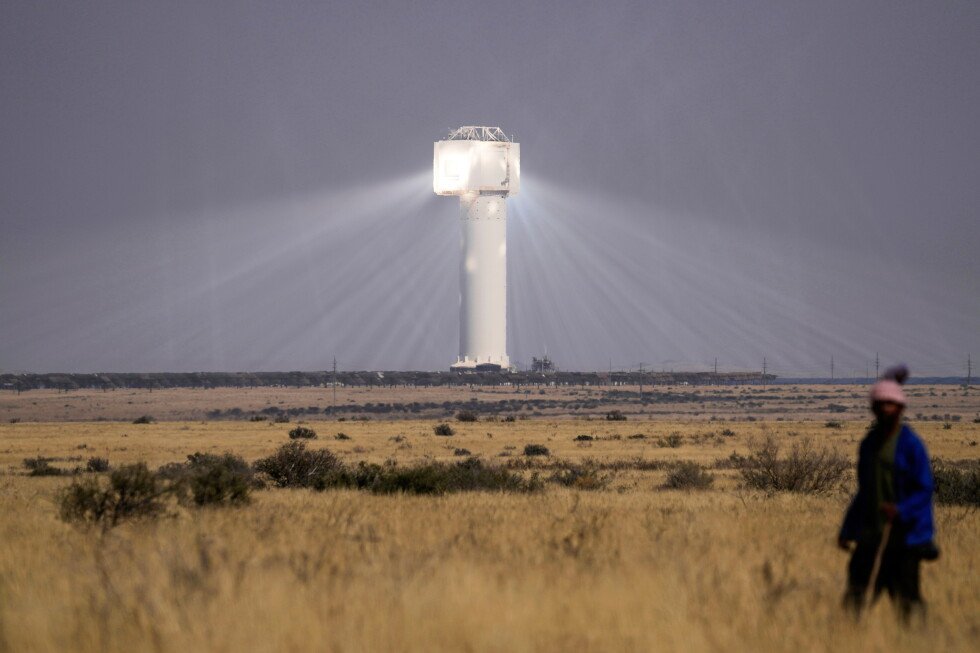
NAIROBI, Kenya (AP) – Africa’s next-generation power projects are increasingly being built around solar power, wind power and battery storage as governments and investors move away from coal and large hydroelectric dams for cheaper, faster and more reliable electricity.
This shift is evident in the $1.5 billion energy deal between China and Zambia announced in early May, which includes three separate 300 megawatt projects spanning solar, wind and coal-fired power.
While the introduction of coal underscores the continent’s continued need for reliable baseload electricity, African countries facing rising fuel import prices, declining grid reliability and increased industrial demand as a result of the Iran war are increasingly turning to renewable energy projects that can be deployed faster and cheaper than traditional power plants.
Solar and wind power generation increases
According to energy research firm Electron Intelligence, of the 322 energy projects announced across Africa in 2025, 173 were solar projects, followed by 46 hydropower projects, 34 wind power projects, 22 gas projects and 14 hybrid energy projects.
“Africa is not on the periphery of the global energy transition, but at its center,” said Magwe Manga, head of climate finance at FSD Kenya. “This continent has some of the best renewable resources in the world, and the economic landscape is now decisively shifting in favor of clean energy.”
Olamide Nii Afue, CEO of the African Mini-Grid Developers Association (AMDA), says the continent is undergoing a broader strategic shift in the way energy infrastructure is developed, with an emphasis on systems that can be deployed more quickly and scaled in stages with flexible financing.
Mr Niahue pointed out that solar power is playing an increasing role within mini-grid systems.
According to the International Renewable Energy Agency, Africa will see a record increase in renewable energy capacity of 11.3 gigawatts in 2025, three times more than the previous year. South Africa, Egypt and Ethiopia accounted for most of the increase.
Cost reduction is a major factor
Increasingly affordable technology can help. Since 2010, the cost of utility-scale solar power has fallen by nearly 90% globally, and the cost of onshore wind power has fallen by about 70%, making renewable energy the cheapest source of new power generation in many African markets.
“Renewable energy is now clearly the fastest, cheapest and most bankable way to connect people, businesses and economies with the megawatts they need for growth,” said Matt Tillard, CEO of Crossboundary Energy, which invests in renewable energy in Africa.
Much of the growth will come from distributed solar power and battery storage systems installed directly in mines, factories, communication towers, and homes.
“Most official statistics still measure the energy transition in the old-fashioned way, by counting the number of megawatts connected to a country’s electricity grid,” he said. “But solar power and batteries don’t require a central utility.”
Data from the African Solar Industry Association tracks 23.4 gigawatts of solar power projects to be operational across Africa by the end of 2025. However, Chinese export statistics show that 58.1 gigawatts of solar panels have been shipped to African countries since 2017, suggesting that solar power penetration may be growing at a much faster pace than official statistics.
Renewable energy brings faster returns
Investors are increasingly favoring renewable energy projects because they can generate profits more quickly and are less exposed to global fuel price shocks.
“Solar and wind power projects are particularly attractive at the moment as they combine strong commercial fundamentals with relatively low investment risk,” Nii Afue said.
At the Kamoa-Kakula copper complex in the Democratic Republic of the Congo, Crossboundary Energy is developing a 233 MW solar and battery project to power one of Africa’s largest copper mines. Tirado said the project was more than 80% complete within a year of signing. Coal-fired power plants can take up to 12 years to complete, while large hydropower projects often take more than 10 years.
“Investors put in capital and see the assets generate income within 18 months,” Tirado said.
Policy changes help, but challenges remain
The continent’s push for renewable energy is also being fueled by policy changes. Ethiopia was the first country to ban imports of internal combustion engine vehicles, spurring the spread of electric vehicles. In South Africa, restrictions on in-house power generation have been eased, opening the door to a surge in industrial renewable energy projects.
Still, major obstacles remain. Many of Africa’s power companies are in financial trouble. As a result, lenders are wary of long-term power purchase agreements. Perceived country risks make renewable projects in Africa cost three times more to finance than in developed countries, according to the International Energy Agency.
Development finance institutions such as the African Development Bank and the International Finance Corporation are helping to fill the gap with concessional lending, guarantees and risk-sharing structures.
“What remains is not a question of technology or cost,” Manga says. “This is a matter of finance, political will and the preparation of profitable projects that will drive the continent’s electricity needs.”
___
Associated Press climate and environment reporting receives funding from several private foundations. AP is solely responsible for all content. Find AP standard Please see below for our philanthropic efforts, list of supporters and areas funded. AP.org.
