


Researchers have created a new global map showing where unusual volcanic rocks associated with rare earth elements are found, revealing a surprising connection to the oldest and thickest parts of Earth’s continents.
An international team led by scientists from the University of Cambridge’s School of Earth Sciences has found that these rare earth-rich igneous rocks are strongly linked to fluctuations in the lithosphere, the planet’s hard outer shell. Their findings suggest that the thick lithosphere plays a major role in forming the types of rocks that can concentrate valuable metals over time.
This study natural earth sciencecould help scientists identify new rare earth deposits around the world.
“Our study begins to provide some kind of predictive power about where these rocks, and therefore their associated rare earth element deposits, can be expected to form,” said Dr. Emily Bowman, lead author of the study from Cambridge Earth Sciences.
Rare earth elements are important components in many modern technologies, including smartphones, electric cars, and wind turbines. As demand for clean energy technology increases, countries are increasingly seeking secure domestic supplies, rather than relying heavily on imports from China.
The crust of ancient continents holds the key
Scientists have long tried to understand why rare earth deposits appear in some areas and not in others.
“There is great scientific interest in why rare earth deposits form where they exist,” said Professor Sally Gibson, senior author of the research paper at Cambridge Earth Sciences, who is currently leading a £1 million research project focused on the topic.
Most previous studies investigated individual deposits or specific regions. This study instead looked at the problem on a global scale, examining processes occurring deep beneath the Earth’s surface.
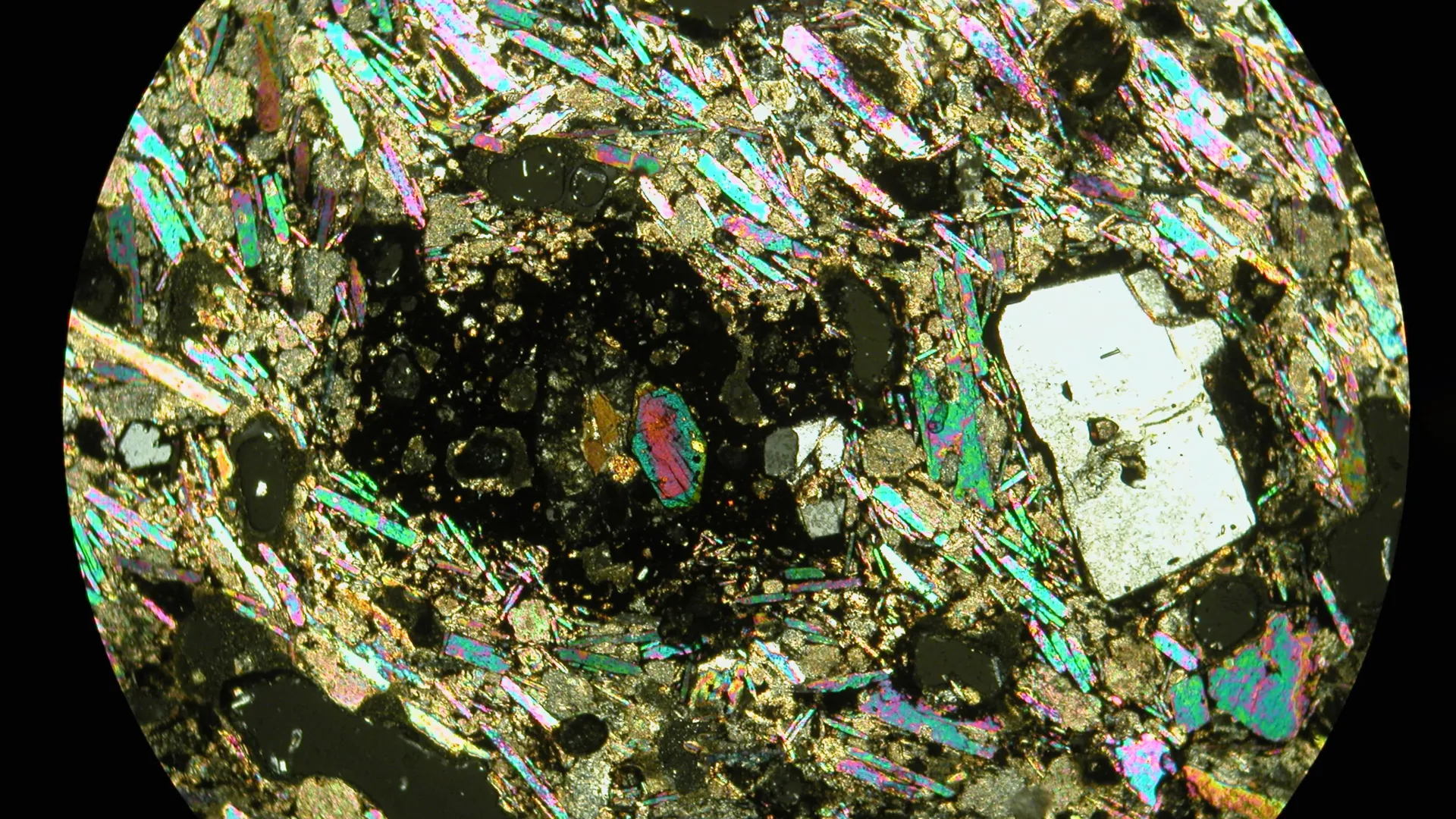
To conduct the study, Bowman compiled chemical information from about 9,000 igneous rock samples collected around the world. All rocks were rich in dissolved CO2, an important component that increases the concentration of rare earth elements.
“Until relatively recently, some of this igneous rock was just a rarity,” Gibson said. “Geologists collected them avidly, while undergraduates were puzzled by them in their lab classes. But in recent years, they have become very important.”
Many of these rocks are extremely rare and were first identified in the 19th and early 20th centuries. Their names often come from where they were discovered or the strange minerals they contain.
“The terminology is so diverse that you could almost create a new language out of the names of these rocks,” Gibson said. “This and the scientific complexity of it adds to the confusion and tends to turn people away from them.”
Seismic waves reveal hidden clues about rare earths
The researchers combined a rock database with detailed seismic images of the Earth’s interior. Using seismic waves, the research team was able to map the thickness and structure of the lithosphere beneath different continents.
Professor Sergei Lebedev, a geophysicist involved in the study, said: “In the same way that sonar can detect features on the ocean floor, seismic waves from earthquakes can be used to create slice images of the lithosphere.” “This mapping shows that the thickness of the lithosphere plays a guiding role in where these deposits are found.”
Scientists have discovered that rocks with chemistry suitable for enriching rare earths are found primarily along the steep edges of Earth’s thickest and oldest lithospheres.
“To establish the link, we had to put together two pieces of the puzzle: rock chemistry and seismic data,” Gibson said. “Rocks with chemistry suitable for enrichment occur only in very specific locations, primarily along the steep edges of the thickest and oldest lithospheres on Earth.”
How rare earth deposits form slowly deep underground
Researchers say the thick lithosphere keeps mantle rocks at high pressure and relatively low temperatures, limiting the amount they can melt. Under these conditions, only a small amount of magma forms deep underground.
These pockets of magma are often trapped beneath the lithosphere, where they slowly cool and solidify into CO2-rich igneous rocks. Subsequent geological events can cause these rocks to partially melt again, further enriching the rare earth elements over time until ultimately economically valuable deposits are formed.
The research team now plans to expand its search to include rocks that are more than 200 million years old, including many of the world’s major rare earth mines and deposits.
“In this study, we initially focused on deposits that formed after the main stages of breakup of Earth’s large continents,” Gibson said. She explained that geological activities such as mountain building and continental rifting have disturbed many older rocks, making them more difficult to analyze. “Now that we can confirm that this systematic behavior exists, we can go further back in time. It will be more difficult, but we hope this is an important step in predicting the occurrence of minerals.”
