


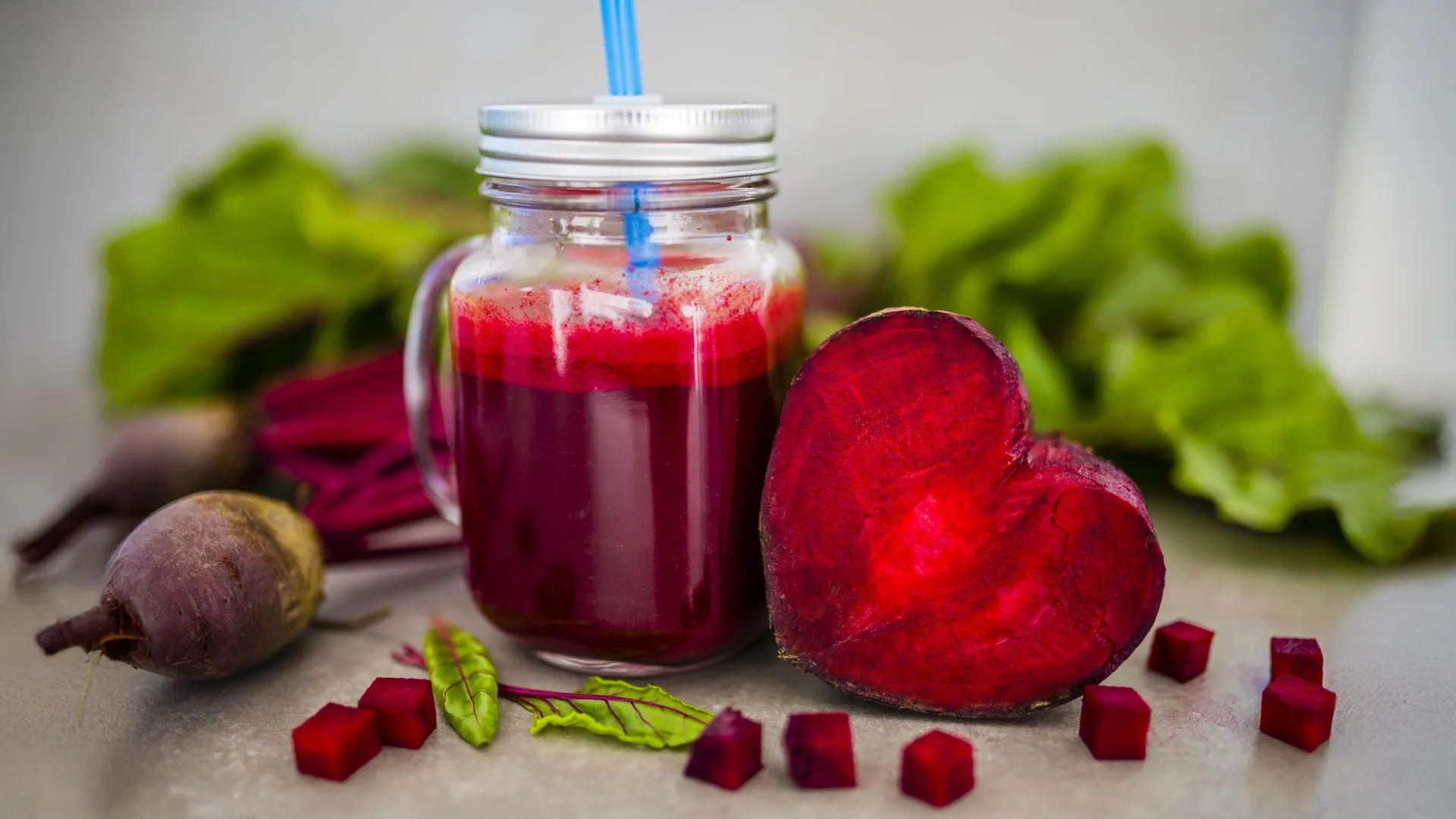
A simple beet juice routine may help explain one of the most surprising connections in healthy aging: the link between oral bacteria and blood pressure.
A University of Exeter study found that older people who drank nitrate-rich beetroot juice twice a day for two weeks had lower blood pressure. Although beetroot juice also changed the oral microbiome, the same effect was not seen in young adults.
This research Free radical biology and medicineis the largest study of its kind to investigate how dietary nitrate affects oral bacteria, nitric oxide biology, and vascular responses in young and older adults.
Why is the mouth important?
Nitrates are naturally found in many vegetables and play important roles in the body. Beetroot is particularly rich in nitrates, but it’s not your only option. Spinach, arugula, fennel, celery, and kale are also great sources of nutrients.
A critical step occurs before nitrates reach the bloodstream. Certain bacteria in the mouth help convert nitrates from food into compounds that ultimately support the production of nitric oxide. Nitric oxide helps blood vessels relax and function properly. This is important for healthy blood pressure regulation.
When the balance of oral bacteria shifts in the wrong direction, the nitrate-to-nitric oxide pathway can become less efficient. The Exeter team found evidence that beetroot juice altered the oral microbiome of older adults in ways that appeared to support this pathway.
2 week beetroot juice test
The trial involved 39 adults under 30 and 36 adults in their 60s and 70s, recruited through the NIHR Exeter Clinical Research Facility. This was supported by the Exeter Clinical Trials Unit and funded through a BBSRC Industrial Partnership Award.
Participants completed two separate 2-week phases. At one stage they regularly consumed beetroot juice, which is rich in nitrates. In another experiment, participants drank a placebo version of the juice with the nitrates removed. The researchers separated the phases with a two-week “washout” period to allow conditions to reset before testing the next drink.
The team then used bacterial genetic sequencing to study which microbes were present in the mouth before and after each condition.
Older people responded differently
Both age groups showed significant changes in their oral microbiome after drinking nitrate-rich beetroot juice. However, the changes were not the same for younger and older participants.
Among older adults, beetroot juice was associated with a significant reduction in Prevotella, a group of oral bacteria that researchers said was potentially harmful in this context. At the same time, bacteria associated with health benefits, such as the genus Neisseria, also became more abundant.
The older group also started the study with a higher average blood pressure than the younger group. After the nitrate-rich beet juice phase, their blood pressure decreased. This reduction was not seen after taking a placebo and was not observed in young adults.
Relationship between nitric oxide
This result shows why beet juice may be especially helpful later in life. Older people tend to produce less nitric oxide as they age, and reduced nitric oxide availability can affect vascular function.
Study author Professor Anni Vanhataro from the University of Exeter said: “We know that a diet rich in nitrates has health benefits, and older people produce less nitric oxide as we age. They also tend to have higher blood pressure, which can lead to increased risk of heart attacks and strokes. “Encouraging older adults to eat more nitrate-rich vegetables may have significant long-term health benefits. The good news is, it’s okay if you don’t like beets.” There are many nitrate-rich alternatives, including spinach, arugula, fennel, celery, and kale. ”
The results of this study suggest that beetroot juice does not only work due to the nutrients it provides. It may also work by changing the tiny ecosystem in your mouth that helps release these nutrients.
Related research makes matters worse
Follow-up studies and related studies continue to strengthen the idea that oral bacteria are central to the effects that nitrates have on the body.
A randomized, double-blind, placebo-controlled crossover study in 2025 in 15 older adults on treatment for high blood pressure found that consuming nitrate-rich beetroot juice for 4 weeks selectively altered the oral microbiome, increasing Neisseria and decreasing Veillonella, while there were no significant changes in the gut microbiome. The same research program reported that nitrate intake affected nitrate metabolism but did not result in sustained improvements in blood pressure or vascular function in the treated hypertensive group, indicating that responses may depend on health status, medication, study design, and bacteria present at baseline.
A preliminary study in 2026 also highlighted the importance of the mouth in nitrate biology. The study found that the antiseptic mouthwash chlorhexidine interferes with nitrate processing and reduces nitric oxide synthesis in the stomach, while dietary nitrate supplementation partially preserves microbial function and nitric oxide-related signaling during antiseptic use.
Other studies have raised similar questions about antibacterial mouthwashes. A 2025 Scientific Reports study in rats found that nitrate and antioxidant mouthwashes supported the reduction of oral bacteria caused by nitrates and nitrites and were associated with lower blood pressure compared to chlorhexidine treatment. Because this study was conducted in animals, this finding cannot be directly applied to humans, but it adds to the broader evidence that oral bacteria can influence the nitrate pathway.
Potential nutritional strategies for healthy aging
Co-author Professor Andy Jones from the University of Exeter said: “This study shows that nitrate-rich foods can alter the oral microbiome, reduce inflammation and lower blood pressure in older people. This paves the way for larger studies investigating the influence of lifestyle factors and biological sex on how people respond to dietary nitrate supplementation.”
The results of this study do not mean that beet juice is a substitute for medications or other proven blood pressure management methods. However, they suggest that nitrate-rich vegetables may be a practical addition to a heart-healthy lifestyle, especially for older adults.
They also point to a more personalized future of nutrition. Two people can eat the same nitrate-rich food and have different reactions. This is because the oral microbiome may not process nitrates in the same way.
what happens next
Exeter researchers say larger studies are needed to understand why some people react more strongly than others. Future research may help clarify how differences in lifestyle, gender, age, oral hygiene habits, and baseline microbiome shape the effects of dietary nitrate.
Dr Lee Beniston FRSB, Associate Director of Industry Partnerships and Collaborative Research and Development at BBSRC, said:
“This study is a great example of how bioscience can help us better understand the complex relationships between diet, the microbiome, and healthy aging. We uncover how dietary nitrates affect oral bacteria and blood pressure in older adults. “By doing so, this research opens new opportunities to improve vascular health through nutrition. BBSRC is proud to support this innovative partnership between academic researchers and industry to advance knowledge with real-world benefits.”
Taken together, this evidence points to a surprising idea. That means one path to healthier blood vessels may start in your mouth, not your heart.
