


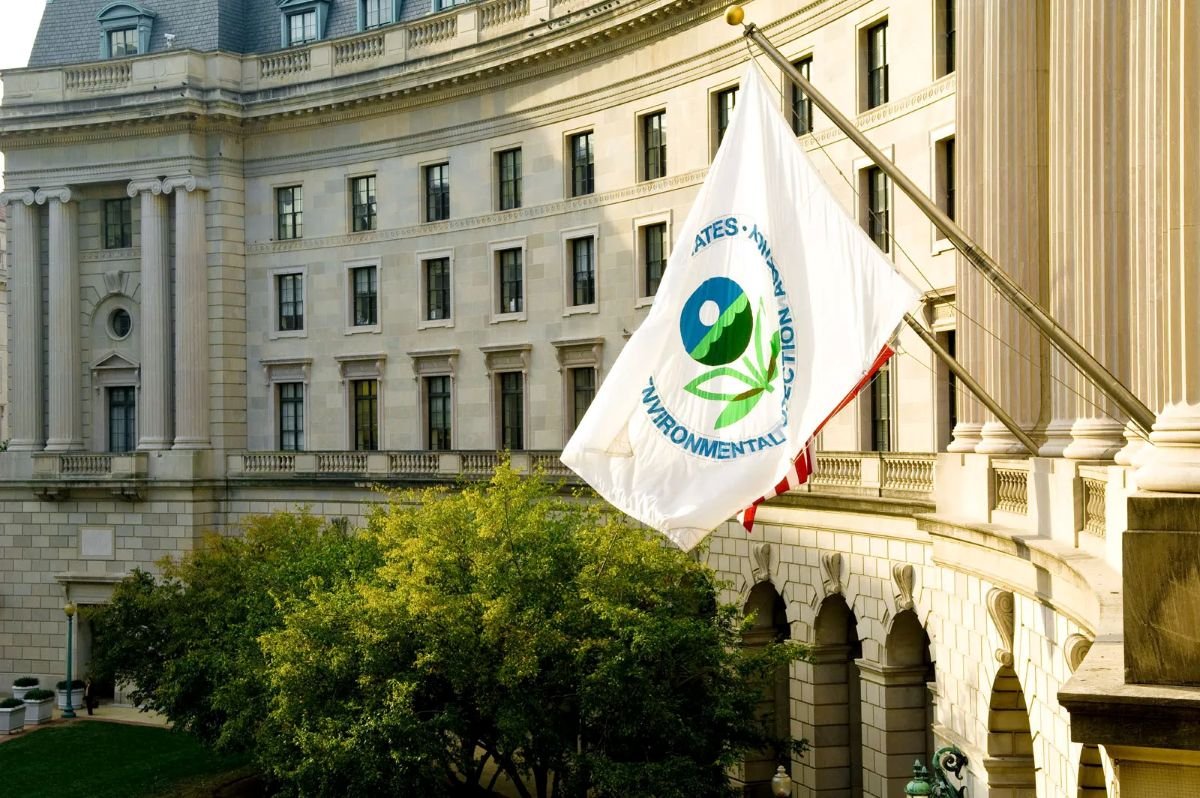
 Environmental Protection Agency headquarters in Washington, DC Credit: EPA via Flickr
The U.S. Environmental Protection Agency is moving ahead with plans to lower the nation’s first health standards for chemical contaminants in the drinking water sources of millions of North Carolinians.
The proposal, announced Monday, comes one year after EPA Administrator Lee Zeldin said the agency would repeal and reevaluate enforceable standards for four per- and polyfluoroalkyl substances (PFAS), including GenX-branded compounds. The agency also wants to push back by two years, from 2029 to 2031, the deadline by which water utilities must comply with mandatory standards for PFOA and PFOS, chemicals that are no longer manufactured.
Billed as a “comprehensive PFAS strategy,” the agency explains in a five-page release that drinking water systems will have the option to opt in for a two-year extension, giving them more time to sample source water for contaminants, test new controls, and train employees to administer those controls.
The agency says the proposed rule, which would rescind the current federal standards for HFPO-DA, commonly referred to as GenX, PFNA, PFHxS, and PFBS, is in accordance with the provisions of the law that establishes the regulation of drinking water standards. The Trump administration claims that the Biden administration did not follow proper legal requirements under the Safe Water and Drinking Act when it established drinking water standards for these four chemicals.
Under the proposal, EPA would provide nearly $1 billion in new funding to states to address PFAS in drinking water, and another $1 billion through a new contaminants program in small or disadvantaged communities.
“The Biden administration cut corners and failed to comply with the law,” Zeldin said in a statement. “We are correcting that mistake with a standard that water systems can implement in practice and that will stand up to scrutiny, while addressing PFOA and PFOS, two of the best-studied PFAS with well-documented health effects.”
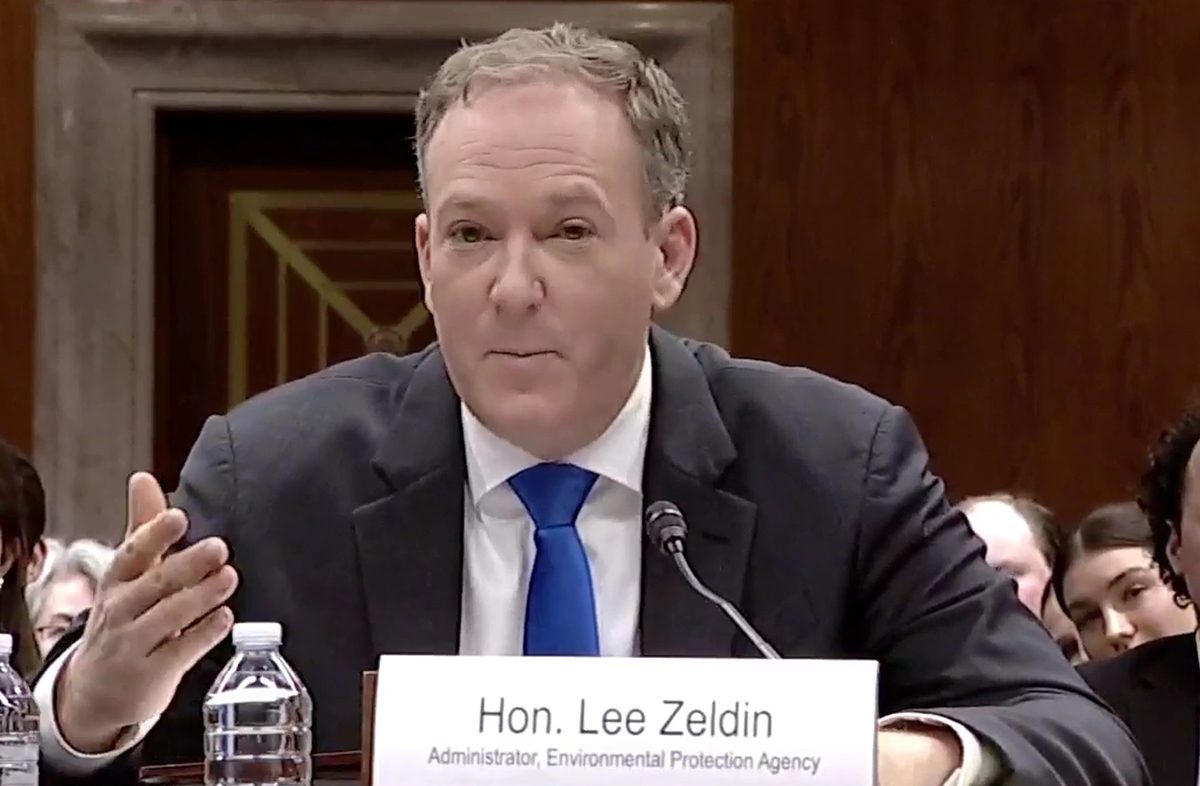 Environmental Protection Agency Administrator Lee Zeldin will testify before the Senate Appropriations Committee in May 2025.
U.S. Health and Human Services Secretary Robert F. Kennedy Jr. said in a release that PFAS contamination is “a serious public health challenge that requires rigorous science, clear standards, and practical solutions. We are advancing gold standard research across HHS to better understand PFAS exposure, toxicity, and long-term health effects on the American public.”
Critics of the proposed rule quickly fired back, calling the announcement a “PR stunt” meant to cast a shadow over the more than 100 million people nationwide whose drinking water sources are contaminated by PFAS.
“Zeldin and Kennedy are trying to sell potions from the back of a covered wagon,” Dr. Anna Reid, Natural Resources Defense Council director of PFAS advocacy, said in a release Monday. “The millions of Americans who demand safe drinking water will not be fooled by their nonsense. By repealing and delaying the PFAS standard, EPA is abandoning communities that desperately need drinking water protection, especially those who live near polluting industries.”
News of the proposed rule particularly shocked the Cape Fear region. Across the region, residents, environmental groups and public water providers are united in fighting for regulations that hold emitters accountable to keep PFAS out of drinking water sources.
It’s been nearly nine years since the Wilmington Star-News broke the news that DuPont spinoff Chemours had been discharging PFAS, including GenX, directly into the Cape Fear River from its Fayetteville plant facility for decades. GenX is unique to Chemours’ Bladen County plant, which is located more than 110 miles upstream from Wilmington.
More than 1,000 residents near the Cape Fear River watershed are currently participating in a study in which researchers will measure levels of GenX and other PFAS in people’s blood.
PFAS are a group of chemicals used to make many consumer products, such as food containers, waterproof gear, and cosmetics, for their ability to repel water, dirt, and grease.
These chemicals are ubiquitous because they do not break down naturally in the environment.
The EPA currently classifies approximately 15,000 PFAS, the overwhelming majority of which have not yet been studied for their potential effects on human health.
Known human health effects from PFAS include weakened immune systems, low birth weights in newborns, thyroid disease, and certain types of cancer.
“Our community was ground zero for the discovery of GenX in public water supplies, impacting more than 500,000 water customers in 10 counties in southeastern North Carolina,” Clean Cape Fear co-founder Emily Donovan said in a release Monday. “The United Nations Human Rights Council investigated our pollution crisis and publicly named chemical companies like DuPont and Chemours, along with state and federal regulators, for failing to protect us from business-related human rights abuses. We believe today’s announcement will perpetuate those abuses. It will not solve the growing PFAS pollution crisis. We will stop monitoring. Breaking the thermometer won’t cure the fever.”
RELATED: Public hearing set for proposed wastewater discharge rule
Earlier this month, the North Carolina Environmental Control Commission concluded a series of six public hearings held across the state on proposed monitoring and minimization rules for discharges of PFOS, PFOA, GenX, and 1,4-dioxane to the state’s surface waters. The EPA has classified 1,4-dioxane, which is primarily used as a solvent in industrial manufacturing, as a probable human carcinogen.
The overwhelming majority of those who spoke at these hearings argued that the proposed rule would do little to protect drinking water sources because the rule does not establish specific discharge limits or penalties for PFAS emitters found in violation of the rule.
The North Carolina Department of Environmental Quality is accepting written comments on the proposed rule until June 15. Most of the thousands of written comments already submitted to the DEQ are consistent with those submitted during public hearings, department officials said.
Public water utilities serving residents of the Cape Fear region have invested hundreds of millions of dollars to treat PFAS from raw water sources.
The PFAS drinking water standard, which was enacted in 2024 during the Biden administration, is currently being fought in a lawsuit brought by chemical companies and water utility associations. A decision on the case, which is being heard by the U.S. Court of Appeals for the DC Circuit, is not expected until next year.
“By waiving and delaying legally enforceable limits on dangerous industrial chemicals like GenX and other PFAS, government agencies are prioritizing the interests of polluters over people and sending a clear message that corporate profits are more important than human lives,” Kelly Moser, senior attorney and water program leader at the Southern Environmental Law Center, said in the release. “This reversal is a slap in the face to all the communities that have fought for clean drinking water. EPA’s decision is not based on science or law, but a political choice that puts families across America at risk.”
EPA will accept written comments on the proposed rule for 60 days after the proposed rule is published in the Federal Register. This rule is published at www.regulations.gov under Docket ID: EPA-HQ-OW-2025-1742 and Docket ID EPA-HQ-OW-2025-9654.
The agency also has scheduled a virtual hearing on July 7. Anyone wishing to speak must register online.
Questions regarding the public hearing should be directed to PFASNPDWR@epa.gov..
