


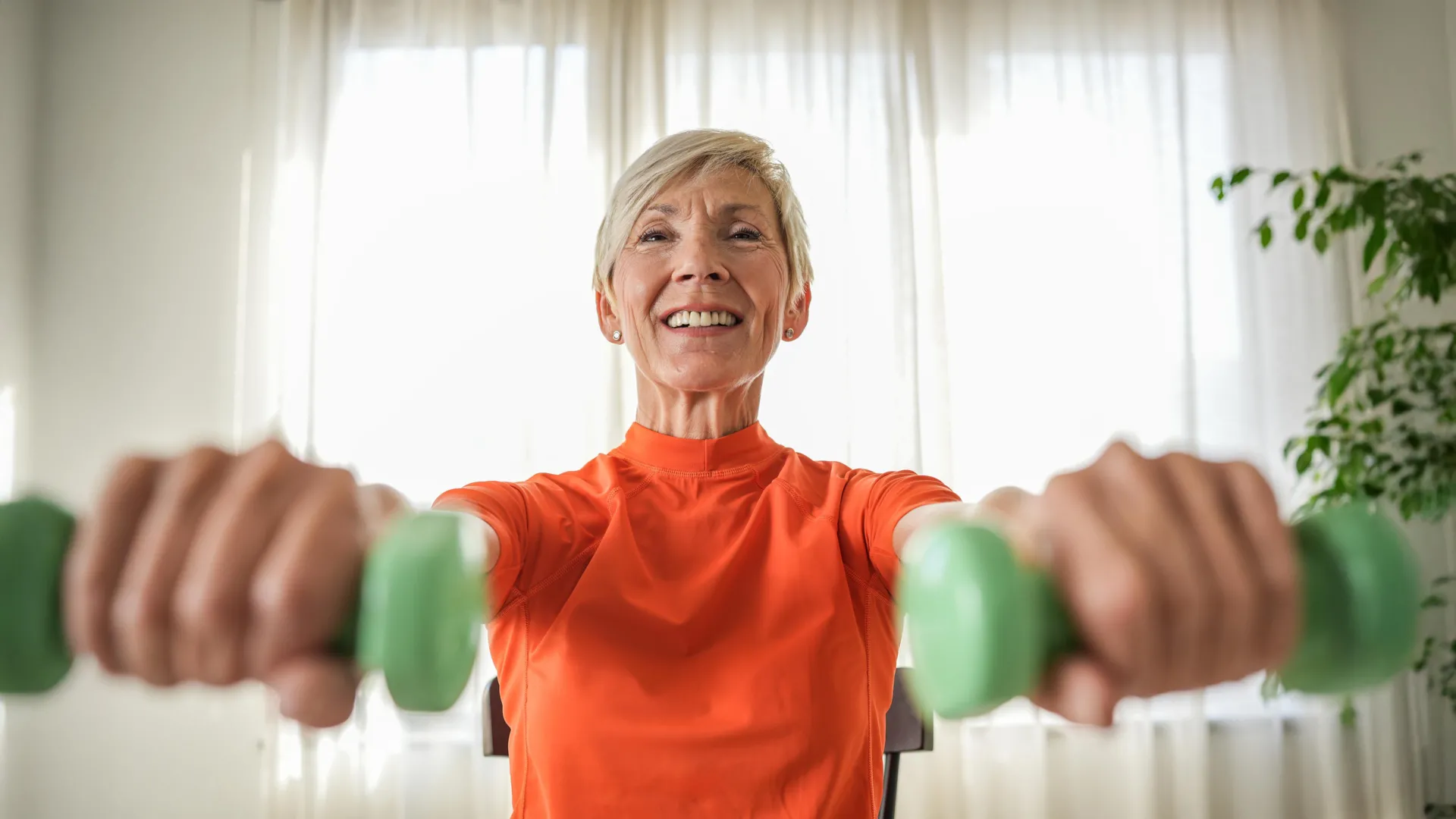
Getting enough exercise is important for healthy aging, but new research suggests muscle strength may play an equally important role. A large study led by researchers at the University at Buffalo found that older, physically fit women had a significantly lower risk of death, even when physical activity levels, cardiovascular health, and inflammation were taken into account.
The survey results are JAMA network openResearchers followed participants for eight years and found that women with stronger grip strength and faster chair-to-stand test times were more likely to live longer.
Muscle strength is associated with lower mortality rates
This study focused on two simple measures commonly used in medical settings to assess muscle strength in older adults: grip strength and chair stance. In the chair-stand test, participants completed five unassisted sit-to-stand movements as quickly as possible.
Women who performed better on these tests had significantly lower mortality rates during follow-up. The researchers found that for every 7kg increase in grip strength, the risk of death decreased by an average of 12%. Improving chairstand performance was also associated with improved survival, with every 6 second improvement from slowest to fastest time reducing mortality by 4%.
Importantly, these results remained significant even after the researchers adjusted for physical activity and sedentary behavior using accelerometer data, walking speed (an indicator of cardiovascular health), and levels of C-reactive protein, a blood marker of inflammation associated with muscle weakness and early death.
Why strength is important for healthy aging
“If you don’t have enough strength to stand up, you’ll have a hard time doing aerobic activities like walking, which is the most commonly reported recreational activity among adults 65 and older in the United States,” says study lead author Michael LaMonte, Ph.D., professor of epidemiology and environmental health studies in the UB School of Public Health.
“Strength allows you to move from one point to another in many ways, especially when moving your body against gravity,” Lamonte added. “Adequate physical activity, both aerobic and strengthening, is probably best for healthy aging. When we can’t get up from a chair and move around, we’re in trouble.”
Lamonte said this is the largest study to date examining how muscle strength is associated with longevity in women over 60. Previous large-scale studies often lacked detailed measures of physical activity, cardiovascular fitness, and inflammation, making it difficult to isolate the role of muscle strength alone.
The researchers also found that body size did not explain the relationship between physical fitness and longevity.
“We also showed that differences in body size cannot explain the relationship between muscle strength and death,” he says. “When we converted measures of muscle strength to body weight and even lean body mass, mortality rates remained significantly lower.”
Benefits of improving muscle strength beyond exercise guidelines
One of the study’s most notable findings was that even women who didn’t meet current physical activity recommendations benefited from greater muscle strength. Current guidelines recommend at least 150 minutes of moderate-intensity aerobic exercise each week.
Even for women below that threshold, higher muscle strength levels were associated with a significantly lower risk of death. Lamonte says this provides strong evidence that muscle-strengthening activities should receive more emphasis in public health recommendations, especially for older adults.
“Because women over 80 are the fastest growing age group in the United States, the importance of monitoring and maintaining muscle strength will have a major impact on public health in the coming decades,” she says.
Easy ways for older people to increase their physical strength
Muscle-building activities don’t necessarily require expensive gym equipment or intense training. Researchers point out that bodyweight exercises such as free weights, dumbbells, weight machines, modified push-ups, wall presses, and knee bends can all help improve strength.
Lamonte says everyday household items can also act as a means of resistance.
“Even using a soup can or a book as a form of resistance stimulates skeletal muscles and may be useful for people for whom other options are not viable.”
He advises older adults to consult their health care provider before starting a strength-strengthening program. Those new to strength training may also seek guidance from a physical therapist or exercise specialist to ensure safety and proper progression.
The study also included researchers from the National Cancer Institute, the University of California, San Diego, Texas A&M University, Brown University, Stanford University, and Fred Hutch Cancer Center.
