


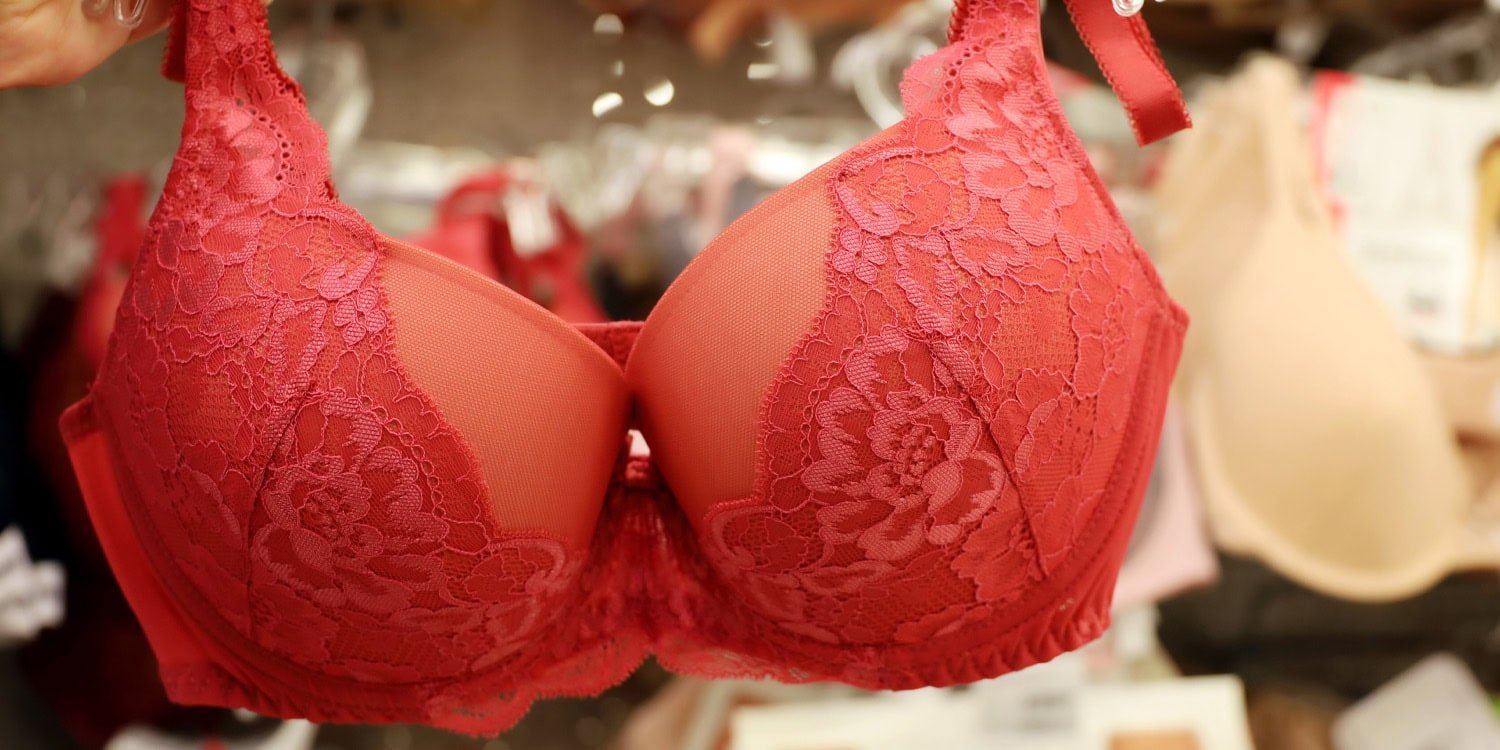
Recent research published in frontiers of psychology We suggest that women’s decision to wear a bra involves a strategic trade-off between displaying physical attractiveness and avoiding negative social evaluation. Scientists have found that while not wearing a bra tends to be seen as highly attractive by both men and women, it also provides evidence that it is perceived as a sign of sexual potential. This perception of availability seems to increase fear of harassment among women and shape their daily clothing choices.
Scientists conducted this study to understand the evolutionary and social factors that drive everyday clothing choices. From an evolutionary perspective, clothing acts as a tool for self-promotion, helping to increase physical attractiveness to potential romantic partners. At the same time, clothing serves to hide intimate parts of the body, which can indicate sexual bondage or fidelity in a relationship.
The authors explain that human males naturally prefer female breasts of average or above-average size and high firmness. One evolutionary theory suggests that prominent breasts became visually important after early humans began walking upright on two legs. Another theory proposes that breast firmness serves as an honest indicator of a woman’s health and metabolic resources.
The authors wanted to know how the specific choice to wear or not wear a bra fits into this evolutionary balance. Going without a bra makes your breasts and nipples more visible to observers, which can increase your sexual appeal. On the other hand, wearing a bra visually improves the firmness of your breasts. This generates strong biological signals about youth and fertility, which can elicit strong responses from potential partners.
To examine these dynamics, researchers recruited 686 heterosexual adults from Slovakia. The sample included 409 women and 277 men, with an average age of approximately 35 years. The scientists used social networking sites to distribute the survey and asked participants to invite people they knew.
The authors asked female participants detailed questions about their bra-wearing habits in public and private spaces. The researchers also measured various psychological and physical characteristics of the female participants. These include self-esteem, breast size, breast shape, media exposure, fear of sexual harassment, etc.
They also measured participants’ sociosexual orientation. This psychological concept refers to a person’s willingness to engage in casual sex without having a committed emotional relationship. Additionally, the researchers asked participants about their pornography consumption, as this media can influence sexual expectations.
In a separate task, a subgroup of 277 men and 158 women viewed 10 pairs of photos showing women’s torsos. Each pair featured the same woman in a white shirt, once with a bra and once without. Participants had to choose which image of each pair looked more sexually appealing. They also had to choose which images suggested higher relationship fidelity.
The results revealed that women rarely go braless in public. Approximately 78.5% of female participants answered that they wear a bra almost every time they go out. In private settings, behavior is more evenly divided, and women feel much more comfortable not wearing a bra at home.
Women who reported having smaller and firmer breasts were more likely to go braless in public. The authors noted that firmer breasts tend to serve as an evolutionary signal of youth and fertility. This suggests that these women may feel less of a need for the artificial enhancements that bras provide. Women with silicone breast implants were more likely not to wear a bra. This is probably because the implant increases both size and stiffness.
Interestingly, a woman’s openness to casual sex did not predict her bra-wearing habits. Rather, fear of sexual harassment played a large role in these decisions. Women who expressed higher fear of being harassed were significantly more likely to wear a bra in public. This suggests that women intuitively use clothing to protect themselves from unwanted attention.
When rating photos, both men and women consistently rated images without a bra as more sexually attractive. However, both men and women rate women who don’t wear bras as less likely to be loyal to their partners. Men with a strong personal preference for large breasts were particularly attracted to braless photos.
Researchers also found that men who reported intentions to sexually harass women were significantly more sensitive to braless photos. These men tended to view the absence of a bra primarily as a signal of infidelity or sexual exploitation. The authors suggest that this is consistent with evolutionary ideas about male sexual jealousy, with some men interpreting provocative clothing as a sign of a woman’s desire to cheat.
This new data is consistent with previous research on how society views women’s bodies and clothing choices. For example, research published in journals sexuality and culture We investigated women’s attitudes towards toplessness in public places. Researchers asked 326 people living in the United States to rate images of topless women taken in various public places such as beaches and parks.
The authors found that personal characteristics of the person, rather than the location of the photo, influenced reactions. Interestingly, women actually rated photos of topless women more negatively than men. The authors suggested that a sexually objectified environment fosters competition between women. This concept, known as intrasexual competition, encourages individuals to socially police rivals.
Similarly, European Journal of Social Psychology This provides evidence that people judge women’s bodies through a strict moral lens. In their study of 470 participants, scientists found that acts such as going topless and getting tattoos were considered moral issues for women, but not for men. When asked to explain their opposition to female toplessness, participants spontaneously engaged in arguments about harm and purity.
This double standard highlights the heavy burden society places on women’s bodily autonomy. The researchers found that people with sexist beliefs were particularly likely to use concepts such as chastity to oppose female toplessness. This type of bias, known as benevolent sexism, idealizes women as pure beings who need protection. This idea helps explain why society imposes more control and judgment on women’s bodies compared to men’s bodies.
Other studies have focused specifically on biological signals associated with not wearing a bra, such as the visibility of the nipples. Research published in journals evolutionary behavioral science A study involving 234 participants investigated how people react to photos of women with clearly erect nipples. This finding suggests that this unconscious physical response causes immediate sexualization and objectification by the observer.
Scientists have found that women with visibly erect nipples are perceived as less intelligent, less moral, and more licentious than women without visibly erect nipples. Female participants in this study rated women with visible nipples as having lower relationship quality. The men in the study expressed a desire to interact with these women, while the female participants expressed a desire to avoid them. This further supports the idea that prominent breast signals carry significant social and reputational costs for women.
Although these studies provide interesting insights, the authors of the bra-wearing studies note that their studies have several limitations. The study relies heavily on self-reported data on bra-wearing frequency and media exposure. This method can be influenced by the desire to appear socially acceptable, and people may not accurately report their daily habits.
This study frames clothing selection primarily in evolutionary terms. This approach can overlook the strong influence of contemporary cultural norms, personal comfort, and fashion trends. Future studies could use more objective methods such as daily diaries to track clothing habits in real time. Scientists also recommend cross-cultural studies to examine how different social rules interact with these evolved sexual signals.
The study “Women’s and men’s perceptions of wearing (not) bras in public” was authored by Pavol Prokop, Ivana Tomanová Čergeťová and Jozef Balcerčík.
