

Close Menu

    Subscribe to Updates

    Get the latest creative news from FooBar about art, design and business.

    What's Hot

    NASA captures wild swirling clouds and rare arctic storm over Alaska

    May 6, 2026

    A survey of large amounts of data reveals that taking a break from social media does not improve mental health

    May 6, 2026

    PeaceHealth cancels plans to outsource Oregon ER doctors

    May 6, 2026
    Facebook X (Twitter) Instagram
    Facebook X (Twitter) Instagram
    Health Magazine
    • Home
    • Environmental Health
    • Health Technology
    • Medical Research
    • Mental Health
    • Nutrition Science
    • Pharma
    • Public Health
    • Discover
      • Daily Health Tips
      • Financial Health & Stability
      • Holistic Health & Wellness
      • Mental Health
      • Nutrition & Dietary Trends
      • Professional & Personal Growth
    • Our Mission
    Health Magazine
    Home » News » Study questions long-held assumptions about the causes of lacunar stroke
    Discover

    Study questions long-held assumptions about the causes of lacunar stroke

    healthadminBy healthadminMay 6, 2026No Comments3 Mins Read
    Study questions long-held assumptions about the causes of lacunar stroke
    Share
    Facebook Twitter Reddit Telegram Pinterest Email


    Scientists have discovered new evidence that challenges long-held assumptions about the causes of common types of stroke and provides clues as to why widely used treatments are ineffective.

    The study found that the buildup of fatty deposits within arteries does not appear to cause lacunar ischemic stroke. Lacunar ischemic strokes account for around a quarter of all ischemic strokes (strokes caused by blockages in blood vessels) that occur in the UK each year.

    Instead, researchers identified another vascular abnormality, the enlargement and dilation of arteries in the brain, that is strongly associated with lacunar stroke.

    Experts say the findings help explain why aspirin and other antiplatelet drugs commonly used to prevent stroke are less effective at preventing lacunar ischemic stroke.

    The results are now helping to inform new therapeutic approaches, such as the LACunar Intervention Trial 3 (LACI-3), which is testing drugs that directly target small blood vessels in the brain.

    Lacunar stroke is caused by damage to the brain’s smallest blood vessels, called small vessel disease, and is a major cause of disability, cognitive decline, dementia, and other strokes. However, its underlying causes remain unknown and progress in developing effective treatments has been limited.

    To investigate this, researchers from the University of Edinburgh, the British Dementia Research Institute, and colleagues studied 229 patients who had experienced lacunar stroke or mild non-lacunar stroke.

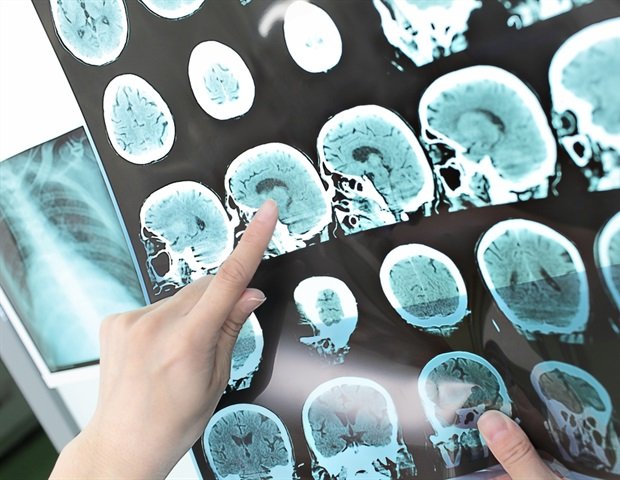
    Participants underwent clinical and cognitive assessments along with brain MRI scans at the time of stroke and one year later. These scans allowed researchers to track types of strokes, signs of small vessel disease, and new areas of brain damage.

    They compared the fatty narrowing of large arteries to the dilation and elongation of arteries in the brain.

    This study found that aortic stenosis was not associated with lacunar stroke or small vessel disease. This is more commonly seen in other types of stroke, and follow-up scans did not predict new areas of brain damage.

    In contrast, arterial enlargement showed a strong association with lacunar disease. Patients with this characteristic were more than four times more likely to suffer a lacunar stroke.

    Dilated arteries were also associated with an increased burden of small vessel disease, rapidly worsening brain damage, and an increased risk of developing new “silent” strokes (damage to small areas of brain tissue caused by disruption of blood supply that can occur without obvious symptoms).

    More than one in four participants developed such a silent stroke during the study, despite receiving standard treatment to prevent further strokes.

    Researchers say future treatments will need to target the underlying small blood vessel damage. Trials such as LACI-3 are currently testing whether existing drugs such as cilostazol and isosorbide mononitrate can protect the brain, reduce further strokes, and help prevent problems with memory, motor skills, and dementia after lacunar stroke.

    This study provides strong evidence that lacunar stroke is not caused by fatty blockages in large arteries, but rather by disease in small blood vessels within the brain itself. Recognizing this difference is critical as it explains why traditional treatments such as antiplatelet drugs are less effective against this type of stroke and highlights the urgent need to develop new treatments that target the underlying microvascular damage. ”


    Joanna Wardlow, Professor of Applied Neuroimaging, Institute of Neuroscience and Cardiovascular Disease, University of Edinburgh, Group Leader, Dementia Research Institute, UK

    sauce:

    Reference magazines:

    Han, F. others. (2026). The impact of cranial artery stenosis and nematode ectasia on the pathogenesis of cerebral small vessel disease: findings from a prospective mild stroke cohort. circulation. DOI: 10.1161/CirculationAHA.126.079493. https://www.ahajournals.org/doi/10.1161/CIRCULATIONAHA.126.079493


    Source link

    Visited 3 times, 3 visit(s) today
    Share. Facebook Twitter Pinterest LinkedIn Telegram Reddit Email
    Previous ArticleBariatric surgery offers more long-term health protection for older adults than GLP-1 drugs
    Next Article New findings challenge decades-old assumptions in HIV biology
    healthadmin

    Related Posts

    Testosterone may help suppress the growth of brain tumors in men

    May 6, 2026

    GLP-1 weight loss drug modulates brain reward circuits and suppresses eating for pleasure

    May 6, 2026

    New findings challenge decades-old assumptions in HIV biology

    May 6, 2026

    Bariatric surgery offers more long-term health protection for older adults than GLP-1 drugs

    May 6, 2026

    Bariatric surgery is more effective than GLP-1 drugs in remitting obesity

    May 6, 2026

    What labs need to know about PFAS

    May 6, 2026
    Add A Comment
    Leave A Reply Cancel Reply

    Categories

    • Daily Health Tips
    • Discover
    • Environmental Health
    • Exercise & Fitness
    • Featured
    • Featured Videos
    • Financial Health & Stability
    • Fitness
    • Fitness Updates
    • Health
    • Health Technology
    • Healthy Aging
    • Healthy Living
    • Holistic Healing
    • Holistic Health & Wellness
    • Medical Research
    • Medical Research & Insights
    • Mental Health
    • Mental Wellness
    • Natural Remedies
    • New Workouts
    • Nutrition
    • Nutrition & Dietary Trends
    • Nutrition & Superfoods
    • Nutrition Science
    • Pharma
    • Preventive Healthcare
    • Professional & Personal Growth
    • Public Health
    • Public Health & Awareness
    • Selected
    • Sleep & Recovery
    • Top Programs
    • Weight Management
    • Workouts
    Popular Posts
    • 1773313737_bacteria_-_Sebastian_Kaulitzki_46826fb7971649bfaca04a9b4cef3309-620x480.jpgHow Sino Biological ProPure™ redefines ultra-low… March 12, 2026
    • the-pros-and-cons-of-paleo-dietsThe Pros and Cons of Paleo Diets: What Science Really Says April 16, 2025
    • pexels-david-bartus-442116The food industry needs to act now to cut greenhouse… January 2, 2022
    • Improve Mental Health10 Science-Backed Practices to Improve Mental Health… March 11, 2025
    • 1773729862_TagImage-3347-458389964760995353448-620x480.jpgDespite safety concerns, parents underestimate the… March 17, 2026
    • 1773209206_futuristic_techno_design_on_background_of_supercomputer_data_center_-_Image_-_Timofeev_Vladimir_M1_4.jpegMulti-agent AI systems outperform single models… March 11, 2026

    Demo
    Stay In Touch
    • Facebook
    • Twitter
    • Pinterest
    • Instagram
    • YouTube
    • Vimeo
    Don't Miss

    NASA captures wild swirling clouds and rare arctic storm over Alaska

    By healthadminMay 6, 2026

    The winter of 2026 came to a dramatic end in southern Alaska. Coastal areas experienced…

    A survey of large amounts of data reveals that taking a break from social media does not improve mental health

    May 6, 2026

    PeaceHealth cancels plans to outsource Oregon ER doctors

    May 6, 2026

    MIT scientists discover millions of ‘silent synapses’ in adult brains

    May 6, 2026

    Subscribe to Updates

    Get the latest creative news from SmartMag about art & design.

    HealthxMagazine
    HealthxMagazine

    At HealthX Magazine, we are dedicated to empowering entrepreneurs, doctors, chiropractors, healthcare professionals, personal trainers, executives, thought leaders, and anyone striving for optimal health.

    Our Picks

    MIT scientists discover millions of ‘silent synapses’ in adult brains

    May 6, 2026

    Sanofi requests participation from CNPV fast track program for expansion of Twierd

    May 6, 2026

    White House plans for drug strategy contradict recent actions

    May 6, 2026
    New Comments
      Facebook X (Twitter) Instagram Pinterest
      • Home
      • Privacy Policy
      • Our Mission
      © 2026 ThemeSphere. Designed by ThemeSphere.

      Type above and press Enter to search. Press Esc to cancel.