


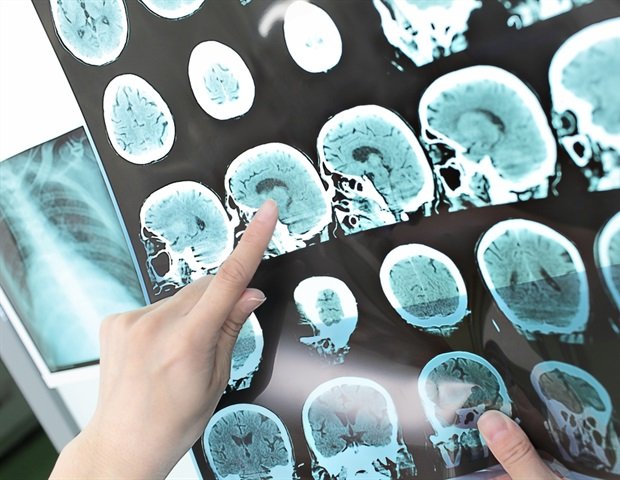
Scientists have discovered new evidence that challenges long-held assumptions about the causes of common types of stroke and provides clues as to why widely used treatments are ineffective.
The study found that the buildup of fatty deposits within arteries does not appear to cause lacunar ischemic stroke. Lacunar ischemic strokes account for around a quarter of all ischemic strokes (strokes caused by blockages in blood vessels) that occur in the UK each year.
Instead, researchers identified another vascular abnormality, the enlargement and dilation of arteries in the brain, that is strongly associated with lacunar stroke.
Experts say the findings help explain why aspirin and other antiplatelet drugs commonly used to prevent stroke are less effective at preventing lacunar ischemic stroke.
The results are now helping to inform new therapeutic approaches, such as the LACunar Intervention Trial 3 (LACI-3), which is testing drugs that directly target small blood vessels in the brain.
Lacunar stroke is caused by damage to the brain’s smallest blood vessels, called small vessel disease, and is a major cause of disability, cognitive decline, dementia, and other strokes. However, its underlying causes remain unknown and progress in developing effective treatments has been limited.
To investigate this, researchers from the University of Edinburgh, the British Dementia Research Institute, and colleagues studied 229 patients who had experienced lacunar stroke or mild non-lacunar stroke.
Participants underwent clinical and cognitive assessments along with brain MRI scans at the time of stroke and one year later. These scans allowed researchers to track types of strokes, signs of small vessel disease, and new areas of brain damage.
They compared the fatty narrowing of large arteries to the dilation and elongation of arteries in the brain.
This study found that aortic stenosis was not associated with lacunar stroke or small vessel disease. This is more commonly seen in other types of stroke, and follow-up scans did not predict new areas of brain damage.
In contrast, arterial enlargement showed a strong association with lacunar disease. Patients with this characteristic were more than four times more likely to suffer a lacunar stroke.
Dilated arteries were also associated with an increased burden of small vessel disease, rapidly worsening brain damage, and an increased risk of developing new “silent” strokes (damage to small areas of brain tissue caused by disruption of blood supply that can occur without obvious symptoms).
More than one in four participants developed such a silent stroke during the study, despite receiving standard treatment to prevent further strokes.
Researchers say future treatments will need to target the underlying small blood vessel damage. Trials such as LACI-3 are currently testing whether existing drugs such as cilostazol and isosorbide mononitrate can protect the brain, reduce further strokes, and help prevent problems with memory, motor skills, and dementia after lacunar stroke.
This study provides strong evidence that lacunar stroke is not caused by fatty blockages in large arteries, but rather by disease in small blood vessels within the brain itself. Recognizing this difference is critical as it explains why traditional treatments such as antiplatelet drugs are less effective against this type of stroke and highlights the urgent need to develop new treatments that target the underlying microvascular damage. ”
Joanna Wardlow, Professor of Applied Neuroimaging, Institute of Neuroscience and Cardiovascular Disease, University of Edinburgh, Group Leader, Dementia Research Institute, UK
sauce:
Reference magazines:
Han, F. others. (2026). The impact of cranial artery stenosis and nematode ectasia on the pathogenesis of cerebral small vessel disease: findings from a prospective mild stroke cohort. circulation. DOI: 10.1161/CirculationAHA.126.079493. https://www.ahajournals.org/doi/10.1161/CIRCULATIONAHA.126.079493
