


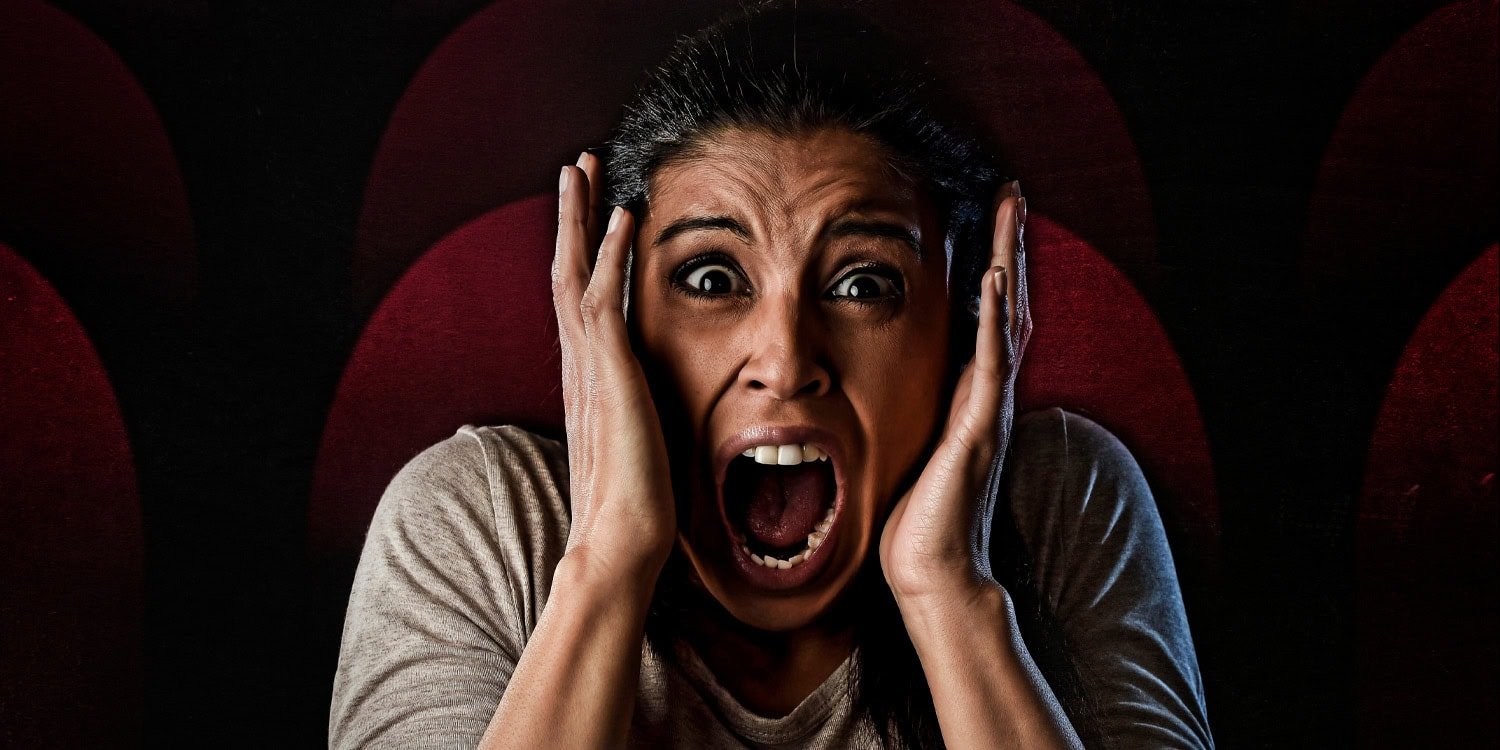
New research published in journal emotions This provides evidence that people tend to feel more connected to each other when they voluntarily participate in scary activities with others, such as visiting a haunted house. The findings suggest that experiencing fear in a safe environment fosters a subjective sense of bond, but whether relationships are truly strengthened may depend largely on talking about the experience afterwards.
Humans are highly social creatures, and forming bonds with others is strongly tied to overall health and psychological well-being. Scientists have assembled substantial evidence that sharing positive emotions, such as laughing at a comedy show or cheering at a concert, increases interpersonal intimacy. Another body of research suggests that negative emotions, especially fear, also prompt people to seek the company of others. When people face a common threat, they often prefer to stand together rather than alone.
In addition to simply seeking companionship, shared emotional excitement creates a sense of togetherness. Previous research has shown that fear can spread from person to person, synchronizing heart rates and strengthening group cohesion. Most previous experiments exploring the relationship between fear and social bonds have relied on artificial laboratory environments or situations involving real threats. The researchers wanted to investigate how fear affects relationships in a recreational environment where threats are fully simulated.
Jane Wiley conducted this study as an undergraduate at the University of Florida and is a freshman social psychology doctoral program student at the University of Virginia. She explained that the rationale for this project came from personal experience in similar recreational settings.
“This topic is personal to myself and principal investigator Dr. Ken Swan,” Wiley said. “He and I are both big fans of horror and haunted houses. We’ve shared many stories (and heard many from our haunted house guests) about how experiencing a haunted house together can be a bonding experience.”
Wiley noted that success stories served as inspiration for the project. “My first date with him at Halloween Horror Nights led to a happy marriage, and I became very close with my best friend Garrett Johnson (the paper’s other author) after experiencing haunted houses together,” she said. “When we began our research, this interpersonal focus had not been studied in the recreational fear literature, so that’s what attracted us to study what we did.”
Every year, millions of people seek entertainment for fear by riding roller coasters, watching horror movies, and visiting haunted attractions. Scientists designed this project to test whether the fear experienced in these playful and safe environments leads to stronger social bonds. They wanted to know whether the temporary thrill of fear could create the warmth of lasting relationships among friends, family, and acquaintances.
To explore these ideas, researchers conducted a series of five studies over three Halloween seasons at commercial haunted attractions in Florida. In the first study, the team surveyed 986 attraction participants immediately after completing a sensory deprivation haunted house experience. Participants answered seven-point questions about how scared they felt, how much they enjoyed the attraction, and whether the experience brought them closer to the person in the group they felt closest to. Researchers also asked whether participants communicated or held hands with peers during the event.
The scientists found that higher levels of reported fear strongly predicted feelings of stronger bonds with peers. Having physical contact and communication, such as holding hands, during the event also predicted higher ratings of closeness. Enjoying the experience also contributed to the bonding effect. This provided the first evidence that fear sharing in a pleasant environment promotes social bonding.
To verify these findings and look for measurable changes, the researchers conducted a second study with 500 participants during the upcoming Halloween season. This time, guests completed a survey both immediately before and after moving between attractions. This method allowed scientists to measure precise changes in interpersonal intimacy. As in the first study, participants were asked to focus on the person in the group they felt was closest.
Once again, the amount of fear a person feels predicts how much they believe the experience brings them closer to their peers. But when scientists looked at direct before-and-after differences in intimacy, they found no measurable change. Researchers suspected a ceiling effect. This means that there is little mathematical room for intimacy scores to increase on a 7-point scale because participants already rate their relationship very highly before entering the attraction.
In a third study, the researchers adjusted their focus to see whether the bonding effect applied to less intimate relationships. They surveyed 554 participants and asked them to focus on the group member they felt least close to, or the person with whom they argued most often. Participants were asked whether the attraction brought them close to a specific person, how frightened they felt, and whether they had any physical contact.
Scientists have found that fear and physical contact are strong predictors of emotional solidarity, even with the least close of companions. Approximately 45 percent of the participants agreed that the experience made them feel closer to members of their least close group. When asked about the party as a whole, an even higher percentage, around 64 percent, said they felt the experience brought them closer together as a group. This suggests that the bonding effect of recreational fear generalizes across different relationship types and may be further amplified when experienced as a group.
In the fourth study, the researchers again attempted to capture measurable changes in intimacy before and after the haunted house. They continued to focus on their least close peers to avoid the ceiling effect seen in previous attempts. The researchers collected complete survey data from 263 participants and rated their closeness with their least close groupmate before entry and again after exit. The team also asked participants to rate their fear, enjoyment, and physical contact during the 30-minute immersive experience.
This predictive model held true a fourth time, with fear, physical touch, and enjoyment all predicting perceived increased intimacy. Furthermore, the researchers ultimately detected a statistically significant increase in familiarity from pre- to post-experience. The actual changes were very small, with an average increase of 0.21 points on a 7-point scale. This modest change raised the question of why people overwhelmingly reported feeling closer even though their numerical closeness ratings had changed little.
“Our most surprising finding was that we didn’t see any changes in intimacy before and after we realized that post-haunt reflection is essential for bonding to occur,” Wiley said. “We conducted two different studies before and after, one looking at the closest dyad and one looking at the closest dyad, and neither found any significant changes.”
She added that this lack of initial change was difficult to interpret at first. “This ultimately led to a transition to qualitative data collection, so we ended up hitting a nice roadblock (which helped us speculate on post-experience reflections), but it was difficult to understand at the time,” Wiley said. “So the most surprising finding is that passing through a haunted house together and not having time to talk or laugh afterwards doesn’t seem to be enough to form a deep bond.”
To understand this discrepancy, the researchers conducted a fifth and final study consisting of face-to-face qualitative interviews. Qualitative research involves collecting non-numeric data, such as conversational responses, to understand underlying concepts, opinions, and motivations. The researchers conducted a quantitative survey by interviewing 20 guests immediately after the haunted house was completed. They asked participants what a feeling of closeness meant to them and why their numerical scores did not change despite reporting stronger bonds.
During interviews, participants emphasized that the bonding effects of shared fear are not always immediate. Instead, participants explained that real connections occur during post-experience processing. Processing involves talking, laughing, and exchanging scary stories on the car ride home. Sharing novel and physically intense experiences created a space for vulnerability. But scientists have learned that immediate surveys often fail to capture changes in relationships because participants haven’t yet had time to mentally unravel the event and think about their common survival.
“Haunted houses seem to have the power to make two people feel closer, whether or not they were previously very close,” Wiley explained. “In other words, experiencing a ghostly attraction with a close friend or an unwanted co-worker is likely to prove beneficial to the relationship. However, this relationship is highly dependent on what you and the other person do after the experience.”
The act of relaxing after fear seems to be a necessary ingredient to strengthen the relationship. “Reflecting after a haunting is important to the bonding process. The haunted house itself may not do much to strengthen your relationship, but talking about, reminiscing about, and laughing about the experience afterward will likely deepen your bond with that person even more,” Wiley said.
Although this study provides extensive insight into recreational fear, there are several limitations. “As with any study, our study certainly had limitations,” Wiley noted. “We used a convenience sample of people who had already been to haunted houses, so not only was race, ability, and income unevenly distributed, but our conclusions can only really be generalized to people who typically show up to haunted houses with friends and family (though this is a double-edged sword; since we’re interested in recreational horror, we’re particularly interested in people who seek out these experiences on their own time anyway).”
Environmental factors during the study may also have influenced the data. “We were surveying people inside a bar in a haunted house, and it was a pretty chaotic, high-traffic space. The music was loud, people were drinking, and participants were filling out questionnaires alongside other participants (and in some cases, people they came with),” Wiley explained. “This means that the environment in which we were collecting data was not a distraction-free environment by any means, and that may have affected the response. Also, we only specifically investigated the effects of haunted houses, so we cannot yet draw the same conclusions for other forms of recreational fear, such as horror movies or extreme sports.”
One potential misconception is the idea that simply scaring people together will automatically repair broken relationships. A notable minority of participants did not feel close to their peers. This suggests that fear can strain relationships if a person feels unsupported or ridiculed in moments of vulnerability. Researchers have proposed that recreational fear may function as an interpersonal stress test. Responding to a scared partner with physical comfort and humor can strengthen your bond, but responding poorly can weaken your bond.
Expanding the research could provide useful insights into how the intensity of shared emotions shapes human connections over time. “We would like to extend this study further, specifically by adding experimental manipulations in which some participants had time to reflect after the experience, while others did not, to investigate causal relationships,” Wiley said. “We also want to see if this pattern of bonding also exists in other forms of recreational fear.”
The study, “The Allure of Ghosts: The Effects of Recreational Fear on Interpersonal Bonds,” was authored by Jane K. Wiley, Alexa A. Rivers, Oso Garrett Johnson, Christina S. Negral, Jake T. Watson, Tara M. Perrault, Rebecca Martin, Sarah C. Slayton, Stefano I. Segovia-Palacios, Benjamin R. Staniski, and Kate. E. Doherty, Lawton K. Swan.
