


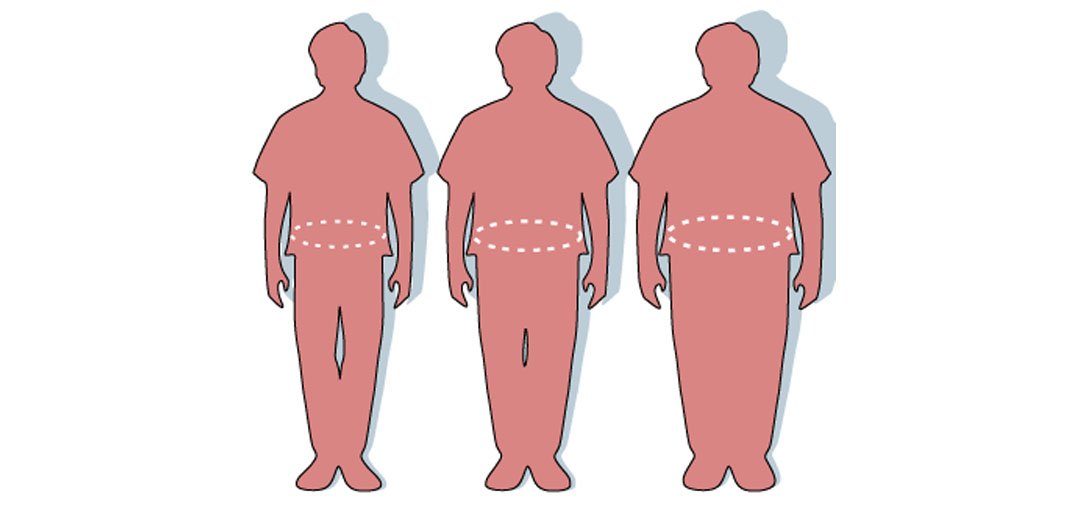
Recent research published in Economics and human biology suggests that carrying excess weight does not inherently reduce one’s chances of finding employment in Australia. After analyzing longitudinal data, researchers found no consistent evidence that overweight or obese people face widespread employment discrimination. The findings suggest that weight has little effect on current job prospects when past work experience is taken into account.
Over the past few decades, obesity rates have increased significantly around the world. In Australia alone, approximately one in three adults will be classified as obese in 2022. This weight gain poses a variety of health risks, but also raises questions about potential social and economic impacts.
“The international literature generally finds that excess weight is associated with poorer labor market outcomes, particularly for women, and there is growing evidence that these effects reflect discrimination and prejudice, not just productivity,” said researcher Pundarik Mukhopadhyay, professor of economics at Macquarie Business School. “This study was motivated by the relative lack of causal evidence about the prevalence of excess weight in Australia and how it impacts labor market outcomes,” he explained.
Mukhopadhyay oversaw the research with Chris Heaton, led by former doctoral student Anushya Vijayashivajee. Australia has anti-discrimination laws designed to protect workers, making it important to assess whether preference-based discrimination still has a negative impact on hiring decisions. Preference-based discrimination occurs when an employer allows personal biases to influence career choices.
To conduct the study, researchers used data from the Australian Household, Income and Labor Dynamics Survey. This large-scale national project tracks the financial and personal well-being of thousands of Australian households over many years. The scientists focused on data collected between 2006 and 2019, intentionally stopping data just before the pandemic to avoid unusual employment disruptions.
The final analysis included up to 10,233 unique individuals aged 25 to 54 years. This resulted in a total of 76,307 individual study observations over a 13-year follow-up period. Researchers excluded full-time students and pregnant women to ensure the data accurately reflected the general working population.
To measure weight, scientists calculated each participant’s body mass index. This standard measurement uses a person’s height and weight to estimate total body fat. Participants were grouped into categories ranging from underweight to severely obese based on World Health Organization guidelines.
The researchers recorded whether each individual was employed or unemployed in each survey year. They also controlled for a wide range of individual characteristics to ensure they isolated the specific effects of body weight. These background factors include childhood experiences such as geographic location, educational level, and parents’ socio-economic status.
The researchers also included personality measures such as willingness to take risks and preference for immediate rewards over future profits. By taking these factors into account, scientists were able to paint a highly detailed picture of each individual. It also minimized the possibility that other personal characteristics were secretly driving employment outcomes.
To analyze this huge data set, scientists used two different mathematical approaches. The first approach works by assuming that unmeasured individual characteristics behave in a predictable and linear manner. It also assumes that a person’s weight acts independently and only as a cause, not an effect, of job status.
Under these particular conditions, preliminary models suggested that people with higher body weight were slightly less likely to be employed. However, researchers recognized that human life rarely follows such strict and independent rules. For example, losing your job can be a financial strain and may force you to rely on cheap, heavily processed foods.
In this scenario, losing your job actually causes weight gain, creating a loop known as reverse causation. To address this problem, scientists applied a more advanced statistical method known as the generalized method of moments. This preferred method relaxes strict mathematical rules and takes into account the possibility that unemployment can lead to weight gain.
This advanced technique also explicitly removed hidden and invariant factors that could skew the results. Applying this more nuanced approach, the researchers found no statistical association between excess weight and employment. This result held true for the entire sample and was consistent regardless of whether self-employed individuals were included.
“The results were sensitive to the assumptions made, for example, that taking into account an individual’s work history would yield substantially different results than not taking into account the individual’s work history,” Mukhopadhyay noted. When we split the data by gender, we still found no evidence that heavier men or women were less likely to be employed in Australia.
Scientists also investigated the concept of health-related productivity. They wondered whether underlying physical or mental health conditions might cause people with higher body weight to miss work or be perceived as less productive. By comparing statistical models, they found very weak evidence that health-related productivity influences the relationship between weight and employment.
Although this study provides an in-depth look at the Australian labor market, there are some potential limitations that should be considered. This finding highlights how sensitive economic research is to the particular mathematical models chosen. “The type of methodology used to investigate the relationship is important, so this must be kept in mind when interpreting/understanding the results,” Mukhopadhyay explained.
This study also relied on self-reported height and weight, which may introduce subjective bias. People tend to underestimate their weight, which can skew your weight calculations slightly. To address this, the scientists ran a test using a correction formula to adjust for known reporting bias, and the adjusted results closely matched the original findings.
Despite the lack of statistical significance in the final model, the researchers cautioned against ignoring the issue completely. Mr Mukhopadhyay said: “Although there is little convincing evidence of discrimination in hiring individuals on the basis of excessive body size, we cannot rule out the possibility that this type of discrimination exists in Australia.”
In the future, the researchers hope to expand the study to see how weight affects other occupational outcomes. “Depending on resource availability, we would like to explore the impact on occupational classification, job security and tenure, working hours, and contract type,” Mukhopadhyay said. “Furthermore, we would like to analyze the differential effects by occupation and industry.”
The scientists hope their work will spark a broader global investigation. “We hope this study will spur further research using more comprehensive datasets across multiple OECD countries,” Mukhopadhyay added.
The study, ‘The impact of excess weight on Australia’s employment prospects’, was authored by Anushya Vijayashivajee, Pundalik Mukhopadhyay and Chris Heaton.
