


Why do some dreams feel vivid and real while others are confusing or hard to remember? New research from the IMT School of Advanced Studies Lucca suggests the answer lies in a combination of individual characteristics and common life experiences, both of which influence what we see and feel during sleep.
This study communication psychologyexamined more than 3,700 reports describing both dream and waking experiences from 287 participants aged 18 to 70. Participants recorded their daily experiences over a two-week period. At the same time, researchers collected detailed data on sleep habits, cognitive skills, personality traits, and psychological profiles.
AI reveals the hidden structure of dreams
To analyze this large dataset, the researchers used advanced natural language processing (NLP) tools. These methods allowed us to systematically study the meaning and structure of dream explanations. As a result, it turns out that dreams are not random or chaotic. Rather, they reflect complex interactions between individual characteristics, such as tendency to wander, interest in dreams, and sleep quality, and external influences, including major social events such as the COVID-19 pandemic.
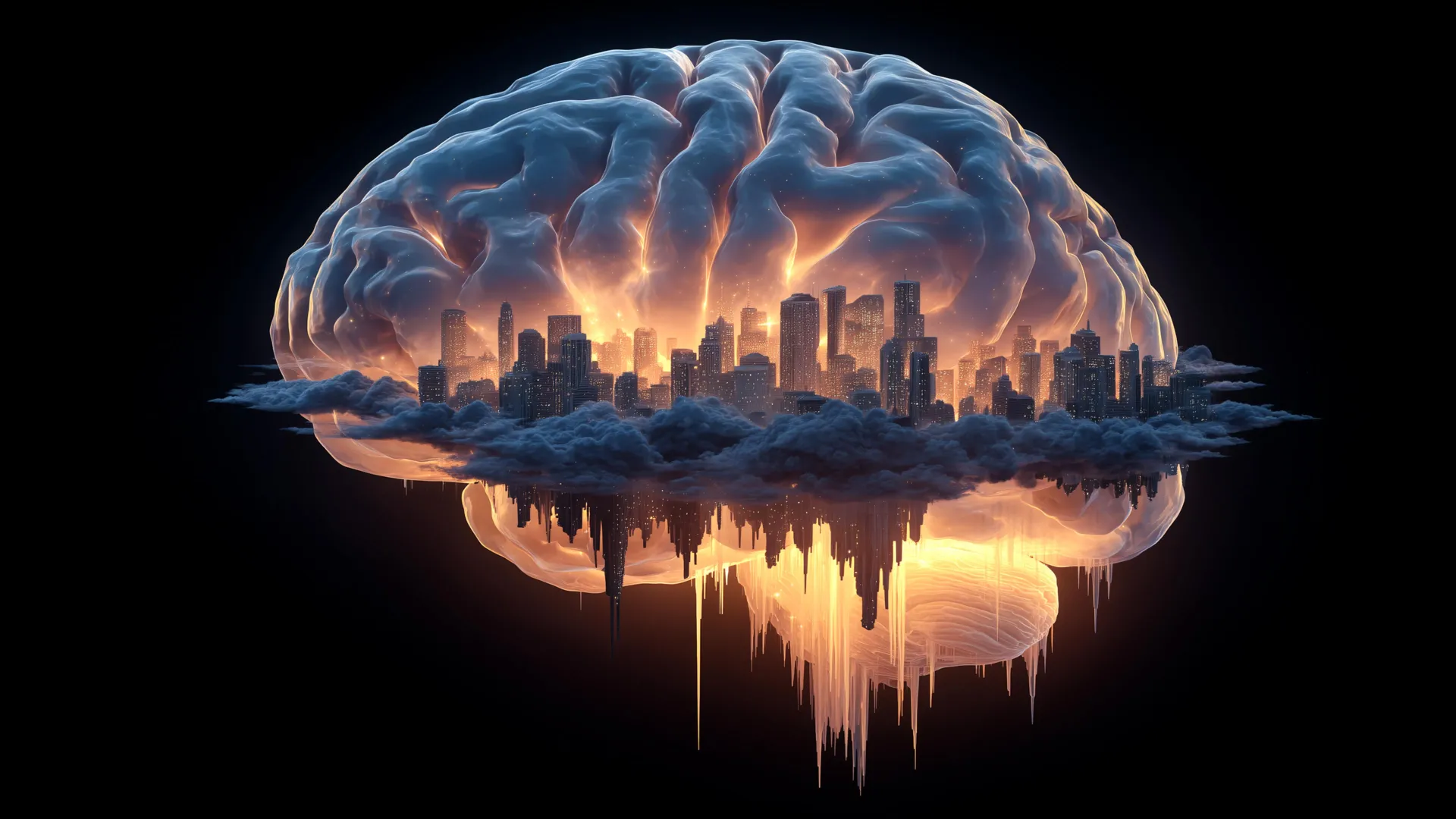
By comparing how participants described their everyday experiences and dreams, the researchers found that the brain is not simply reproducing what happens in waking life during sleep. Instead, reframe those experiences. It does not accurately recreate familiar environments such as workplaces, hospitals, and schools. They are reimagined into vivid, immersive scenes that combine different elements and change perspectives in unexpected ways.
This process suggests that dreams actively reconstruct reality, rather than passively reflecting it. The brain fuses memories with imagined or anticipated events to create new and sometimes surreal scenarios.
Personality and life events influence dream style
Not everyone dreams the same way. People who tend to let their thoughts wander often report that their dreams are fragmented and constantly changing. In contrast, people who valued dreams more and believed they had meaning tended to experience richer and more immersive dream environments.
The study also investigated how large-scale events affect dreams. Data collected by researchers at Sapienza University of Rome during the COVID-19 lockdown and later compared with findings from the IMT team showed that dreams during lockdown were more emotionally intense and often included themes of limitations and restrictions. As time passes and people adapt, these patterns gradually fade, suggesting that dream content evolves as people adjust psychologically to major life changes.
Dreams reflect dynamic mental processes
“Our findings show that dreams are not just a reflection of past experiences, but are dynamic processes shaped by who we are and what we have been through,” explains Valentina Else, a researcher at the IMT School and lead author of the paper. “By combining large-scale data and computational techniques, we were able to uncover patterns in dream content that were previously difficult to detect.”
AI opens new doors in dream research
The study also focuses on how artificial intelligence can advance dream research. The NLP model was able to capture the meaning and structure of dream reports with similar accuracy to human raters. This approach could make it easier to study topics such as consciousness, memory, and mental health on a larger and more consistent scale.
This research was supported by a grant from the BIAL Foundation (#091/2020) and a TweakDreams ERC starting grant (#948891). The study was carried out at the IMT Lucca School of Advanced Studies in collaboration with researchers from Sapienza and Camerino Universities in Rome.
