


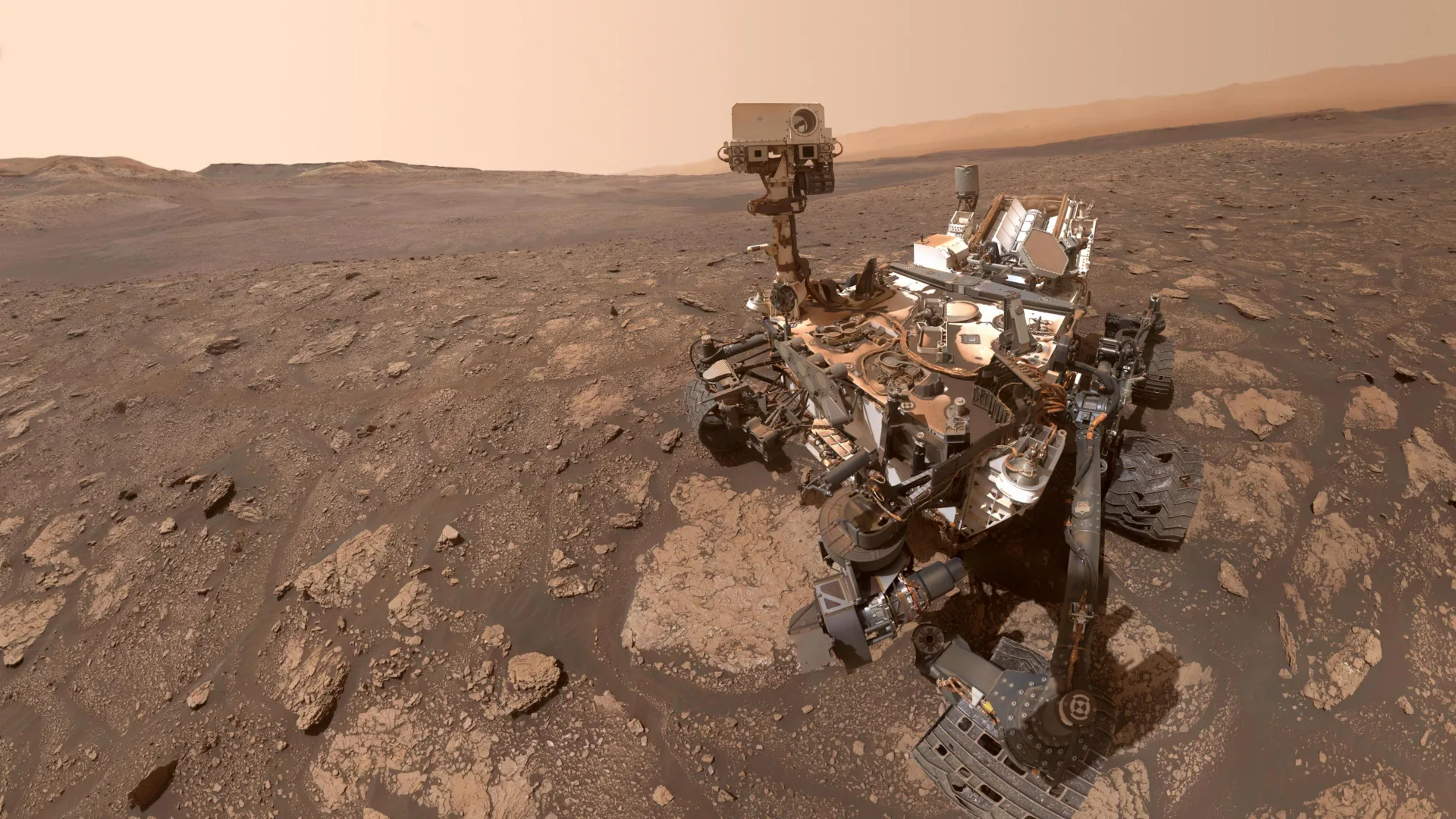
NASA’s Curiosity rover has identified a wide range of organic molecules on Mars, including compounds that scientists believe are key ingredients in the origin of life on Earth.
The discovery came from the first chemical experiment performed on another planet. The results showed that the surface of Mars can store molecules that could serve as potential signs of ancient life. However, this experiment cannot determine whether these organic compounds came from past life on Mars, natural geological processes, or meteorites that hit Mars.
To see real evidence of past life, scientists will need to bring Martian rock samples back to Earth for detailed study.
New experiment reveals preserved ancient chemistry
The research was led by Dr. Amy Williams, a professor of geological sciences at the University of Florida and a member of the science teams for both the Curiosity and Perseverance rovers. Curiosity arrived on Mars in 2012 to investigate whether the planet once had conditions suitable for microbial life. Perseverance, which landed in 2021, is focused on searching for direct signs of ancient life.
“We think we’re looking at organic material that has been preserved on Mars for 3.5 billion years,” said Williams, who helped develop the experiment. “Having evidence of preserved ancient organic matter is very useful because it’s a way to assess the habitability of an environment. And if you want to look for evidence of life in the form of preserved organic carbon, this shows that it’s possible.”
Williams and an international team published their findings on April 21 in the journal Nature Communications.
One of the important discoveries is DNA-like molecules
More than 20 different chemicals were identified in this experiment. Among them is a nitrogen-containing molecule with a structure similar to the compounds involved in building DNA, which has never been detected on Mars before. The rover also discovered benzothiophene, a large sulfur-containing molecule with two connected rings that is typically transported to planets by meteorites.
“The same stuff that rained down on Mars from meteorites rained down on Earth, and that probably provided the building blocks for life as we know it on Earth,” Williams said.
Gale Crater and clay minerals protect organic matter
Curiosity, operated by NASA’s Jet Propulsion Laboratory, landed in Gale Crater in August 2012. This place was once the bed of a lake. The experiment was carried out in 2020 in the Glen Torridon area, an area rich in clay minerals that form in the presence of water. These clays are particularly good at capturing and preserving organic material, making them an ideal location for this type of investigation.
SAM instrument and TMAH chemical analysis
The analysis was performed using the Mars Instrument Suite Sample Analysis known as SAM. Dr. Jennifer Eigenbrod, an astrobiologist at NASA Goddard Space Flight Center and co-author of the study, is the instrument team leader. SAM contributed many of the mission’s important discoveries about Mars’ chemistry, atmosphere, and potential habitability.
In this experiment, scientists used a chemical called TMAH to break down larger organic molecules into smaller pieces. These fragments could then be examined by the SAM’s onboard equipment. Because Curiosity was carrying only about two cups of TMAH, researchers had to carefully plan their experiments and choose the best sampling locations possible.
Implications for future Mars and Titan missions
The success of this method will shape future exploration plans. Future missions, such as the Rosalind Franklin spacecraft on Mars and the Dragonfly mission to Saturn’s moon Titan, are expected to conduct similar TMAH-based experiments to search for organic compounds.
“We know that the shallow surface of Mars preserves large, complex organic matter, and we have great promise for preserving large, complex organic matter that could be evidence of life,” Williams said.
