


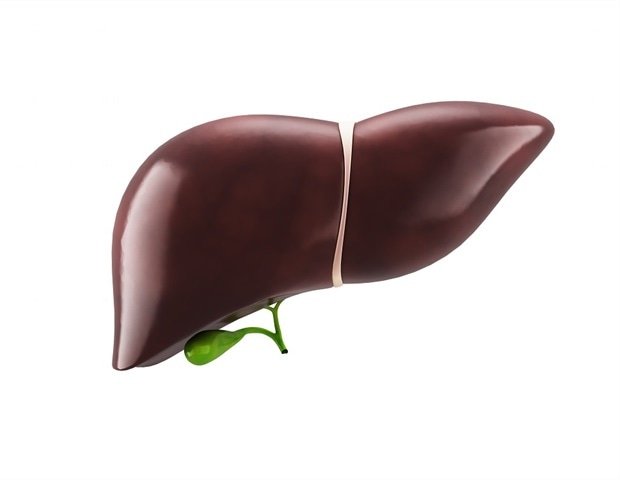
Many liver diseases have a common feature: fibrosis, the progressive accumulation of scarring in liver tissue. Those scars (the liver’s response to sustained damage or attack) can prevent the organ from functioning properly. Fibrosis affects millions of people worldwide and is a crucial step in the progression to cirrhosis, a fatal condition that can develop into liver cancer.
Now, a new study by the National Cancer Institute (CNIO) natural metabolismidentified an important mechanism in the development of liver fibrosis. This discovery represents a further step towards developing personalized treatments that can help prevent its progression.
More than just carrying bile “pipes”
Nabil Djouder, head of CNIO’s Growth Factors, Nutrients and Cancer Group, and his team focused their research on the bile ducts that carry bile to the liver. More specifically, they studied the cells that form these pathways, called biliary epithelial cells (BECs).
Previously, BECs were thought to be both a reservoir of cells capable of regenerating the liver and a component of the bile ducts (closed “pipes” that transport bile and prevent it from coming into contact with liver tissue). This study changes that perspective. BEC cells are not just passive vessels but also active guardians that regulate the liver environment.
Structure that prevents liver damage
A new study by CNIO has identified a molecular mechanism that helps avoid bile duct fibrosis. Under normal conditions, a protein called the FXR receptor is expressed in BEC cells. As bile circulates through the bile ducts, FXR detects and binds to bile acids, activating the production of another protein called YAP. Adhesion molecules are then formed that keep the BEC cells tightly bound, preventing bile from reaching the liver tissue. At the same time, YAP regulates the activation of a third protein essential for BEC cell proliferation, thereby limiting excessive proliferation of BEC cells.
This system is key to the bile ducts acting as an effective barrier. However, in certain diseases and genetic conditions, the FXR protein no longer functions properly or even stops being expressed, resulting in BEC cells losing this control mechanism. BEC cells proliferate excessively, weakening the barrier and leaking bile acids into the tissues responsible for liver function, the liver parenchyma.
When bile acids reach areas of the liver where they shouldn’t, they activate other cells (stellate cells) that produce scars. Accumulation of these causes liver fibrosis. Both excessive proliferation of BEC cells and fibrosis can progress to cirrhosis, a serious and potentially fatal disease.
Clinical implications: treatment modalities and patient stratification
Paula Sanchez, a researcher on Djouder’s team and the study’s first author, believes this study changes the way we understand the role of the bile ducts and highlights the clinical importance of the results. “Our study shows that BEC cells actively regulate liver health. “By regulating FXR-YAP signaling, these cells form a barrier that prevents bile acid leakage and fibrosis. This discovery allows us to move our research toward safer and more targeted treatments.”
Using a combination of animal models, computer analysis, and human liver samples, including the first genetic mouse model of cirrhosis previously developed by Djouder’s group, the team demonstrated that loss of FXR receptors in BEC cells accelerates the progression from fibrosis to cirrhosis.
This knowledge will help establish screens to select patients for targeted drugs. “Understanding how different types of liver cells respond will allow us to better select patients suitable for FXR-targeted therapy and prevent potential side effects in other patients,” Djouder said.
Undesirable side effects of drugs targeting FXR
The findings help explain the side effects observed with obeticholic acid (OCA), a drug used to treat liver disease. This drug is a second-line treatment prescribed for conditions such as primary biliary cholangitis, which primarily affects women, when most common treatments have failed.
OCA is a semisynthetic bile acid designed to activate FXR receptors to treat chronic liver diseases associated with fibrosis. However, some patients have seen their fibrosis worsen after receiving this drug. This study shows that this effect may be related to FXR dysfunction in BEC cells of these patients, which may alter the expected response to the drug.
Dr. Djouder emphasizes, “When FXR signaling is lost in BEC cells, OCA can exacerbate fibrosis. This explains why some patients experience accelerated liver fibrosis despite receiving treatment.”
Faced with these undesirable effects, the U.S. drug regulatory agency, FDA, issued a warning against the use of OCA, and OCA was withdrawn from the U.S. market. In Europe, the European Medicines Agency recommended that the European Commission revoke its marketing authorization in 2024, but the European Court of Justice allowed it to continue to be administered to patients already receiving it.
funding organization
The Spanish Ministry of Science, Innovation and Universities (MCIU), the National Research Agency (AEI), the European Union (through the European Regional Development Fund (FEDER)), the Regional Government of Madrid, the Spanish Cancer Association (AECC), the Foundation BBVA, the Ramon Areces Foundation.
The study was developed at the CNIO with funding from the Carlos III Health Institute (ISCIII) and MCIU.
Nabil Djouder’s laboratory is part of the IDIFFER Excellence network, which is funded by MCIU and AEI.
sauce:
National Cancer Institute (CNIO)
Reference magazines:
Sanchez Sanchez, P. others. (2026). FXR-YAP signaling maintains bile duct epithelial cell identity and maintains liver homeostasis. natural metabolism. DOI: 10.1038/s42255-026-01521-z. https://www.nature.com/articles/s42255-026-01521-z
