


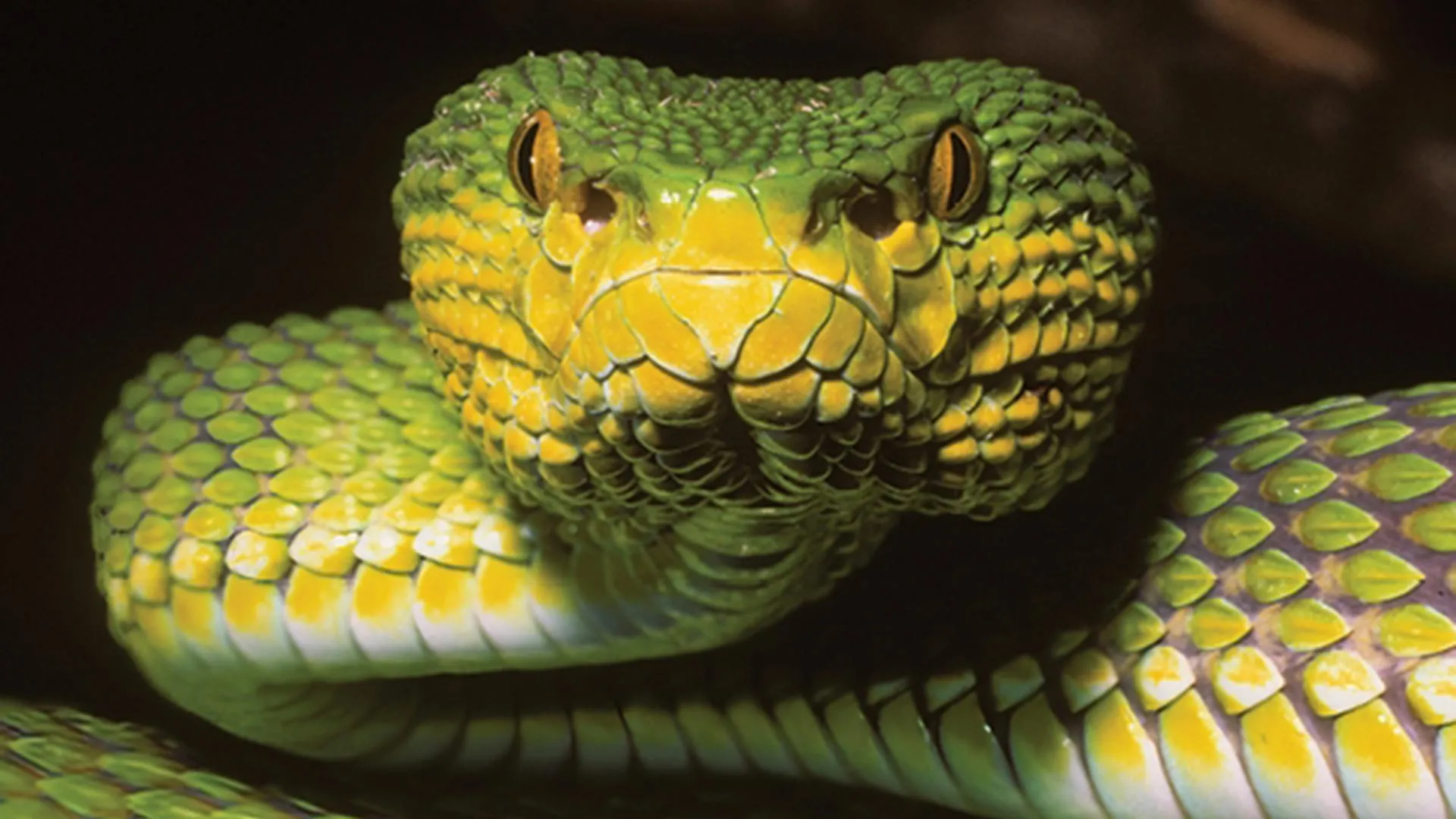
Identifying new species is not always easy. Scientists typically rely on physical characteristics that distinguish one species from another, but in nature, those differences do not always fall into appropriate categories. In some cases, two different species can look nearly identical. These are called cryptic species. In some cases, a single species can vary so much in appearance that it appears to be several different species. The challenge is even greater when both patterns emerge at the same time.
Herpetologist Dr Chan Kin Ong, formerly with the Lee Kong Chian Museum of Natural History in Singapore and now with the University of Kansas Biodiversity Institute and Museum of Natural History in the US, led the study of the Myanmar pit viper. This pit viper appears to be both similar and distinct from its relatives. The study, published in the open access journal ZooKeys, builds on previous genomic research. systematic biology It already showed that snakes represent a separate evolutionary lineage.
“Asiatic pit vipers in the genus Trimeresurus are notoriously difficult to distinguish due to their morphological diversity. Some groups contain multiple species that look the same, while others look very different but are actually the same species,” the researchers say.
Differences between Myanmar pit vipers
A closely related species, the redtail pit viper (Trimeresurus erythrurus), which lives along the northern coast of Myanmar, is always bright green and has no markings on its body. Another one is the mangrove pit viper (Trimeresurus purpureomaculatus) is found in southern Myanmar and usually has black spots along its back. It can appear grey, yellow, brown, or black, but never green. In central Myanmar, between these two habitats, researchers discovered a population of rare green snakes with varying amounts of spots. At first glance, they appeared to be a mixture of two known species.
“This mysterious population in central Myanmar puzzled us, and we initially thought it might be a hybrid population,” the researchers said. But early genome analysis revealed something even more surprising. The snake was not a hybrid. They represented their own distinct species.
A unique species with a highly variable appearance
The story got even more interesting when the research team took a closer look at the snake’s physical characteristics. They found that this newly recognized species is also highly diverse in appearance. Some populations are dark green and have distinct spots, making them fairly easy to distinguish from the bright green, non-spotted redtail viper. However, other populations are bright green, unspotted, and look almost identical to red-tailed pit vipers.
“This is an interesting phenomenon in which a species is both similar and different from its closest relative (the red-tailed pit viper). We think that at some point in the past, the new species may have exchanged genes with the red-tailed pit viper in the north and the mangrove pit viper in the south,” says Dr. Chan. That interpretation is consistent with a 2023 genome study that focused on species boundaries in this pit viper group while accounting for gene flow.
The new snake was named Ayeyarwaddy pit viper (Trimeresurus Ayeyawadiensis), named after the Ayeyarwady River, one of the largest and most important rivers in Myanmar. A vast delta region stretches between the Pathein River in the west and the Yangon River in the east. These river systems and their surrounding watersheds also represent the westernmost and easternmost known distribution limits for the species described in the study.
