


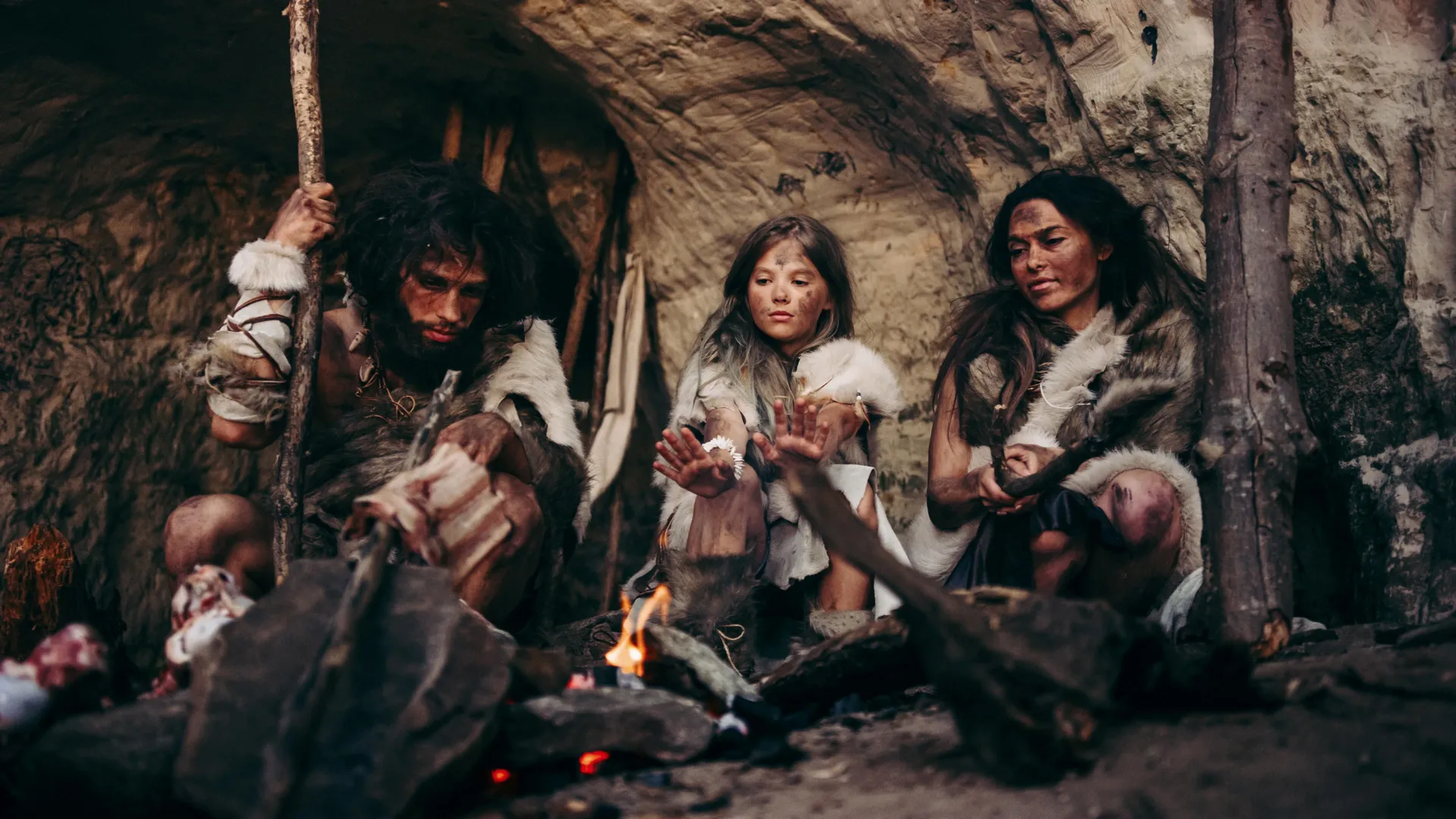
New international research published in current biology We report on the analysis of ancient mitochondrial DNA extracted from eight Neanderthal teeth discovered in the Stagynia Cave in Poland. Using this material, researchers were able to reconstruct the genetic profile of a small number of Neanderthals who lived at the same time in the same place north of the Carpathian Mountains. This is the first time scientists have reconstructed the genetic picture of multiple Neanderthals from a single location and time period in the region.
“This is a surprising result because for the first time we have been able to observe a small group of at least seven Neanderthals from Central and Eastern Europe who lived about 100,000 years ago,” said study coordinator Andrea Pisin, a professor at the University of Bologna. “In most cases, genetic data for Neanderthals is obtained from single fossils or from sites scattered in different locations and time periods. By contrast, in Staginia it was possible to reconstruct a small population, providing for the first time a consistent genetic picture of Neanderthals in this region of Europe.”
A rare snapshot of a Neanderthal community
Researchers were already aware of the importance of Staginia Cave, but the new discovery exceeded their expectations. The site has now found evidence of different groups of Neanderthals, offering a rare glimpse into how these ancient humans lived together.
“Although it has long been known that Stazynia Cave preserves exceptional evidence, these results exceeded our expectations,” said study co-authors Violeta Nowaczewska of the University of Wrocław and Adam Nadaczewski of the Institute of Animal Systemology and Evolution of the Polish Academy of Sciences. “The identification of such a small, ancient Neanderthal population at such a complex site is an important achievement for Polish research and the study of Neanderthals in Europe.”
Genetic connections across Europe and beyond
The discovery also sheds light on how certain Neanderthal maternal lines were distributed across western Eurasia. The mitochondrial DNA obtained from the Stadinia individuals belongs to the same genetic branch found in Neanderthals from the Iberian Peninsula, southeastern France, and northern Caucasus. This pattern suggests that this lineage was once widespread before later Neanderthal populations replaced it with different genetic traits.
“What is particularly interesting is that the two teeth of the boy and one tooth of the adult share the same mitochondrial DNA,” added study co-author Mateja Hadjdinjak, a researcher at the Max Planck Institute for Evolutionary Anthropology. “This suggests that these individuals may be closely related to each other.”
Reconsidering the age of ancient Neanderthal fossils
The study also highlights the challenge of determining the exact age of ancient ruins. The researchers compared their results to Neanderthal fossils known as Thorin, discovered in France’s Mandolin Cave. Thorin has a mitochondrial genome similar to the Stadinia group, and is estimated to be approximately 50,000 years old.
“Our study reminds us that the oldest chronicles must be treated with great care,” explains Safra Talamo, professor at the University of Bologna and co-coordinator of the study. “When radiocarbon values approach the limits of calibration, it is important not to assign more precision than the data can actually support. In such cases, comparisons between archaeology, radiocarbon dating, and genetics become important.”
The role of central and eastern Europe in Neanderthal history
From an archaeological perspective, these results strengthen the importance of central and eastern Europe in Neanderthal history. Rather than being a peripheral region, this region is thought to have played a central role in the movement of populations, biological connections, and the spread of technology during the Middle Paleolithic.
Stazynia Cave and the surrounding area in southern Poland are now highlighted as an important site for understanding not only Neanderthal biology, but also how different populations migrated across Europe and interacted over long distances.
