


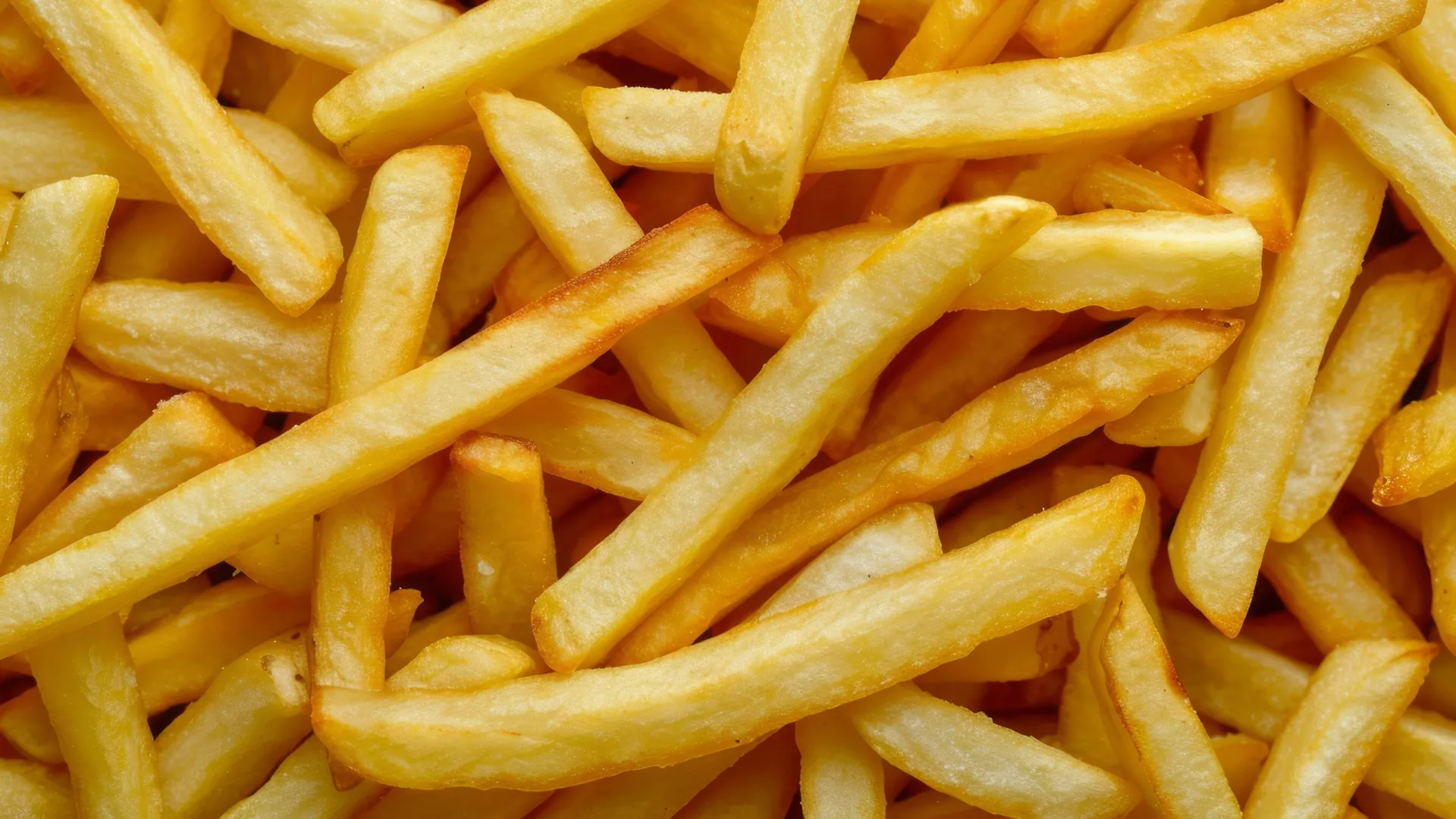
Fried foods are widely enjoyed, but their high fat content can lead to health problems such as obesity and high blood pressure. Creating a lower-fat version while offering the same taste and texture could help consumers make healthier choices without feeling like they’re missing out.
Researchers at the University of Illinois at Urbana-Champaign are studying how frying in the microwave can improve the way French fries are made. Their findings suggest that combining traditional frying with microwave heating may reduce oil absorption while maintaining the crispy texture people expect. This approach also reduces cooking time, making it attractive for large-scale food production.
“Consumers want healthy food, but their desire often gets the better of them when they buy it. High oil content increases flavor, but it also contains more energy and calories. My research team is investigating fried foods with the aim of achieving lower fat content without significantly different taste or texture,” said lead researcher Pawan Singh Thakar, professor of food engineering in the Department of Food Science and Human Nutrition in the U of I’s College of Agricultural, Consumer and Environmental Sciences.
Takhar and doctoral student Yash Shah outlined findings from two recent studies focused on what happens inside french fries during cooking by frying in the microwave.
Behind the scenes of the frying process
In one study, the team worked with researchers at Washington State University to use a specially designed microwave fryer. The system operated on two frequencies: 2.45 gigahertz (similar to a regular microwave oven) and 5.8 gigahertz.
To prepare the samples, potatoes were washed, peeled, cut into strips, blanched and salted. The strips were then fried in soybean oil heated to 180°C. During and after frying, the team measured temperature, pressure, volume, texture, moisture, and oil content.
Thakar explained that a key challenge in deep-frying is to prevent oil from entering the food. At the initial stage of the process, the pores of the potato are filled with water and there is no room for oil. As cooking continues, the water evaporates, creating an empty space where oil is drawn in by negative pressure.
“Think of a straw in a drink. When you force air into the straw, it creates positive pressure and the liquid is pushed out. But when you suck on the straw, the liquid moves up. Imagine a food material full of small straws. When there is positive pressure, the oil stops coming out. But when there is negative pressure, the oil starts moving in,” Takhar explained.
How microwave ovens reduce oil absorption
Much of the frying process takes place under negative pressure, which increases the tendency for oil to be drawn into the food. The researchers aimed to extend the time under positive pressure and shorten the period when negative pressure prevails.
“When you heat something in a conventional oven, heat moves from the outside to the inside, whereas a microwave oven heats from the inside out. This is because the microwaves penetrate the material everywhere. The microwaves make the water molecules vibrate, causing the formation of more steam, shifting the pressure profile to the positive side. The higher pressure of the microwave helps reduce oil penetration,” Takhar said.
Microwaves generate heat throughout the food, which promotes steam formation and helps maintain internal pressure so that oil is not easily absorbed.
Reduces cooking time and reduces amount of oil
Alongside their experimental work, the researchers developed a mathematical model to better understand how different factors affect frying. This modeling allowed us to study temperature, pressure, moisture, texture, volume, and oil content under a variety of conditions including 2.45 GHz, 5.8 GHz, and conventional frying.
They found that microwave frying loses moisture faster, reduces cooking time, and reduces oil intake overall.
However, simply frying in the microwave does not provide the desired texture.
“However, simply frying in the microwave will result in a soggy food. Conventional heating is required to obtain crispy texture and taste. Therefore, we propose to combine the two approaches in the same device. Conventional heating maintains the crispiness, while microwave heating reduces oil intake,” Takhar said.
Practical solutions for the food industry
Researchers suggest that existing commercial fryers could be upgraded with relatively low-cost and widely available microwave generators. This makes this combination method a practical option for large-scale food production.
The results of this study were published in two papers. The first, “The influence of conventional frying and microwave frying on the quality characteristics of French fries” food science journal Authors are Yash Shah, Xu Zhou, Juming Tang, and Pawan Singh Takhar.
The second paper, “Prediction of quality changes during microwave frying of food biopolymers by solving unsaturated transport and electromagnetic equations based on hybrid mixing theory” Current research in food science.
This research was funded by the USDA National Institute of Food and Agriculture (Awards 2020-67017-31194, ILLU-698-308, and ILLU-698-926).
