


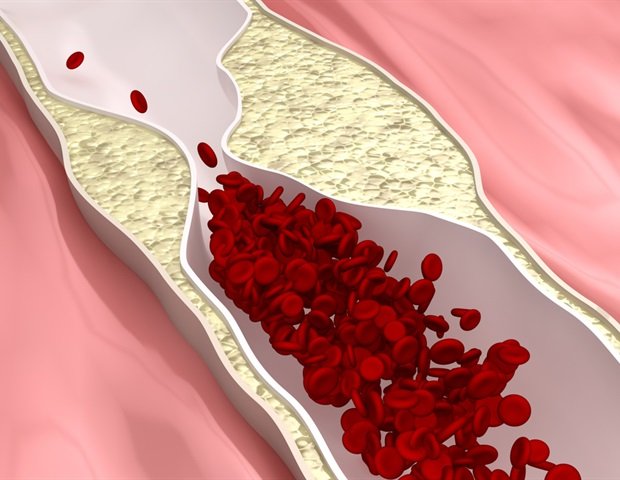
The cholesterol-lowering therapy evolocumab reduced the risk of serious adverse cardiac events by nearly one-third in patients with diabetes and no known significant atherosclerosis, according to a study presented at the American College of Cardiology’s Annual Scientific Sessions (ACC.26).
The study, a subgroup analysis of the VESALIUS-CV trial, included more than 3,600 people with diabetes who were not previously known to have significant plaque buildup (atherosclerosis) in their heart’s arteries, which can lead to heart attacks and strokes. Previous trials have demonstrated that intensively lowering low-density lipoprotein cholesterol (LDL-C) using PCSK9 inhibitors, such as evolocumab, in addition to optimally tolerated statin therapy, can be used as part of secondary prevention efforts to reduce cardiovascular risk in patients who have experienced a prior major cardiac event. VESALIUS-CV was the first trial to evaluate the use of evolocumab in high-risk primary prevention, focusing on patients who had not previously experienced a major cardiac event.
I think this research will change the paradigm. In current practice, PCSK9 inhibitors are primarily used in patients who have had a heart attack or stroke, but we see here an advantage in using evolocumab to also treat patients without a history of heart attack or stroke and without known significant atherosclerosis. This is a message to doctors and patients that there is no need to wait until someone has atherosclerosis to treat them intensively. We can and should be more proactive. ”
Nicholas Marston, MD, MPH, cardiologist and assistant professor at Brigham and Women’s Hospital in Boston and Harvard Medical School, and lead author of the study
Evolocumab is an injectable monoclonal antibody that works by blocking the PCSK9 protein, which increases the number of low-density lipoprotein receptors in the liver and more effectively removes LDL-C from the bloodstream. By significantly reducing LDL-C, the main cause of plaque buildup, it slows the progression of atherosclerosis and prevents serious cardiac events.
The VESALIUS-CV trial enrolled 12,257 patients with LDL-C ≥90 mg/dL, known atherosclerosis or diabetes, and no history of heart attack or stroke. Results reported in 2025 showed that evolocumab significantly reduced the risk of a first major adverse cardiac event compared to placebo in the entire study population. For this new subgroup analysis, researchers analyzed the results of 3,655 VESALIUS-CV participants who had diabetes and no known symptoms of significant atherosclerosis. The median age of these participants was 65 years, 57% were female, and 93% were Caucasian. Additionally, 87% of patients were taking statins.
This subgroup study had two common primary endpoints: a composite of death from coronary heart disease, heart attack, or ischemic stroke, and a composite of any of these three outcomes or a procedure to open a blocked artery (revascularization) caused by decreased blood flow (ischemia). At a median time of 4.8 years, the rate of achievement of both of these composite endpoints was 31% lower in patients who received evolocumab compared with those who received placebo. The reduction in risk was evident at 1 year, after which the between-group difference increased to approximately 40%.
Among patients whose lipid levels were checked throughout the study (approximately 550 of 3,655 participants), those who received evolocumab had a significant reduction in LDL-C, dropping to a median of 52 mg/dL at 48 weeks and 44 mg/dL at 96 weeks, compared to 111 mg/dL and 105 mg/dL, respectively, in patients taking placebo. These patients were also 32% less likely to die from cardiovascular disease and 24% less likely to die from any cause during the study period compared with the control group, although statistical significance was not assessed for these endpoints.
The researchers said that based on the results of the full VESALIUS-CV trial and the subgroup analysis, primary care providers may be able to consider using evolocumab in a much broader patient population than previously possible. Professor Marston said the findings highlight that patients at high cardiovascular risk appear to benefit from more intensive LDL-C-lowering treatment, even in the absence of known significant atherosclerosis.
“For decades, we’ve been lowering and lowering our LDL-C goals and continuing to see the benefits. Now we’re in the process of moving earlier and earlier in the disease course, and so far we continue to see benefits from that approach,” he said.
The ACC/AHA guidelines for the management of dyslipidemia, released earlier this month, recommend lowering LDL-C levels early in life. The guidelines also reinstate recommendations regarding LDL-C and non-HDL treatment targets to guide lipid-lowering therapy. The results of this subgroup analysis strongly support the need to target even lower LDL-C goals in these low-risk patients, which are typically set for very high-risk secondary prevention patients, Marston said.
Professor Marston said some participants included in the subgroup analysis may have had undiagnosed atherosclerotic heart disease, as coronary imaging was not required for study entry. However, this reflects clinical settings where routine coronary artery imaging is not recommended. The analysis was also limited to people with diabetes, and the study population was primarily older and mostly white. The researchers said additional studies may elucidate whether evolocumab offers similar benefits in younger patients or in patients without diabetes but with other cardiovascular risk factors.
The study was funded by Amgen, the manufacturer of evolocumab.
The study was published online at the same time. Japan Automobile Manufacturers Association At the time of the presentation.
Dr. Marston will present his study, “Evolocumab reduces risk of first major cardiovascular event by 31% in patients without significant atherosclerosis: Results from VESALIUS-CV,” on Saturday, March 28 at 3:45 PM CT/3:45 PM UTC in the Great Hall main tent.
sauce:
American College of Cardiology
