


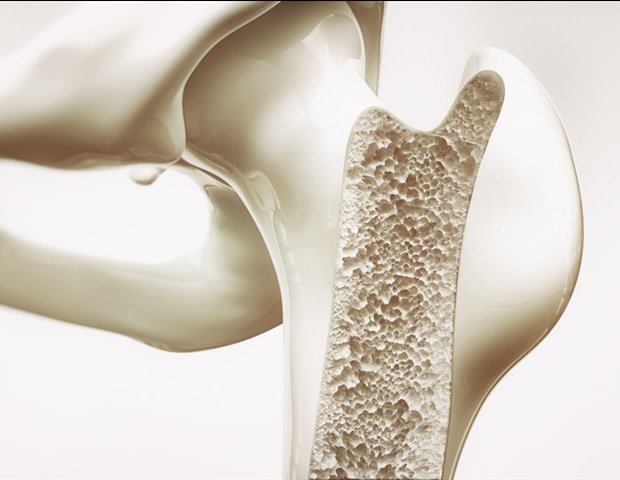
Increasing bone density does not prevent fractures in patients with a rare genetic disorder that causes bones to break easily, a large clinical trial has found.
Patients with brittle bone disease who received treatment to increase bone density experienced a similar number of fractures as patients who received standard treatment.
The findings cast doubt on the long-held idea that better bone density may help people with the disease, and suggest that treatment strategies should instead focus on improving bone quality, experts say.
Brittle bone disease, or osteogenesis imperfecta (OI), is caused by defects in the production of collagen, a protein essential to bone structure, which causes bones to become weak and brittle and can break with little or no trauma. Approximately 1 in 15,000 people are affected.
For decades, treatment of this condition has focused on administering drugs that increase bone density, even though there is little evidence that they reduce fracture risk.
Scientists at the University of Edinburgh followed 350 adults with OI over eight years from May 2017 to March 2025 in the TOPaZ trial. Half of the patients received drug treatment aimed at improving bone density, and the other half received standard treatment.
Although patients receiving drug treatment had a significant increase in bone density compared to those receiving standard treatment, this did not translate into a reduction in the number of new or total vertebral fractures. Thirty-seven percent of those treated with bone density therapy experienced a fracture, compared with 36% of those treated with standard therapy.
Experts say the findings could help reshape treatment approaches for OI, moving toward treatments that strengthen bone quality, limit disease progression, and improve patient outcomes.
The research was supported by the Brittle Bone Society, funded by the Medical Research Council and the National Institute for Health and Care Research, and published in the journal Japan Automobile Manufacturers Association. The research team includes scientists from 27 hospitals across the UK and Europe, providing specialist care to patients with OI.
The results of this study will fundamentally change clinical practice for the treatment of osteogenesis imperfecta. We have been using drugs to increase bone density for decades in the hopes of preventing bone fractures, but the TOPaZ trial clearly showed that these drugs simply don’t work. We now need to focus on finding new drugs that can target collagen defects in bones to improve bone strength and reduce the risk of fractures in this rare but serious disease. ”
Stuart Ralston, Research Director and Professor, Genetic Cancer Research Institute, University of Edinburgh
Brittle Bone Patricia Osborne, CEO of the Society, said: “We are proud to have supported the TOPaZ trial. The results give patients and clinicians clear evidence to guide treatment decisions and highlight the importance of OI-specific research. This study also challenges assumptions and “By bringing together the largest group of adults with OI ever studied, TOPaZ will set a new benchmark and directly influence the way future trials are conducted.” will be designed and delivered. ”
sauce:
Reference magazines:
Huld, J.D.; others (2026) Randomized clinical trial of teriparatide and zoledronic acid for osteogenesis imperfecta. Japan Automobile Manufacturers Association. DOI:10.1001/jama.2026.6889. https://jamanetwork.com/journals/jama/fullarticle/2849063.
