


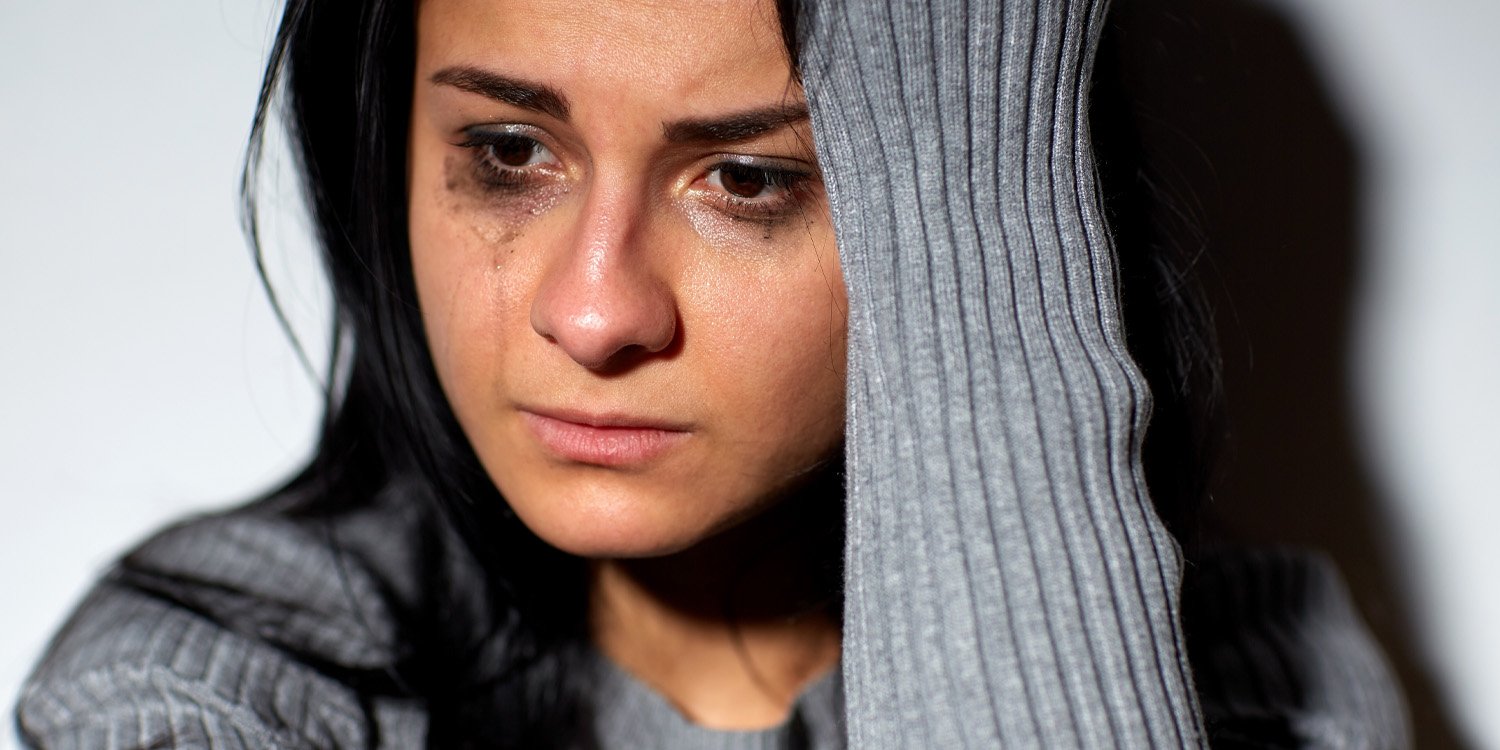
Recent research published in Co-author: Psychology found that the emotional benefits of crying largely depend on the reason behind the tears. People think that crying a lot will instantly make them feel better, but this study suggests that crying doesn’t universally improve a person’s mood. The effects of crying are relatively short-lived and vary depending on whether the tears are caused by personal distress, the media, or a moment of harmony.
Scientists conducted this new study to better understand how crying affects adults in natural everyday settings. Until now, scientists have relied primarily on experiments and surveys that ask participants to recall past events. These traditional methods can cause problems because people may hold back tears in the lab or have trouble remembering exactly how they felt days or weeks later.
“Crying is a fundamental human behavior. We were surprised that so little research has been done on crying in settings like the outdoors,” said study author Stefan Stieger, professor and chair of the Department of Psychological Methods at Karl Landsteiner University.
Scientists wanted to track the evolution of emotions in real time. They tried to measure exactly how long it takes for a person’s mood to change after crying. They also aimed to see whether factors such as the intensity of tears and the specific trigger of crying changed emotional outcomes.
To explore these questions, scientists observed 106 adults over a four-week period. Participants were primarily women from Austria and Germany with an average age of approximately 29 years. They installed a customized tracking application on their personal smartphones to record their experiences.
Whenever participants cried, they were instructed to immediately record the event in the app. They recorded the specific trigger, the intensity with which they cried, how long they continued to cry, and their current levels of positive and negative emotions. The app then automatically prompted them to report their emotional state again after 15, 30, and 60 minutes.
To ensure they didn’t miss any tears, the researchers also asked participants to complete an end-of-day survey. This daily survey recorded any crying episodes that the person may have previously forgotten to record. It also measured their overall emotional state for the day, allowing the scientists to establish a baseline of how each person typically felt on days without tears.
Scientists have discovered that emotional crying is a very common human behavior. Almost 87% of participants cried at least once, with an average of about 5 times over a 4-week period. In total, participants reported 315 events that immediately made them cry and an additional 300 events that they had previously forgotten during the night survey.
Women tended to cry more than men. The women in the study cried an average of nearly six times a month, while the men cried an average of just under three times a month. Women also cried harder and for longer than male participants.
The reasons for crying are different for men and women. Women were more likely to cry due to loneliness or personal conflict with a loved one. Men were more likely to cry in response to feelings of helplessness or in response to media, such as when watching a sad movie.
Across the group, media viewing was the most common reason for crying. My tears were the heaviest and lasted the longest when I felt overwhelmed or alone. These particular episodes averaged 11 to 13 minutes each.
When examining the emotional results, the scientists found no overall evidence that crying automatically provides immediate relief, which Steger said was surprising.
The emotional aftermath depended almost entirely on the specific trigger of the tear. Crying in response to a personal conflict, such as feeling lonely or overwhelmed, led to a sharp decrease in positive emotions and a significant increase in negative emotions.
These negative feelings lasted for quite some time. Those who cried because they felt overwhelmed had significantly lower levels of positive emotions than normal, even after an hour. These self-centered triggers lowered the person’s overall mood for the rest of the day, but by the next morning, emotions returned to normal.
Tears shed for other reasons showed a completely different pattern. Crying after watching media content initially lowered both positive and negative emotions. Over the next hour, negative emotions continued to decrease, suggesting that crying while watching a movie may ultimately help a person calm down.
Tears of harmony, such as crying when someone does something kind, did not immediately change a person’s emotional state. After about 15 minutes, participants experienced a significant drop in negative emotions. Finally, although crying out of helplessness led to a rapid decline in positive affect, participants recovered to their normal affective baseline within 15 minutes.
Although this research provides detailed insight into human emotions, there may be misconceptions and limitations to keep in mind. Because this study relied entirely on self-report, participants may have inaccurately judged their own emotions. It’s also possible that you still forget to report some short or small crying episodes.
The study design also did not allow the scientists to compare crying to experiencing similar strong emotions without crying. For this reason, it is difficult to know whether the observed mood changes were caused specifically by the act of crying or simply by the intense emotional event itself.
“At this time, no further research on this topic is planned,” Steger said. “However, for future studies we will use a smartphone-based assessment procedure, i.e. multiple measurements per day over a number of days using a smartphone (experience sampling method), because this method is very promising when we want to analyze human behavior in everyday life (i.e. has high ecological validity).”
The study, “The Emotional Impact of Crying: An Event-Based Experience Sampling Study of Emotional Crying in Adults,” was authored by Stefan Stieger, Hannah Graf, and Sophie Biebl.
