


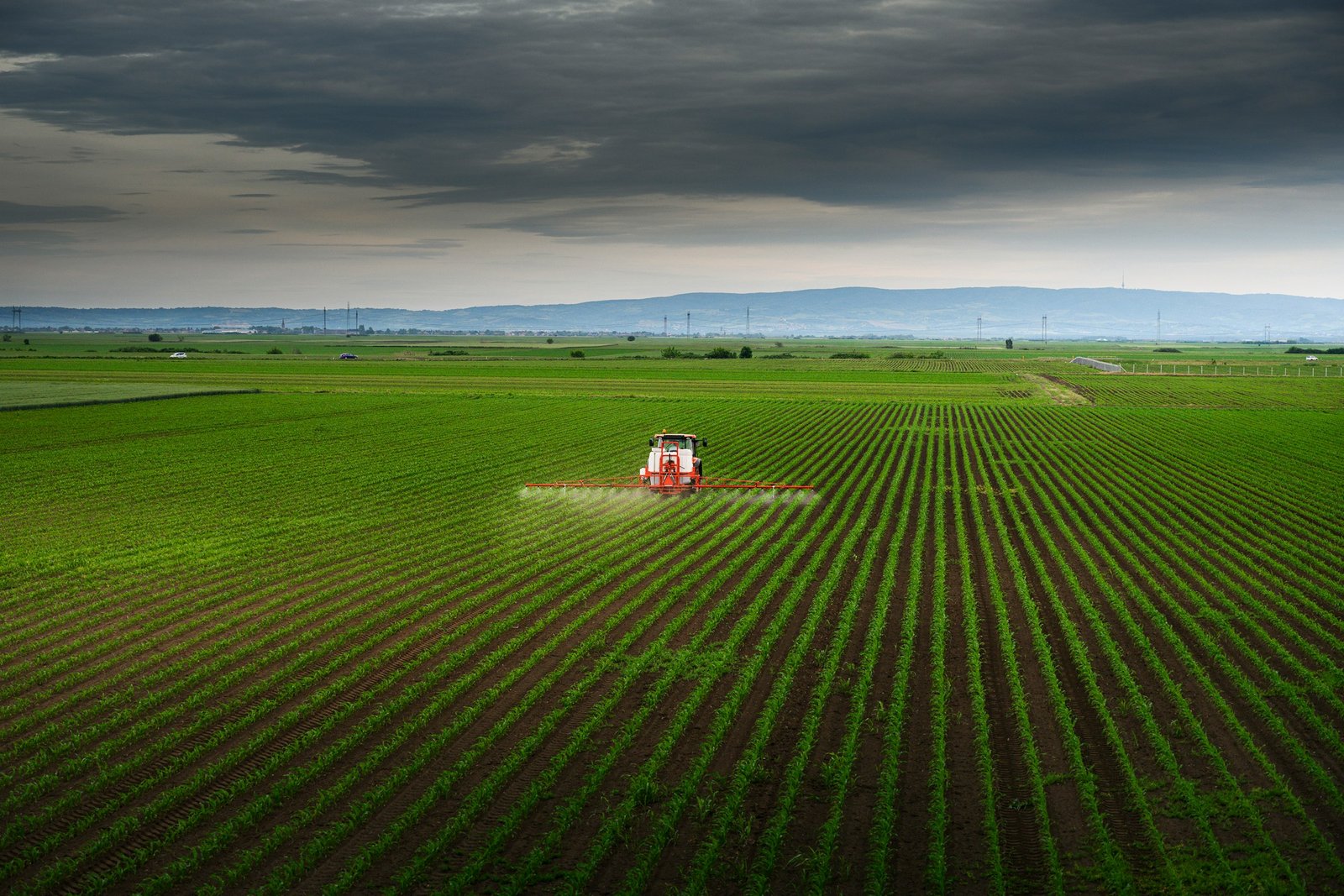
A new report shows that Iowa has higher rates of more than a dozen types of cancer associated with pesticides and pollutants than other regions, and researchers say pesticide exposure alone can rival the risks of smoking.
Iowa has the second highest cancer rate in the nation. Only 1 of 3 states with cancer on the riseaccording to the National Institutes of Health. For many types of cancer, the state’s numbers are well below the national average. For example, the prostate cancer incidence rate in Iowa is 129 per 100,000 people, while the U.S. average is 116 per 100,000. The state’s breast cancer incidence rate is 137 per 100,000 people, compared to the national average breast cancer rate of 131.
The state’s overall cancer rate is 498 per 100,000 people, which is 10% higher than the national cancer rate.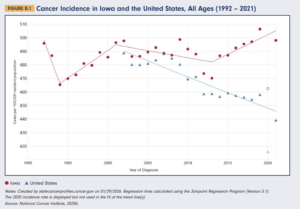
“This is impacting every corner of the state. There are no limits…Democrats, Republicans, urban and rural areas,” said Sarah Green, executive director of the Iowa Environmental Council (IEC), which released the new report in collaboration with the Harkin Institute, a public policy research institute at Drake University in Iowa.
Researchers analyzed cancer and pollution data, existing scientific research, and conducted hearing sessions with Iowans over the past year to narrow their report down to four environmental risks. Pesticides, per- and polyfluoroalkyl substances (PFAS), nitrates and radon, which are prevalent in the state.
According to the latest data, the report found that 13 of 16 cancer types associated with exposure to pesticides, per- and polyfluoroalkyl substances (PFAS), nitrates and radon, including breast cancer, brain cancer, non-Hodgkin’s lymphoma and prostate cancer, affect Iowans at much higher rates than the U.S. population.
“Iowa stands out as an outlier compared to most other states in terms of exposure to these environmental risk factors,” the report states.
The results come as state politicians and public health officials express growing concern about the state’s rising cancer rates and seek solutions. While some residents and health and environmental activists point to the pesticides, agricultural industry groups and their political allies defend their use as safe.
“Iowa stands out as an outlier compared to most other states in terms of exposure to these environmental risk factors.”
While the report’s authors emphasized that cancer is complex and no single driver can be identified, they said their findings suggest that large amounts of pesticides, fertilizers, fertilizers and other pollutants are likely making Iowans sick.
“We have some of the highest levels of pesticide use in the nation, and we also have some of the highest levels of nitrate in our waterways,” said Adam Schreiber, co-author of the report and director of wellness and nutrition policy at the Harkin Institute. “These chemicals are probably playing a pretty significant role in the Iowa crisis.”
Pesticides and cancer
In Iowa Approximately 87,000 farmsranks first in corn, pork, and egg production. It is also in the top five states for soybean and cattle farming. Of Iowa’s total area of 35.7 million acres, approximately 31 million will be earmarked for agriculture. The state has long struggled with waterway pollution from excess pesticides, fertilizers and manure.
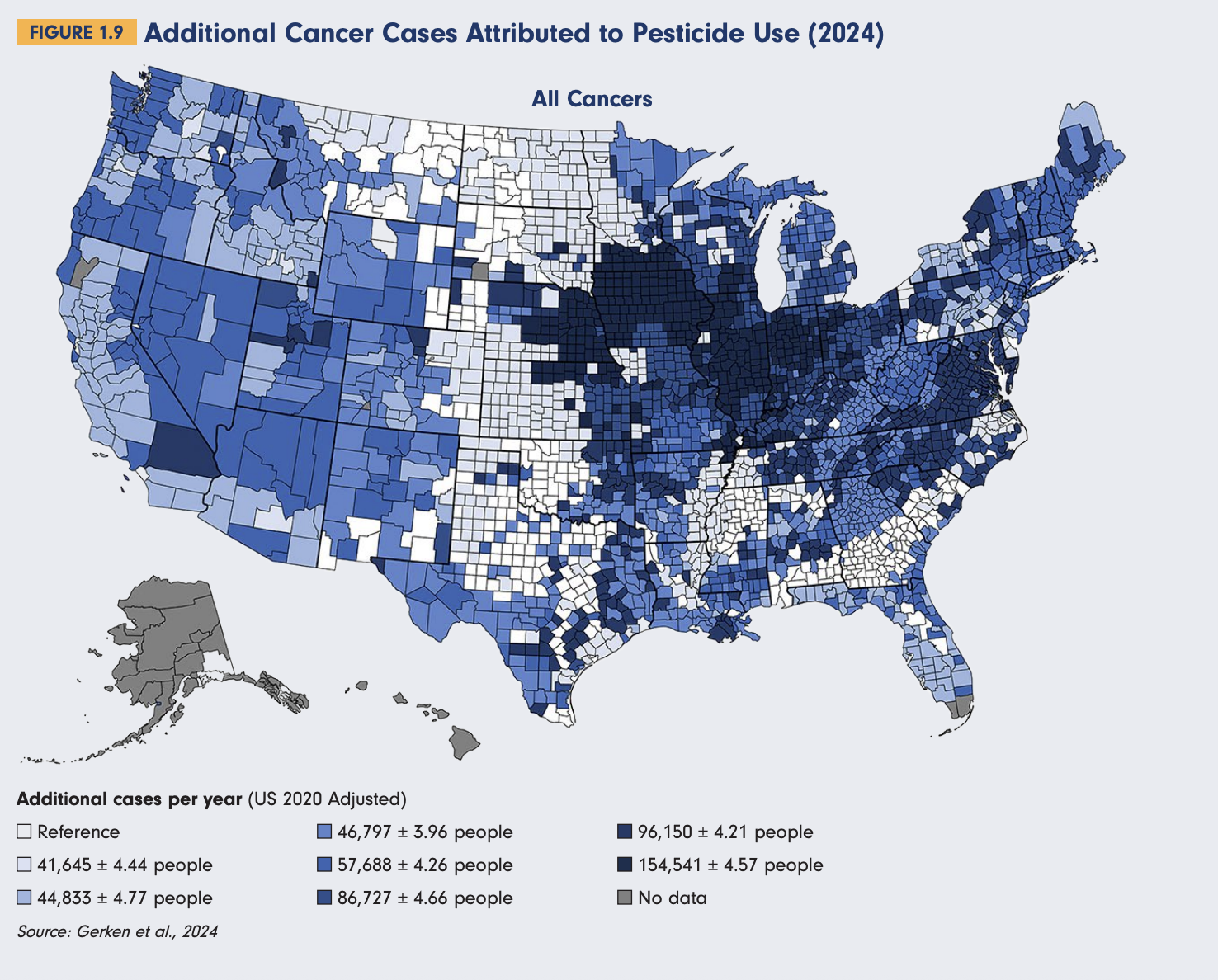
The new report focuses on the three most used pesticides in Iowa: glyphosate, acetochlor and atrazine. The state consistently ranks among the top five states for use of these three types of pesticides, and the report found that these pesticides are linked to several types of cancer, including pancreatic, oral, kidney, and breast cancers, which are on the rise in Iowa.
“The effect of pesticide use on cancer incidence may be similar to that of smoking,” the authors write. They warned that many more pesticides are being used in the state, many of which are also likely contributing to cancer rates, and that there is a “cocktail” effect of people being exposed to different types of pesticides.
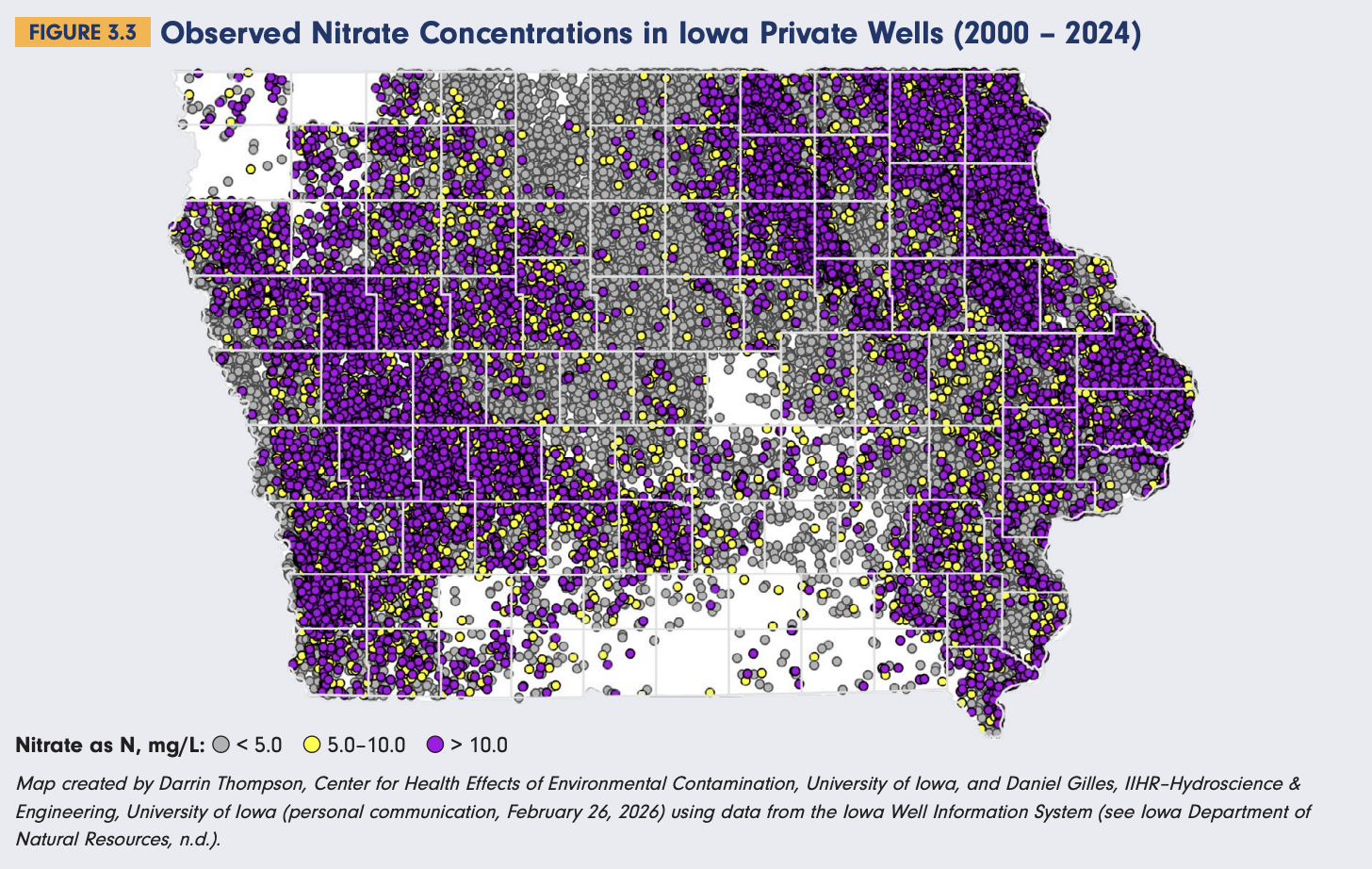
The report also focuses on one of the most frequently occurring pollutants in Iowa: nitrate, a type of nitrogen used as fertilizer and also linked to some types of cancer. Scientific studies have shown that exposure to nitrates is associated with several cancers, including kidney cancer, which is on the rise in Iowa. The pollutant has also been linked to bladder and ovarian cancer, and while it hasn’t increased in Iowa, it is present at much higher levels in the state than in the United States as a whole.
Agricultural fertilizers and fertilizers from large-scale livestock farming are Major sources of nitrates. Iowa is the top state in the nation for concentrated animal feeding operations (CAFOs). Additionally, billions of pounds of synthetic fertilizers are applied to fields each year, creating widespread water pollution problems. For example, the Des Moines and Raccoon Rivers in Iowa are in the top 1% of nitrate concentrations of rivers in the nation, and 80% of the pollution comes from agriculture, the report said.
But some state farmers see curbing farm contamination as an economic and public health victory. About 15 years ago, Matthew Bowman, who has been farming in Iowa for more than a quarter of a century, started applying nitrogen only in season (when plants take up nitrogen) with his corn and soybean crops, rotating cover crops to strengthen the soil, and tilling the soil less.
“It has made farming a lot easier for us,” he said, adding that the changes have strengthened soil health, reduced erosion and reduced the amount of fertilizer runoff entering waterways.
 Bolman, a member of the Loeb Rangers farm group (named after the Des Moines-Loeb area where they farm), makes it clear that he is not an activist, but a farmer who wants to lead change in the state.
“More farmers need to adopt practices to improve water quality, but we are not at the scale we need,” he said.
Iowa agriculture industry groups are resisting stricter regulations on the use of livestock manure, pesticides and fertilizers, arguing they are essential tools for growing crops and have been proven safe. Both the Iowa Department of Agriculture and the Iowa Corn Growers Association did not respond to requests for comment on the link between farm chemicals and cancer.
“Farmers often feel as trapped in this system as the rest of us,” says Colleen Fowle, IEC water program director and co-author of the report. “Farmers don’t necessarily feel like they have the ability to make decisions about their land.”
political inaction
Iowa’s cancer rates are influencing state politics, with lawmakers on both sides of the aisle weighing in on the crisis. Agriculture contributes an estimated $159.5 billion to the state’s economy, representing about one-third of Iowa’s total economic product. According to Iowa Farm Bureau.
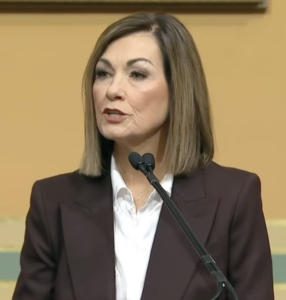 Iowa Governor Kim Reynolds during her State of the State address in January.
In January’s State of the Nation Address, Republican Gov. Kim Reynolds said, “More than 20,000 Iowans are diagnosed with this terrible disease each year. Everyone in this room is affected by this disease in some way.” She went on to promote screening as key to the fight against cancer, strengthen cancer treatment “hubs,” and promote the state’s Healthy Hometowns Initiative, which “funds the oncologists, equipment and advanced medical technology needed to provide this specialized care.”
Democratic state lawmakers have more aggressively targeted pesticides and farm pollution that are believed to be responsible for the state’s cancer rates.
“This report confirms what most Iowans instinctively believe: that the environment is the primary cause of the cancer crisis,” said Austin Beiss, a physician and state representative.
Beiss said the only recent state legislative effort regarding environmental carcinogens is Radon mitigation.
“My challenge now is to get my Republican colleagues to admit that we even have a water pollution problem,” he said. The New Rede contacted state Rep. Dean Fisher, a Republican who chairs the state Environmental Protection Commission, but did not receive a response.
The Harkin Institute and IEC are not the only organizations in the state investigating the causes of cancer. Researchers at the University of Iowa School of Public Health made the announcement earlier this month. Preliminary information It comes from a year-long partnership with the state Department of Health and Human Services to better understand Iowa’s high cancer rates. The researchers stressed that while this study is ongoing, it suggests that there is no single reason for the increased rate. But they told the Legislature that stricter pesticide regulations would likely help lower the state’s cancer rates.
“My challenge now is to get my Republican colleagues to admit that we even have a water pollution problem.” -Austin Beiss, Iowa State Representative
Additionally, a new analysis from Food & Water Watch last week linked heavy use of the herbicide glyphosate to increased rates of non-Hodgkin’s lymphoma (NHL), particularly in the Midwest. a hotspot map shows clusters of particularly high NHL rates in many regions of Iowa.
Call for monitoring and pollution control
A new report offers several recommendations to reduce the state’s cancer burden, including stricter limits on water pollution, increased water monitoring, and increased research on cancer and environmental risks.
“We need to fund water monitoring networks to measure nitrate and pesticide levels in our waterways,” Schreiber said. “The state Legislature basically defunded it two years ago…so to say, ‘We don’t have enough information,’ while cutting off the flow of further information, is kind of wild.”
The report also provides specific policy prescriptions to reduce the current maximum nitrate contaminant level of 10 mg/L (milligrams per liter) in public waters and adopt federal guidelines. introduced over 10 years ago — which Iowa never adopted — would limit carcinogens in water and fish tissue.
Mr. Bormann spoke about the current voluntary measures aimed at farmers. State nutrition reduction strategies — It’s not working.
“Agriculture is a business that doesn’t need to change because people are happy with the way things are,” he said. “If farmers had to change their practices to qualify for crop insurance or farm program payments, things would change overnight.”
Featured image: Getty Images/Unsplash +
-

Brian Bienkowski is the editor-in-chief of The New Lede. He is a veteran journalist with over 15 years of experience covering the environment and human health. Prior to joining TNL, he was a senior editor at Environmental Health News for nearly a decade, overseeing the newsroom and two local bureaus. He was also the founder, producer, and host of the EJ podcast Agents of Change from 2020 to 2024.
Bienkowski has received multiple awards for her editing and reporting, including honors from the Healthcare Journalists Association, Columbia School of Journalism, Hunter College, and the Environmental Journalists Association. He has a master’s degree in environmental journalism from Michigan State University and lives in northern Michigan.
