


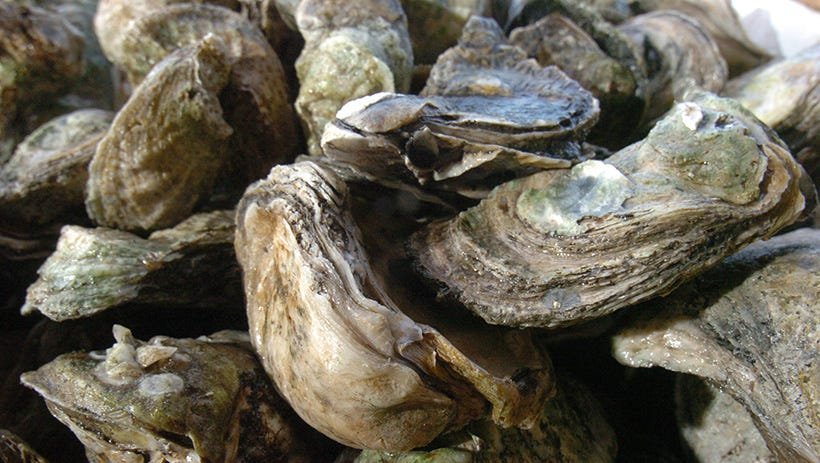
Oysters, long associated with the North Carolina coast, are a delicacy that is difficult to farm due to factors both in and out of the water.


Warmer weather brings new shellfish risks to North Carolina
Oyster farmers in North Carolina face increased risks of disease, contamination and Vibrio bacteria as rising water temperatures and drought strain farms.
- Shellfish farmers face numerous challenges, including disease, pollution, and the effects of climate change.
- North Carolina’s oyster industry is recovering, but still faces threats from development and water quality degradation.
- Public health concerns about bacteria such as Salmonella and Vibrio can impact consumer confidence and sales.
On Canada’s coast of Prince Edward Island, many oyster farmers are suffering near 100 per cent losses on their shellfish farms due to disease.
Along the Atlantic coast of New England and mid-Atlantic states, farmers are closely monitoring shellfish harvests and gauging losses from a bitterly cold and icy winter season.
Shellfish farmers in North Carolina have so far avoided major fatalities in 2026. But it’s still early in the year, and rising coastal water temperatures could quickly turn it into a petri dish for disease and viruses.
While marine aquaculture has continued to grow along North Carolina’s coast, despite several hitches, becoming an important economic driver in areas with few other avenues for growth, especially in non-waterfront areas, here are some of the natural and man-made hazards that the state’s shellfish farmers often have to overcome.
disease and pollution
Oysters in North Carolina haven’t had an easy time lately. Overfishing, destruction of oyster beds, and deteriorating water quality along with the encroachment of development on many pristine coastal areas have taken their toll for decades.
Some researchers believe that up to 90% of North Carolina’s historic oyster farms have been lost, and the state’s coastal appeal shows no signs of slowing down any time soon. For example, the population of the three-county Wilmington metropolitan area has grown from about 276,000 in 2000 to an estimated 494,000 in 2025. It is predicted to reach more than 651,000 by 2040.
But the mollusk, prized for its salty taste and famous natural aphrodisiac properties, is making a comeback in North Carolina’s coastal waters after more than 30 years of collaborative efforts by the state, research institutions and environmental groups to support an oyster and aquaculture industry worth more than $15 million a year.
But each year can bring new challenges.
Shellfish farm die-offs are a constant possibility faced by fish farmers, and large-scale events can be especially brutal, costing irrigators a season or more of production.
In recent years, many oyster farms have been devastated by a series of mass mortality events, with more than 80% of the shellfish in some shellfish farms dying. Chris Matteo, owner of Chadwick Creek Oysters and Seed Nursery in Bayboro, near New Bern, and president of the North Carolina Shellfish Growers Association, said the die-off appears to be concentrated in areas with high salinity.
In southern New Hanover County, along the Intracoastal Waterway, a lab run by the University of North Carolina at Wilmington is working to help shellfish farmers.
Since 2011, the UNCW Shellfish Research Hatchery has been selectively breeding oysters, testing whether oysters from specific regions of the state (such as Pamlico Sound and the Cape Fear River) have greater resilience and faster growth potential under different environmental conditions.
Hatchery owner Dr. Ami Wilbur said there have been no significant fatalities in North Carolina so far this year. But it’s still too early, she added, and mortality appears to be at its worst from mid-May to mid-June.
Mateo echoed Wilbur’s sentiments, saying he has only heard of “very isolated incidents” of fatalities by 2026.
But he added that years of severe drought have heightened concerns, as a lack of freshwater flowing into the state’s estuaries and estuaries could push more seawater further inland, reaching levels that could harm shellfish.
As of May 7, the U.S. Drought Monitor announced that all of North Carolina was in drought, with nearly 61% of the state classified as “extreme drought.” The National Weather Service showed that in Wilmington, the port city had recorded 9 inches of rainfall in 2026 through May 11. Typical precipitation is 15.7 inches.
human challenges
Mother Nature concerns aren’t the only concerns facing the state’s shellfish farmers in some areas.
New Hanover County’s moratorium on new shellfish leases, adopted in 2019 and extended several times since then, was prompted by complaints from waterfront homeowners and boaters about the density, landscape and rapid growth of shellfish farms in Masonboro and Myrtle Grove Sound.
This ban, along with a decades-long ban in Brunswick County, led to the rapid growth of the industry in Topsail Sound and Stump Sound in Pender County. But now officials in Pender and Onslow counties are pushing back, saying it’s unfair to push all leases onto just a small portion of the coast.
According to the latest statistics from the North Carolina Department of Marine Fisheries, there are 525 shellfish leases in North Carolina, covering just over 2,500 acres of public trust waters. These include 85 lease locations in Onslow County and 52 lease locations in Pender County. By contrast, New Hanover County has six leases involving research work at UNCW, and Brunswick County has just one.
Mateo said the moratorium would not work to reduce conflicts between users, but would instead increase the problem by concentrating shellfish farms in small areas and putting further pressure on an industry that benefits coastal communities, their economies and the environment thanks to the amazing water quality and habitat benefits of oyster reefs.
Shellfish farmers also face public concerns about the safety of their products, especially when eaten raw.
In December 2025, the U.S. Centers for Disease Control and Prevention (CDC) issued a warning against consuming raw oysters after a salmonella outbreak sickened dozens of people. The warning was widely reported and sparked a backlash from industry groups. Industry groups argued that vague and widespread investigations showed evidence of an outbreak in oysters, potentially costing farmers millions of dollars in lost sales, even though evidence of a link or connection to a single region or producer was flimsy at best.
Vibrio is also a bacteria found in shellfish that often attracts attention from the public and media because eating raw seafood such as oysters can cause gastrointestinal problems.
The organisms live in warm, brackish coastal waters, floating around and accumulating in water-filtering species such as oysters and clams. Thanks to rising water temperatures associated with climate change and oceans absorbing more heat, bacteria are appearing in more areas faster and in higher concentrations.
According to the CDC, Vibrio causes an estimated 80,000 illnesses and about 100 deaths in the United States each year, and about 12 types of bacteria are pathogenic to humans.
But it’s one particular type of bacteria that sends chills down the spines of health officials. Vibrio vulnificus is a human-eating bacteria that can lead to intensive care, surgical tissue removal, and even amputation if not treated immediately.
Mateo said shellfish farmers follow strict procedures backed by oversight by federal and state regulators to prevent infected oysters from entering the food chain. He also pointed out that most Vibrio infections in humans are caused by swimming in brackish water with an open wound.
Reporter Gareth McGrath can be reached at GMcGrath@usatodayco.com or @GarethMcGrathSN on X/Twitter. This article was produced with financial support from Journalism Funding Partners. USA TODAY Network maintains full editorial control of the work.
