


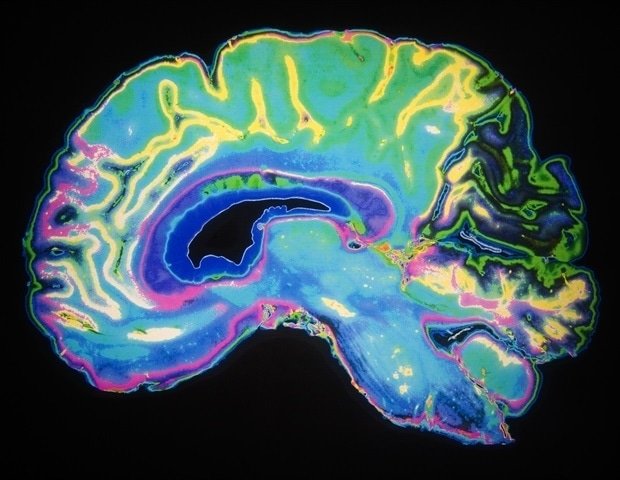
To better understand and potentially treat the many conditions that affect early cognition, neurodevelopment, and the brain later in life, researchers at Johns Hopkins University have been mapping the molecular structure of the human brain around the world. These models, supported in part by federal and international research grants, are helping researchers study the genetic connections and pathways involved in diseases ranging from autism spectrum disorders, which affect about 1 in 31 children, or 3%, in the United States, to Alzheimer’s disease, which is estimated to affect more than 7 million U.S. adults, including 1 in 9, or 11%, over the age of 65.
To support this blueprint, in a new study, Carlo Colantuoni, Ph.D., an adjunct professor of neurology at Johns Hopkins University and the Institute for Genomic Sciences at the University of Maryland School of Medicine, and other researchers gathered data from nearly 200 published studies and more than 30 million cells to advance insights into how the neocortex, the outermost layer of the brain, develops and forms over time. This area of the brain is responsible for a variety of functions, including how we think, sense, process and store information, and make decisions.
“Our goal is to understand how the neocortex is built at the cellular level and identify clues to developmental delays and early stages of brain disorders,” Colantuoni said. “By mapping the cellular transitions and genes that give rise to the neocortex’s complex structure and function, we will be able to better understand and attempt to treat diseases that occur in utero, in infancy, childhood, and even much later in life.”
This enhanced atlas will not only help researchers study the genetic associations of autism spectrum disorders, but also provide insight into rare diseases like microcephaly, which begin before birth and can have a significant impact on brain development. Our strength is that we can provide this information all at once. nature and natural neuroscienceResearchers can study detailed stages of development to identify typical growth patterns and pinpoint the causes and pathways of neurodevelopmental delays and diseases.
In addition to mapping human models of the neocortex, the authors presented mammalian and mouse models. These various atlases demonstrate that gene expression programs that began as a spreading network millions of years ago have recently focused on human neural stem cells to drive expansion of the human neocortex. Researchers say this process contributes to and partially explains differences in high cognitive performance in humans compared to other animals.
The researchers also used the accumulated data to create a graph of neuron maturation in the human neocortex. This process has been prolonged over evolutionary time as the human neocortex and mental capacity expand. For example, this type of neural development takes weeks in mice but years in humans. This represents a sophisticated system difference that allows the human brain to learn how to adaptively interpret complex social, environmental, and sensory input over long periods of development.
These resources are now available as an open-access web portal to empower other researchers studying human brain development and disease. Colantuoni says these and other brain mapping efforts aim to help researchers study the mechanisms of brain disease across the lifespan and provide tools to better support and accelerate everyday research.
Researchers without coding expertise can explore the expression patterns of individual genes of interest, graph the coordinated expression of gene modules that work together in specific ways during development, and contribute their own data to expand the resource.
Previous brain research from the Advancing Innovative Neurotechnologies (BRAIN) initiative has included surveys of human and mouse brain cells to catalog the diversity of cell types in the mammalian brain. Other projects are investigating how opioid use affects the brain in people living with HIV, how hair cells in the inner ear may regenerate and restore hearing, and how cellular pathways are distributed in dementia, including Alzheimer’s disease.
These brain mapping studies are complemented by extensive efforts to chart the entire cellular landscape of the human body, such as the Human Cell Atlas (HCA). HCA was founded in 2016 with the goal of bringing together researchers from around the world to create an open-access resource to map every cell in the human body. In 2024, experts published insights from more than 40 papers examining 62 million cells from nearly 10,000 humans.
HCA research and related research have already led to the discovery of new lung cells, a better understanding of how the body responds to infections, and the identification of networks of cells that work together to help the heart beat, regulate heart rate, and enable communication between organs throughout the body.
“We are living in unprecedented times. Advances in technology that coordinate and analyze large data sets, collaborate with researchers around the world, and leverage insights across disease states are paramount to identifying new treatments that can save and improve lives,” Colantuoni said. “As these efforts reach major milestones, we know that the ways investigators can collaborate and use these atlases are also just beginning.”
Colantuoni added that it is important to recruit more academic and industrial partners to invest in these pre-competitive data exploration spaces that will significantly expand the identification of novel molecular targets to treat brain disorders. “We hope that combining these resources with AI algorithms that guide large-scale screening of stem cell systems will enable precise tailoring of treatments to help individual patients with neurodevelopmental and neurodegenerative diseases,” he says.
To support this vision, Colantuoni and colleagues including Paul Worley, Jin-Chong Xu, Xiangyu Liao, and Yuelin Lao (all from the Johns Hopkins School of Medicine), Carol A. Barnes (University of Arizona), and Matthew Huetelman and Ignazio S. Piras (Translational Genomics Institute TGen) have also created an open data resource focused on Alzheimer’s disease.
Other authors of the neocortical development paper include Shreyash Sonthalia, Ricky S. Adkins, Joshua Orvis, Guangyang Li, Shoel Mato Blanco, Alex Casella, Jingrui Liu, Genevieve Stein O’Brien, Brian Cafo, Ronna Herzano, Anup Mahlukar, Jesse Gillis, Jonathan Werner, Xiaojie Ma, Nicolas Micali, Nenad Sestan, Pasko Rakic, Gabriel Santo Apelle, Seth Ament.
sauce:
Reference magazines:
DOI: 10.1038/s41593-026-02204-4
