


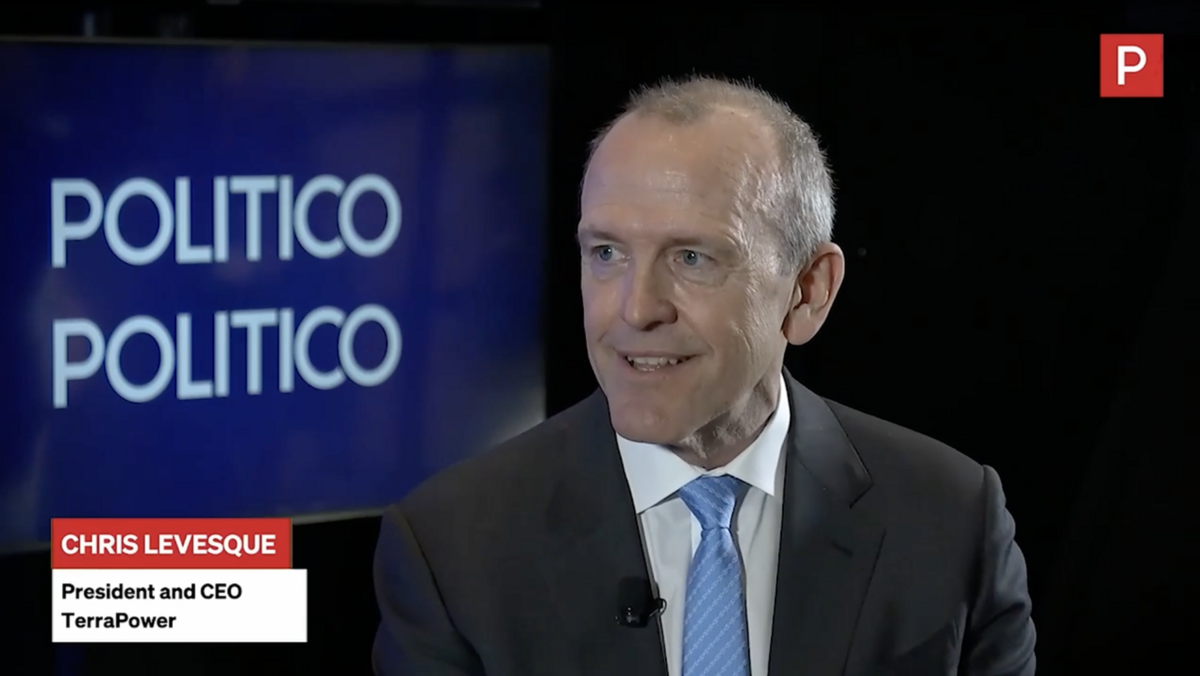
The CEO of Bill Gates-backed TerraPower said Monday that the highest hurdle for nuclear power companies is the inability to secure federal approval from the Nuclear Regulatory Commission.
Since returning to office, President Donald Trump has vowed to accelerate development of advanced nuclear reactors by pushing for faster NRC approvals and giving the Department of Energy a bigger role.
“The NRC is no longer a big concern,” TerraPower CEO Chris Levesque told CERAWeek in an interview at POLITICO Pub. Rather, he said the bigger limitation is workforce development and access to the materials needed to build modern nuclear reactors.
TerraPower recently became the first company to receive permission from the NRC to build a complete commercial advanced nuclear reactor. The company plans to build an unprecedented grid-scale small nuclear reactor. The permit will allow TerraPower to begin nuclear construction at the Wyoming site.
“Very objectively, we believe we are the next commercial nuclear power plant to come online in the United States,” Levesque said.
TerraPower CEO says it’s ‘unfortunate’ nuclear isn’t ready to meet AI demands
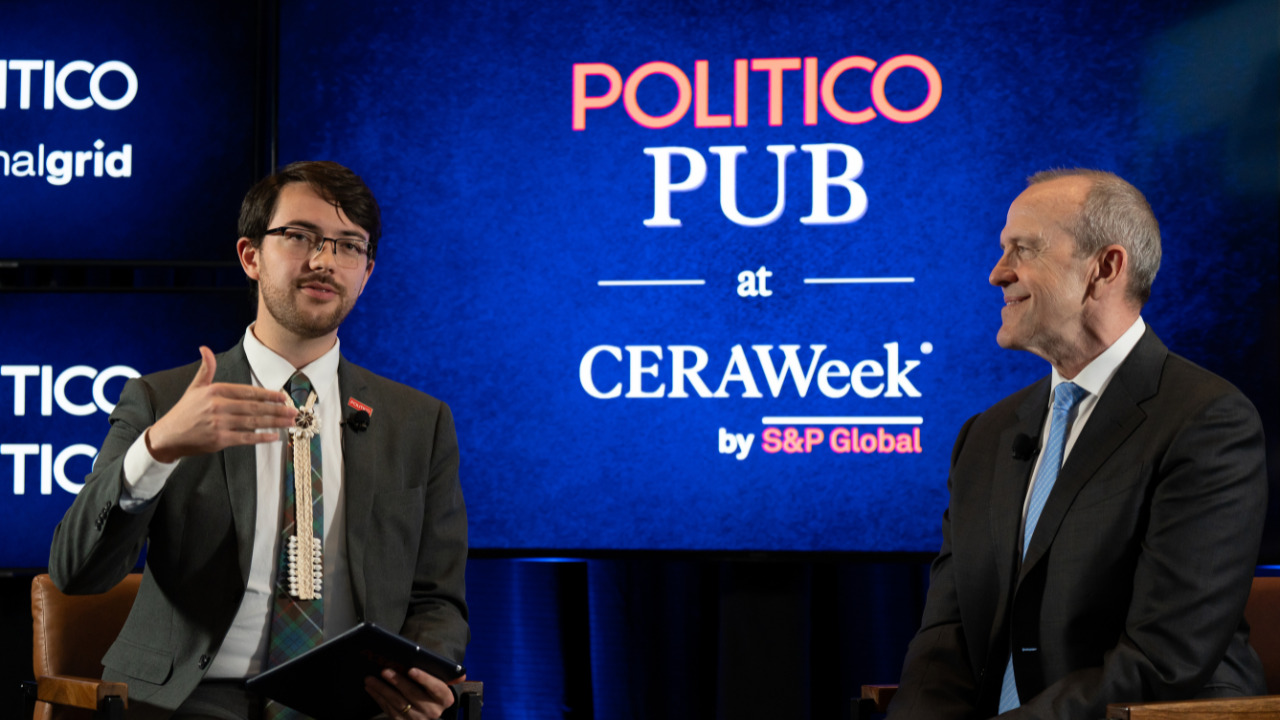 lead image
Levesque’s comments about the nuclear industry’s changing challenges come as power companies and big tech companies seek new generation sources to power artificial intelligence data centers. Through an executive order and changes to the NRC, the White House called for independent regulators to speed up the time it takes to review applications.
But some critics have raised concerns that risks could be overlooked in the rushed timeline.
“The opportunity is here,” Levesque said of the new focus on nuclear power. “In fact, it’s unfortunate that nuclear power is not ready tomorrow when there is such a demand for AI. We really deplore that.”
Levesque acknowledged the NRC’s changes and said TerraPower is setting a “high bar” for other companies seeking approval for new reactors. Other nuclear power company executives have similar sentiments.
“In my opinion, I don’t see licensing as a bottleneck at this point, especially given all the changes that are going on, and the NRC and now the DOE are working to accelerate some of the processes,” Samuel Gibson, founder and CEO of Hadron Energy, told a crowd in Houston early Monday. “The supply chain is one with limited capacity. It’s a small industry, so you have to have a place in line, and the lead times are quite long.”
Bill Jessup, chief nuclear officer at Natura Resources, said he believed regulatory reform was essential two years ago.
“I think the fact that our concerns are now in the supply chain shows that everyone is moving forward,” Jessup said during a March panel discussion hosted by OurEnergyPolicy.
TerraPower’s CEO also discussed the possibility of the privately held company offering to investors in the public market. It’s all a matter of timing, he said.
“Access to public capital is what we want,” Levesque said.
“The other thing you have to realize about nuclear power is that first-of-its-kind projects take a very long time, so releasing them too soon is a big problem,” Levesque said.
Still, he said there is a lot of private capital flowing in. Gates remains a major investor, but noted that semiconductor giant NVIDIA and South Korea’s SK Group are investing in and partnering with the project.
TerraPower was founded by Gates, of whom he currently serves as chairman of the board. Gates has recently faced questions over his ties to disgraced investor Jeffrey Epstein, but Levesque suggested the topic is not a top priority for employees at the nuclear startup.
“Our employees are very focused on their mission,” Levesque said.
Lévesque said the nuclear industry is going through a period of “disruption,” especially amid rising demand for electricity and growing interest from technology companies. This dynamic is reshaping how nuclear projects are positioned and sold.
TerraPower and other advanced nuclear companies are partnering with power companies, he said. Cooperate with the government. And deals with Meta, Google, and other tech giants are also possible.
“We’re going to embrace all of these things, and with the disruption in the power sector, all of these combinations are kind of being tried right now,” he said.
This week only: Follow POLITICO Pub CERAWeek like an insider with a 7-day free trial of POLITICO Pro’s Morning Energy newsletter, bringing you the deals, policy moves and conversations shaping the week. Plus, get access to E&E News, POLITICO’s suite of essential energy and environment coverage. Sign up now.
