


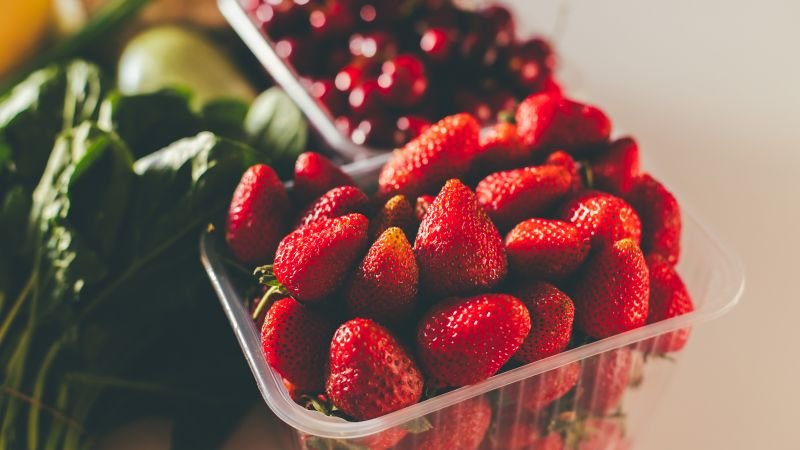
The 2026 Shopper’s Guide to Pesticides in Produce found that leafy greens such as spinach and perennials such as children’s favorites strawberries and grapes contained the highest levels of potentially harmful pesticide residues, based on government testing.
Nectarines, peaches, cherries, apples, blackberries, pears, potatoes and blueberries were the fruits and vegetables most heavily treated with pesticides on this year’s “Dirty Dozen,” according to a report released Tuesday by the environmental working group (EWG), a health advocacy group.
According to EWG, which has been publishing annual reports since 2004, spinach, which holds the top spot, has more pesticide residues by weight than any other produce, containing on average more than four different types of pesticides.
Samples of all produce types had an average of four or more pesticides used, except for potatoes, which had an average of two. Experts say they are concerned about consuming produce treated with multiple pesticides because exposure to mixed pesticides can accumulate and increase risk.
To create this report, EWG reviewed the most recent pesticide residue tests conducted by the U.S. Department of Agriculture on 54,344 samples of 47 fruits and vegetables.
Before USDA tests each sample, fruits and vegetables are peeled or scrubbed and washed thoroughly to mimic consumer behavior at home. Even after taking these steps, tests found traces of 264 different pesticides, 203 of which were in Dirty Dozen produce.
Pesticides are potentially Past studies have linked it to increased preterm birth, congenital malformations such as neural tube defects, spontaneous abortions, and genetic damage in humans. Exposure to pesticides has also been linked to low sperm concentration, heart disease, cancer, and other disorders.
According to the American Academy of Pediatrics, even while in the womb, children are especially susceptible to pollutants, including pesticides. The AAP says, “Pesticide exposure during pregnancy can lead to an increased risk of birth defects, low birth weight, and fetal death. Pesticide exposure during childhood has been linked not only to cancer but also to attention and learning disabilities.”

The Food and Agriculture Alliance, which represents organic and conventional farmers, has criticized the annual report for years.
Previous reports from the Department of Agriculture and the U.S. Food and Drug Administration have shown that “when farmers use pesticides, they follow strict laws and regulations governing their use to provide safe and healthy fruits and vegetables for American families, including their own,” an AFF spokesperson said in a statement.
“The mere presence of a residue does not automatically mean something is unsafe. EPA has established limits for pesticide residues that already include large safety margins to protect infants and children.”
For the first time, the report found that more than 60% of all Dirty Dozen samples contained pesticides, also known as “forever chemicals,” called PFAS. These perfluoroalkyl and polyfluoroalkyl substances were the top three most frequently detected pesticides on agricultural products.
PFAS are called eternal chemicals because their molecular bonds take years, decades, or even centuries to completely break down in the environment.
“PFAS pesticides are the active ingredients in these products because they’re effective at killing things, which is why they’re such a concern to public health and the environment as a whole,” Bernadette Del Chiaro, EWG’s senior vice president of California operations, told CNN in a recent interview.
According to the U.S. Environmental Protection Agency, some PFAS chemicals have been linked to cancer, obesity, thyroid disease, high cholesterol, reduced fertility, liver damage, hormonal disruption, and immune system damage. Some of these chemicals can be harmful at levels as low as parts per billion of a gram.
“Unfortunately, there is no way to limit the damage,” Del Chiaro said. “Just by harming mold spores and insects on peaches, you can’t eliminate the possibility of harm to small children who eat peaches. The fact that we’re intentionally permanently spraying the produce we buy at the grocery store with chemicals is truly eye-opening.”
A spokesperson for CropLife America, which represents the agrochemical industry, told CNN in an email that EWG’s “annual fear-mongering campaign fosters distrust in our food system and the tools farmers use to protect crops from weeds, pests, and diseases.”
“The fact is that more than 99 percent of the produce tested is well below the Environmental Protection Agency’s highest standard safety limits.”
As part of its annual report, EWG annually produces the Clean Fifteen, a list of non-organic produce with the lowest levels of pesticide residues.
This year, almost 60% of Clean Fifteen samples had no pesticide residues detected. Pineapples, sweet corn and avocados topped the list as the least contaminated of all the produce tested. Next came papaya, onion, frozen sweet peas, asparagus, cabbage, cauliflower, watermelon, mango, banana, carrot, mushroom, and kiwi.
The solution, experts stress, is not to stop eating fresh food. Fruits and vegetables are the backbone of a healthy diet, so it’s important to eat as many types of fruits and vegetables as possible.
“More of the Clean Fifteen and less of the Dirty Dozen, or buying organic versions of the 12 most contaminated fruits and vegetables, are great ways to reduce exposure to pesticides,” said Varun Subramaniam, a science analyst at EWG.
Studies have shown that eating more organic foods than conventionally grown foods can lower pesticide levels in humans, he added.
“There are often organic options in the freezer section, too,” Subramaniam says. “But we know that if you can’t find organic blackberries, for example, it’s better to wash them than not.”
According to the U.S. Food and Drug Administration, all produce, even organic, should be washed before peeling to avoid transferring dirt and bacteria from the knife to the fruits and vegetables.. After washing, dry with a clean cloth or paper towel.
According to the FDA, hard produce such as carrots, cucumbers, melons, and potatoes can be scrubbed with a clean vegetable brush under running water. All other produce can be gently rubbed when rinsing. No need to use bleach, soap, or produce cleaners. Fruits and vegetables are porous and can absorb these chemicals.
Remove the outermost leaves of cabbage, lettuce, and other leafy vegetables and carefully wash each leaf. However, do not spray the vegetables with water. Otherwise, it will be damaged.
Experts said it’s best to use low-pressure water that’s warmer than the produce and spin-dry the vegetables in a colander. Do not forget to wash the colander afterwards. The exception is bagged vegetables that have been “triple washed,” which the FDA says requires no additional cleaning.
Get inspired by our weekly roundup of healthy living, made simple. Sign up for CNN’s Life, But Better newsletter for information and tools to improve your health.
