


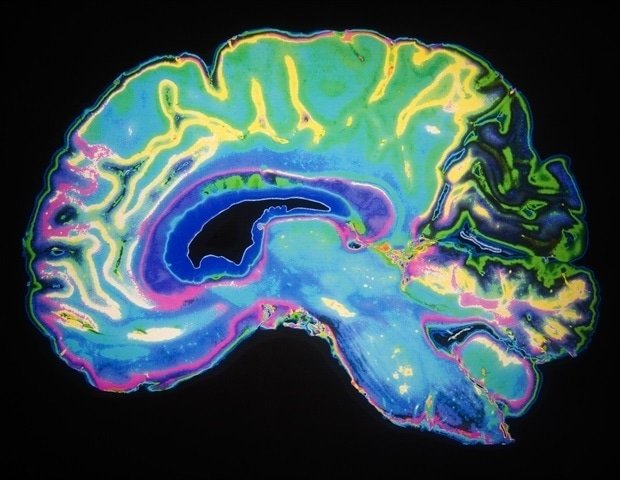
By scanning the brains of mice over their lifetime, scientists at Columbia University’s Zuckerman Institute and the University of Texas at Dallas found that the human brain is not unique in how it changes as we age. These findings may one day help researchers pinpoint the mechanisms in humans that cause age-related brain decline, making humans vulnerable to, or resilient to, disease and disability.
Their study was published online today. Proceedings of the National Academy of Sciences.
The discovery that human and mouse brains age in similar ways may one day help scientists understand the factors underlying brain changes during aging. This knowledge can help researchers find strategies that might slow, stop, or even reverse these declines.
“By looking at mice, we can see, for example, whether changes in diet when young have an impact in old age. We don’t have to wait 80 years to see results like we do in humans,” said study co-author Dr. Itamar Khan, principal investigator at Columbia University’s Zuckerman Institute and associate professor of neuroscience at Columbia University’s Vagelos College of Physicians and Surgeons.
The human brain, our most complex organ, functions as a network of interconnected modules specialized for tasks such as color perception and face recognition. Previous studies have found that these modules become less specialized with age and that their dysfunction is associated with poor memory and other cognitive decline.
Much remains unknown about the chemical and cellular mechanisms underlying this age-related decline in brain function, and how genes, lifestyle, environment, and medicine alter its trajectory. To uncover this mystery, in the new study, researchers used a non-invasive technique called functional magnetic resonance imaging (fMRI) to scan the brains of 82 mice at several intervals from 3 to 20 months of age, roughly equivalent to a human age of 18 to 70.
fMRI is an imaging method that detects changes in blood flow to the brain. But the mouse brain is about 3,000 times smaller in volume than a human brain, so the researchers needed a special strategy for imaging. For example, scientists used fMRI scanners with magnetic fields more than three times stronger than those commonly used by humans, allowing them to image finer details.
Dr. Kahn’s lab is one of the few in the world that can take images of the brains of mice while they are awake, as most people are during MRI exams.
Scientists have discovered that, just like in humans, aging mice have reduced interactions between various specialized brain modules.
“The way the brain’s modules relate to each other as a whole is a measure of brain health, and it seems to apply to both humans and mice alike,” said study lead author Ezra Winter Nelson. Ezra Winter Nelson is a doctoral student in the lab, said co-senior author Dr. Gagan Wiig, associate professor of psychology at the University of Texas at Dallas.
Scientists also discovered significant differences between human and mouse brains. For example, mouse brain modules did not communicate with each other as much as human brain modules.
“We believe that greater integration across human brain networks may contribute to aspects of cognition that are particularly well-developed in humans,” Dr. Wigg said.
Furthermore, the decline in specialization of brain modules in humans was faster than in mice. “Thus, we humans have the ability to integrate information across more widely distributed parts of the brain, which may make us more vulnerable to declines in brain and cognitive function when compared to mice,” Dr. Wigg added.
The researchers noted that they only investigated one type of laboratory mouse. “We know that there are other types of mice that show variation in their response to aging,” Dr. Kahn said. “So we want to look at other types of mice to understand how genetics influences aging trajectories.”
Dr. Khan says these findings open up ways to study brain aging that are not possible in humans. Scientists can use the advanced research tools available today to investigate the effects of genetics, environment, and other factors on age-related decline in mice.
Previous mouse neuroscience research has been criticized for often not having clinical relevance in humans. Much of the previous research has focused on changes seen at the cellular level.
“What we’re doing is looking at the brain at the network level,” Dr. Khan said. “We believe that looking at both the cellular and network levels in mice could prove good for developing treatments that actually work in humans.”
sauce:
Columbia University Zuckerman Institute
Reference magazines:
DOI: 10.1073/pnas.2527522123
