


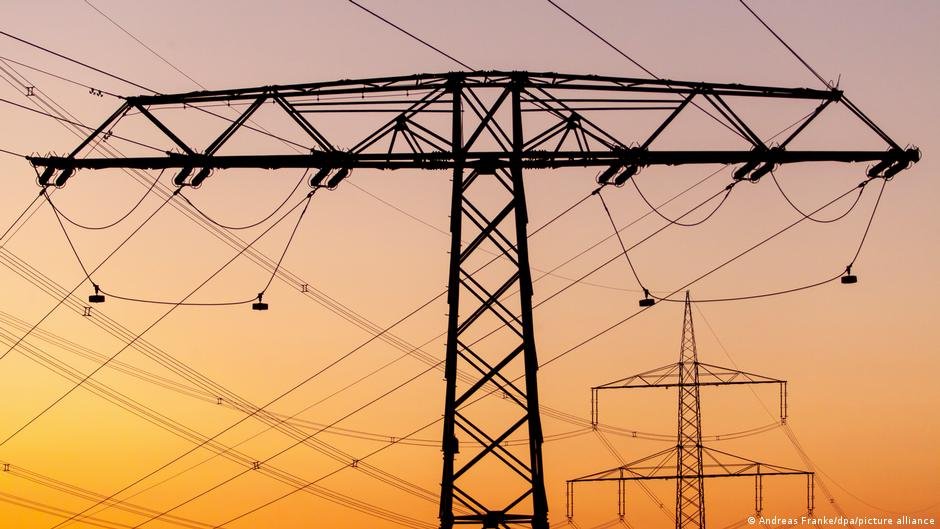
In late June, a heatwave in France caused transformers to malfunction under high temperatures, leaving approximately 70,000 households without power. For about 24 hours, the mercury hovered near 40 degrees Celsius (104 degrees Fahrenheit), leaving some Brittany residents living in the terrifying heat without fans or air conditioning.
Federal authorities then issued a power outage warning as the United States was hit by a heat wave ahead of the nation’s 250th anniversary celebrations. Grid operators are now allowed to order large energy users such as data centers to switch to backup generators to maintain power to homes and emergency services such as hospitals.
Power grids around the world are struggling with intense heat waves and other extreme weather events, with power outages already occurring in the United States. Heat-season power outages across the country, related in part to high temperatures, have increased by about 60% over the past decade compared to the 2000s, according to data from the nonprofit Climate Central. Not being able to cool down during a heatwave is especially dangerous for children, the elderly, and people with chronic illnesses.
Federal authorities issue power outage warning due to extreme heat just ahead of the United States’ 250th anniversary. Image: Cheney Orr/REUTERS
This trend is expected to continue as human-induced climate change causes longer, more frequent and more intense heat waves, making it important for energy networks to adapt.
“When it gets hot, things don’t work as well,” said Ian Staffell, associate professor of sustainable energy at Imperial College London. This means that “failures should be expected to become more common at these very high temperatures.”
“I think we need to adapt our power systems to deal with changing weather,” Staffel added, referring to Europe, which is warming much faster than other parts of the world.
Why are heat waves a problem for the power grid?
During heatwaves, electricity demand spikes as people turn to air conditioners, fans, and other cooling devices to beat the heat. This puts a strain on the power grid, especially later in the day when the heat remains but solar power begins to wane.
At the same time, the infrastructure that keeps electricity flowing, from power plants to transformers, is vulnerable to heat stress. For example, as temperatures rise, the power lines that provide electricity across the country are expanded. This can sometimes cause them to sag enough to hit trees or other obstacles, increasing the risk of short circuits and power outages.
“Grid operators need to reduce the amount of power flowing through these wires in very hot temperatures to ensure everyone’s safety,” Staffel said.
Some nuclear power plants in France and Switzerland reduced output or switched off reactors due to June’s heatwave. Image: Lionel Bonaventure/AFP
In 2003, approximately 50 million people in the northeastern United States and parts of Canada lost power during high temperatures due to sagging heating wires. It was the largest power outage in North American history. Grid operators have since put in place safeguards to prevent similar outages from happening again, but experts say extreme weather remains a threat.
Thermal power plants are also not unrelated. In extreme heat, coal, gas, and nuclear power plants become less effective at cooling, so operators may have to reduce output.
“The efficiency of coal, gas and nuclear power plants decreases by about 1% with every increase in temperature,” Staffel said, meaning they are 10% less efficient at 35°C than at 25°C.
When Europe was hit by a heatwave in June, several nuclear facilities in France and Switzerland had to cut power or temporarily shut down because the rivers they use for cooling got too hot. Regulations require factories to limit the temperature of their discharge water to protect ecosystems and aquatic life.
Renewable energy sources will also be affected. For example, low water levels can prevent hydroelectric power generation. Additionally, solar panels become slightly less efficient at high temperatures, and wind speeds often decrease during heat waves, reducing output.
Hidden problems with solar power (and how to solve them)
To view this video, please enable JavaScript and consider upgrading to a web browser that supports HTML5 video.
Taken together, these factors could cause grid instability if the mismatch between demand and supply becomes too severe, forcing operators to source energy elsewhere.
When cheap solar and wind power is not available during this critical crisis, grid operators often have to rely on more expensive backup power sources to fill the gap. And those tend to be fossil fuels that warm the planet.
Even in the absence of power outages, heat can cause wholesale electricity prices to rise, and depending on the market and contract, wholesale electricity prices may be passed on to consumers. The recent heatwave in Europe caused electricity prices to soar in countries including France and Germany, especially during evening peak hours.
Can energy systems be made heat resistant?
Staffel said there are some smaller fixes that “could have a very big impact.”
This includes upgrading grid components to withstand heat and installing better cooling systems for power lines, transformers, and other equipment. It could be as simple as “bolting on an extra fan and putting a shade on top,” Staffel added.
For example, nuclear power plants “can be built with hybrid cooling systems so they are less dependent on rivers,” the sustainable energy expert said.
Alexander Ross, an energy and climate policy researcher at Brussels-based economic think tank Bruegel, said Europe’s electricity grid is one of the most resilient in the world, but its infrastructure is aging.
At the same time, countries are transitioning to primarily electricity-based renewable energy systems that power everything from electric vehicles and data centers to heat pumps and air conditioning.
Image: Snapshot Freddy/Zooner/IMAGO
As Europe decarbonizes its economy, electricity is expected to account for about half of total energy use by 2040, up from about 20% currently. In other words, demand will continue to increase even without considering the intense summer heat.
“And the current system is not suited for that,” Ross said.
To meet this challenge, we need to modernize our power grids, facilitate the flow of power between countries, and increase system flexibility. For example, battery storage can help reduce stress on the power grid, especially during heat waves.
“These batteries can store cheap solar power around noon, for example, and actually provide power during the evening hours, because when the wind goes out and the sun goes out, there’s still a high demand,” Ross said.
Demand-side measures may also be helpful. Dynamic pricing, in which electricity prices fluctuate throughout the day, encourages consumers to use electricity during off-peak hours, reducing strain on the grid, Staffel added.
What is the holdup?
In Europe, a huge backlog of projects such as batteries and an estimated 1,700 gigawatts of renewable energy waiting to connect to the grid is a major hurdle. Legislation to improve power grids is being discussed in Europe, which would require huge investments. But analysts say it will likely take time to build the necessary infrastructure.
In the United States, the Department of Energy also announced major investments to expand and modernize power grid infrastructure. The country has seen an increase in power outages over the past decade as its power grid struggles to cope with more frequent extreme weather events such as hurricanes and winter storms.
Can the power grid survive the U.S. data center revolution?
To view this video, please enable JavaScript and consider upgrading to a web browser that supports HTML5 video.
At the same time, JPMorgan Chase said the power grid is facing “historic stress” from the growth of electric vehicles, renewable energy and energy-intensive data centers. The bank noted that smart grids and advanced grid technologies are essential for energy security.
Meanwhile, in Europe, Roth believes there is a huge opportunity to build a more functional and flexible electricity grid that is “smarter, uses more electricity, and ultimately benefits people.”
Editor: Jennifer Collins
