


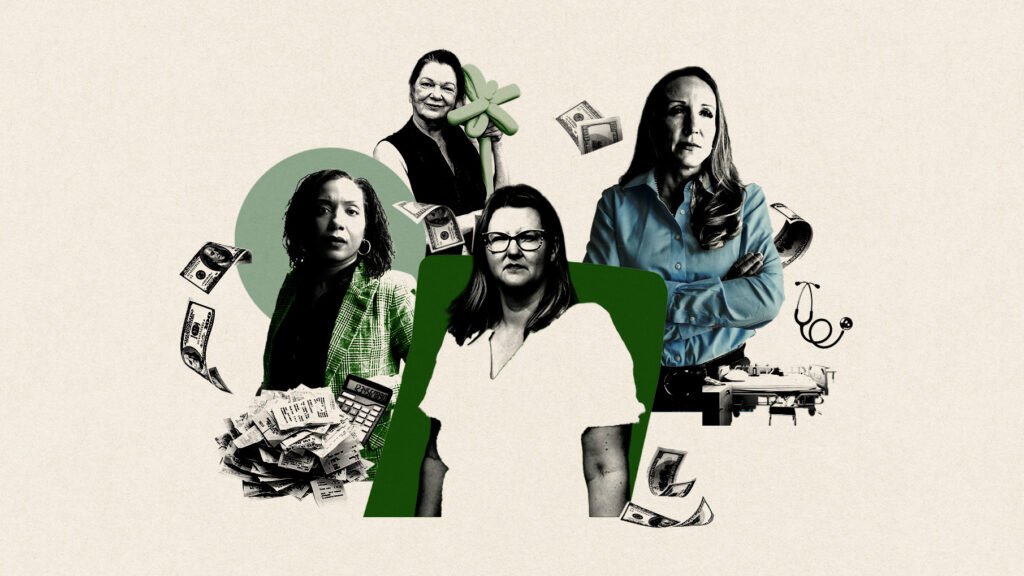
More than 150 million Americans have health insurance through their jobs, making it the primary way people in the United States obtain insurance. STAT examines this important source of insurance to understand how and why premiums are becoming unaffordable for workers and their families across the country.
Health benefits are disappearing for small businesses
Almost all large companies offer health insurance. However, less than 60% of small businesses with fewer than 200 employees currently offer insurance, an all-time low. The cost of health care is pushing small businesses, beloved by politicians and the bedrock of entire communities, over a fiscal cliff. Watering down insurance plans or deciding not to offer insurance at all makes it more difficult for these companies to retain employees.
Providing insurance comes with huge out-of-pocket costs and unwanted surprises
Most small businesses still offer health insurance, but the cost is the most burdensome. For small businesses, the deductible is more than 50% higher than for large businesses. Small businesses can also face unexpected additional charges from insurance companies if they enroll too many workers.

Insurance premiums are rising much faster than inflation
In 1987, employers and workers collectively contributed $132.5 billion in health insurance premiums, according to federal data.By 2024, that amount had grown to more than $1.4 trillion, significantly outpacing inflation. If premiums had fully tracked inflation over that period, employers and workers would have contributed $365 billion. Job-based health insurance has relentlessly eaten into workers’ incomes, even after adjusting for average annual salaries.
Entrepreneurs and mom-and-pop shops increasingly rely on ACA plans
Half of the people who buy insurance on the Affordable Care Act Marketplace work for small businesses or are self-employed, compared to about 28% in 2022. This insurance has become significantly more expensive because Congress did not renew enhanced subsidies that lowered costs for people.
Whistleblower who became one of America’s most influential medical commentators
Chris Deacon previously oversaw health care plans for state employees in New Jersey. She blew the whistle after discovering that her state’s health insurance company was not delivering on its promises and intentionally overpaying for medical care. But New Jersey specifically excluded Mr. Deacon from one of the largest employer-based health insurance settlements. She has become one of the country’s most outspoken critics of the health care system, explaining how employers are taken advantage of on a daily basis.
