



A new review reveals how genes, hormones, lifestyle and environmental stressors interact throughout the lifespan to lead to different changes in blood pressure in women and men, and why future prevention needs to become more individualized.
Research: Intrinsic and extrinsic determinants of sex differences in blood pressure. Image credit: Miljan Zivkovic / Shutterstock
In a recent review published in npj cardiovascular healthour group investigated how biological and environmental factors shape sex-specific changes in blood pressure (BP) and cardiovascular risk across the lifespan.
Blood pressure problems remain one of the leading causes of heart disease, stroke, and kidney failure. Men and women experience different symptoms due to changes in blood pressure, which can be influenced by lifestyle, hormonal, genetic, and environmental factors. Understanding these differences is important because current treatment strategies are often based on generalized approaches rather than gender-specific patterns. Further research is needed to assess the need to develop different guidelines for blood pressure prevention and treatment for women and men.
Blood pressure changes throughout life
Blood pressure naturally changes with age, but this change is different for women and men. However, extensive research shows that healthy aging does not necessarily require elevated blood pressure levels. A healthy lifestyle helps maintain stable blood pressure throughout your life.
During childhood and early adolescence, boys and girls generally have similar blood pressure levels. After adolescence, the differences become more pronounced. The mean systolic blood pressure of young women remains lower than that of men throughout their reproductive years. Conversely, women face a sharp increase in blood pressure after middle age, especially after menopause. This may contribute to increased cardiovascular risk in older women, and early detection may help families and health systems prevent serious cardiovascular complications later in life.
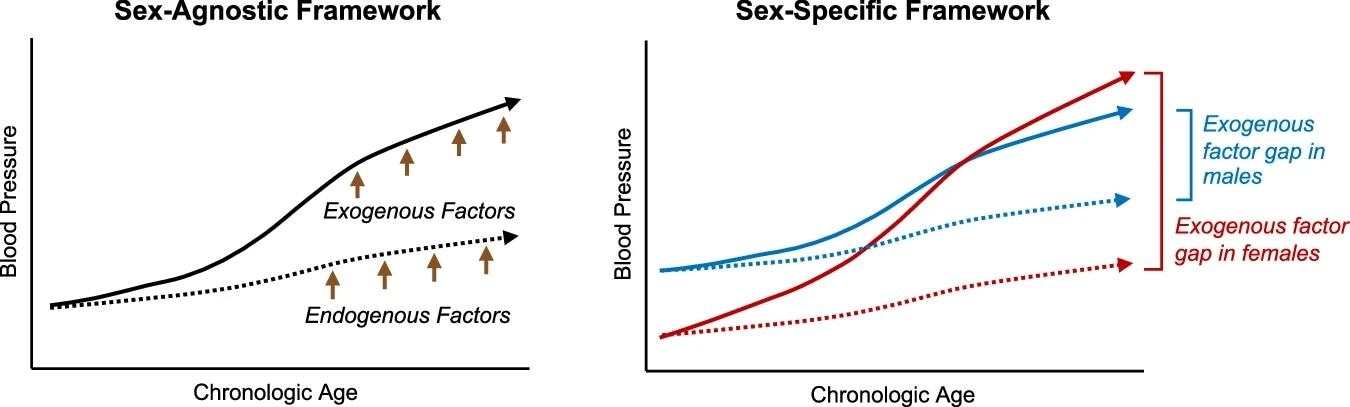
The left panel shows trends in blood pressure across the population as influenced by intrinsic (dotted lines) and extrinsic factors (solid lines). The right panel shows trends in blood pressure over the lifespan due to the effects of intrinsic (dotted lines) and extrinsic factors (solid lines) for women (red) and men (blue).
Genetic and hormonal influences on blood pressure
Blood pressure is influenced by genes and hormones. Women have two X chromosomes, but men only have one X and one Y chromosome. Some genes on the X chromosome are thought to promote blood vessel relaxation and help maintain healthy blood pressure levels. On the other hand, some Y chromosome mutations may be responsible for promoting the production of the renin-angiotensin-aldosterone system (RAAS), which increases blood pressure.
Estrogen and progesterone generally protect blood vessels in women and help lower blood pressure. Estrogen may improve vascular relaxation, enhance endothelial function, and reduce harmful vascular thickening. Progesterone also helps regulate sodium balance and helps control blood pressure. The protective effects of both hormones are greatest during reproductive age.
As women approach menopause, there is a relative decline in cardiovascular protection due to decreased estrogen and progesterone. This may help explain the rapid rise in blood pressure observed around and after menopause. Increased hypertension has also been observed in men, as androgens, particularly testosterone, may counteract normotension through as yet unknown mechanisms, such as possible RAAS activation, renal effects, or maladaptive gut microbiota pathways.
Hormones play an important role in many conditions, including maternal and reproductive health, and create future cardiovascular risks. For example, women with polycystic ovary syndrome (PCOS) are at increased risk of obesity, hypertension, and cardiovascular disease.
Lifestyle and environmental stressors
Although environmental and lifestyle factors have a large impact on blood pressure in both men and women, there is evidence to suggest that women may respond more strongly to some common stressors. Obesity, diabetes, smoking, an unhealthy diet, and lack of physical activity all contribute to increased blood pressure.
Psychological stress from work, caregiving, financial stress, social pressure, etc. can activate the nervous system and increase blood pressure over time. Younger men may have a stronger acute blood pressure response to stress than older men, while older women have a higher prevalence of hypertension, which may further increase their already increased cardiovascular risk.
Environmental factors such as environmental pollution, exposure to toxins, alcohol use, and increased sodium intake can also negatively impact vascular health for women. Some researchers believe that women are more susceptible to these negative health effects than men because they tend to have smaller blood vessels and have a different distribution of body fat. Lack of physical activity, eating processed foods, chronic stress, and excess body weight can all increase these health risks and may contribute to the increased risk of hypertension in the older female population.
Medical care and future clinical approaches
Certain drugs and hormone treatments can also affect blood pressure differently in women and men. For example, in women, taking oral estrogen therapy after menopause can increase blood pressure. However, if estrogen is delivered through the skin (transdermally), the risk of developing high blood pressure is less. Additionally, gender-affirming hormone therapy may also have differential effects on blood pressure depending on whether testosterone or estrogen is administered, but the evidence remains limited and mixed.
Although current hypertension guidelines increasingly recognize female-specific risk factors such as gestational hypertension, most treatment strategies remain largely similar for both men and women. Future medicine may require a more individualized approach that comprehensively considers gender, age, hormonal status, and lifestyle exposures. Aggressive blood pressure lowering does not necessarily benefit older adults equally. For older adults, overtreatment can increase the risk of falls, dizziness, and fainting.
New approaches focused on improving metabolic health, such as glucagon-like peptide-1 receptor agonists (GLP-1 RA), may have favorable blood pressure effects in addition to controlling blood sugar levels, especially in women in the early stages of age-related blood pressure increases.
conclusion
This review concludes that blood pressure regulation is shaped by complex interactions between genetics, hormones, lifestyle, and environmental stressors. In general, women’s blood pressure decreases early in life, but it increases rapidly as they age, especially after menopause. Obesity, diabetes, smoking, psychosocial stress, and hormonal factors can often affect women more than men. These differences may contribute to different patterns of cardiovascular disease between the sexes.
This study supports the need for further research into more individualized approaches to heart disease prevention and treatment that take into account gender-specific biology, age, and environmental exposures to improve heart health worldwide.
Click here to download your PDF copy.
Reference magazines:
- Shangguan, S., Warsi, W., Kwong, J.L., Lee, Y., and Cheng, S. (2026). Intrinsic and extrinsic determinants of sex differences in blood pressure. npj cardiovascular health. 3. Doi: 10.1038/s44325-026-00128-3, https://www.nature.com/articles/s44325-026-00128-3
