


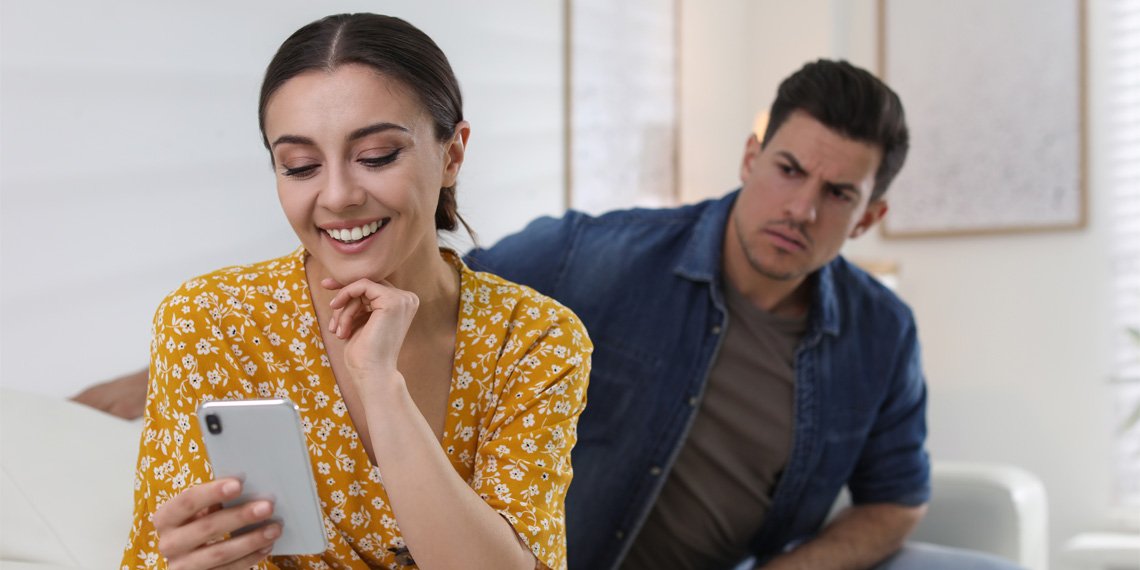
An online experiment found that when men feel jealous, they are more likely to support women’s honor codes. This was not the case for women. Additionally, individuals with more restricted mating orientations also showed greater support for female honor norms. The paper is cognition and emotion.
Women’s honor codes are cultural expectations about how women should behave in order to be considered respectable and honorable. They typically require women to maintain a reputation for sexual purity through behaviors such as dressing modestly and maintaining virginity before marriage. Women’s behavior may be seen as reflecting not only themselves but also their families and wider social groups.
These norms may therefore encourage women to avoid behaviors that may invite gossip, criticism, or accusations of wrongdoing. They may also prescribe traditional gender roles, such as being caring, loyal, obedient, and devoted to family responsibilities.
Women’s honor codes are often reinforced by relatives, peers, religious teachings, and community expectations. In many cultures, it is believed that when a woman upholds a feminine code of honor, she also protects the honor of her partner. Although women’s honor codes can provide women with a valued social identity, they can also limit their autonomy and justify unequal surveillance and control.
Although researchers often point to protecting the male partner’s honor or upholding patriarchal supremacy as an explanation for these norms, some scientists suggest an alternative view: that women’s honor norms may function as a form of “ideological mate protection.” Humans evolved in an environment where paternity uncertainty was a reproductive risk for men, so men developed adaptations to protect their mates. By promoting cultural norms that restrict women’s sexuality, individuals can deter infidelity without relying solely on direct, physical mate protection strategies.
Iowa State University researcher Perrin Gall and her colleagues hypothesized that increased levels of sexual jealousy induced by the threat of infidelity would increase support for women’s honor norms. They also wanted to know whether individuals with more restricted mating strategies would support female honor codes more strongly.
These researchers conducted two experiments. Participants in the first experiment were 388 men recruited through an online survey platform. Their average age was 33 years. Approximately 44% were married.
Participants were randomly assigned to two groups. Participants in the jealousy-inducing group were asked to think of their significant other or someone they had strong romantic feelings for, and to imagine that person flirting at a party or being intimate with someone else. While imagining this scene, they stopped and wrote about how they imagined it at specific points. The other group was a control group who were tasked with imagining an anxiety-provoking scenario of taking an important academic exam and failing it.
To confirm the effectiveness of the experimental scenario, participants completed a jealousy assessment. This also served as an indicator of participants’ subjective experience of jealousy. They also completed measures of support for femininity and other honor norms.
The second experiment aimed to test whether women also uphold female honor norms when they feel sexually jealous. Participants were 551 US adults. Of these, 264 were women. The average age of participants was 33 years. The experimental procedure was the same as that used in the first experiment.
The results of the first experiment showed that participants in the jealous group felt significantly more jealous than participants in the control group, indicating that the experimental manipulation worked as intended. However, support for women’s honor norms did not differ between the two groups.
Nevertheless, participants who reported feeling greater jealousy tended to report stronger support for women’s honor norms. More restricted mating strategies were also associated with stronger support for female honor norms. A more restricted mating strategy means that individuals are more selective about romantic partners, have a stronger preference for long-term commitment and exclusivity in relationships, and are less willing to engage in casual or short-term sexual relationships.
The results of the second experiment confirmed that those who felt stronger jealousy tended to show higher support for female honor norms. Interestingly, men in the jealous group (but not women) tended to report slightly higher support for women’s honor norms compared to the control group, indicating that experimentally inducing jealousy likely increased support for women’s honor norms. The association between jealousy and support for female gender norms was also stronger for men than for women.
The researchers noted that these associations persisted even after controlling for other types of honor norms, such as national masculinity threat, religiosity, political conservatism, age, and male and family honor.
“Across the two studies, national jealousy was consistently associated with support for women’s honor, and in Study 2, experimentally induced jealousy increased support for women’s honor,” the study authors concluded. “Although no experimental effects were observed in Study 1, these findings provide the first experimental evidence consistent with an ideological mate protection explanation and extend previous correlational research by introducing state jealousy as a theoretically meaningful construct in this area.”
This study contributes to the scientific understanding of jealousy and human mate retention strategies. However, please note that all assessments are based on self-reports, leaving room for reporting bias to influence the results. Also, this study focused only on heterosexual participants, and the results may not generalize to other sexual orientations or non-Western cultures with different honor traditions.
The paper, “The Effects of Experimentally Induced Jealousy on Women’s Honor Support,” was authored by Perrin Gul, Stephen Foster, Sajjad Sojowdi, and Tom R. Kupfer.
