


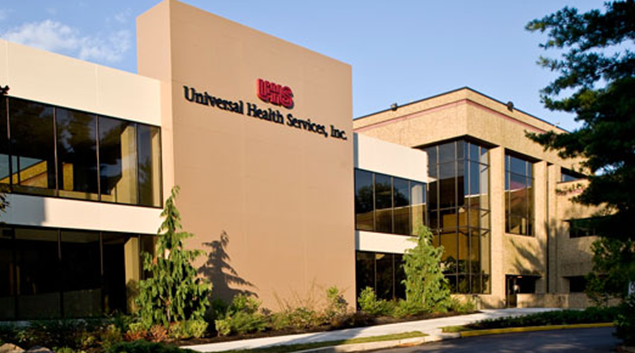
Universal Health Services fell slightly below the lower end of its growth forecast for the first quarter of 2026 as robust rate increases and expense controls collided with expected and unexpected volume shortfalls.
The King of Prussia, Pa.-based acute and behavioral care provider this week reported net income of $348.7 million, or $5.65 per diluted share, for the quarter, up from $316.7 million, or $4.80 per diluted share, a year earlier and beating consensus estimates. Net revenue for the quarter rose 9.6% year over year to approximately $4.5 billion, also exceeding market expectations.
But like its for-profit hospital peers, the company’s volume fell short of its target due to the one-two punch of respiratory delays and the winter storm. Acute volumes also slowed due to changes in coverage within the health insurance exchanges, while behavioral numbers were still somewhat affected by labor bottlenecks that the company has been working to alleviate, both of which were expected in UHS’s full-year outlook.
Although the company achieved nearly expected year-over-year gains on government-sponsored payments for Medicaid, analysts on Tuesday’s earnings call were quick to point out that the performance means UHS will struggle to meet its 5% profit growth forecast this year.
Executives acknowledged the slow start, but said volumes appeared to be back on track in late February and March. More broadly, it is expected to increase steadily for the remainder of the year as new facilities and other capacity expansions begin to gain momentum.
“We know that excluding (government payments) and other non-recurring items, we are not hitting our core 5% growth rate, but we still believe we can achieve it for the full year,” UHS Chief Financial Officer Steve Filton said on a conference call.
UHS stock fell nearly 10% on Tuesday, but had partially recovered as of early Wednesday afternoon.
This was a particularly splashy quarter for UHS, which recently announced plans to acquire virtual behavioral health company Talkspace for about $835 million in the third quarter. CEO Mark Miller reiterated the expected positives for the company from the acquisition, including Talkspace’s existing strong payer structure, two-way referral opportunities between the service’s clinicians and UHS’s inpatient and outpatient sites, and the potential for the development of more granular virtual services, such as the Virtual Intensive Outpatient Program (IOP).
Miller again said that UHS expects the transaction to be accretive to earnings within 12 months of closing, adding that the company expects the effective EBITDA multiple of the Talkspace transaction to be in the “single digit range” after three years. These expectations stem from a recent “thorough review of our business model” and what the company already has planned for the near future if it is not acquired, he said.
“That, plus what we think we can do to help them improve their performance and revenue, gives us a lot of confidence,” Miller said. “…People have asked me about that. If you just look at today’s revenue, it’s hard to understand the multiples. Over the next few years, they’re on a great growth trajectory again, but we intend to increase that even more once we have the combined resources.”
Beyond these topics, investors wanted to know about UHS’s early observations on the health insurance exchange market, how potential state-led supplemental payments could impact this year’s revenue, and the company’s rollout of AI tools.
UHS had expected a $75 million pre-tax hit for the year The exchange, executives said, was expected to have an impact on revenue of about $15 million in the first quarter and increase in the coming quarters. Although the adjusted number of hospitalizations for exchange patients decreased by about 5%, Filton noted that patients who offered insurance through exchange were more likely to become uninsured because of difficulty paying their premiums. Combined, he said, UHS’s actual currency volume decline “will probably be in the low double digits, 10%, 11%, 12%.”
Regarding additional Medicaid benefits, executives said they expect Florida’s program to be approved, which would likely result in about $50 million in benefits. California’s plan is “much less likely, much less certain,” Filton said.
Regarding AI, Miller said UHS has rolled out eight implementations in the last year focused on management and revenue cycle functions that are already delivering “significant benefits” to the company. The company is also targeting new introductions in 2026 focused on clinical capabilities partnered with Hippocratic AI.
In the acute care sector, adjusted same-facility hospitalizations were flat compared to the previous year, but adjusted patient days increased by 0.8%. Filton outlined a 200 basis point impact on volumes due to the flu season and weak winter weather, and then noted that electives and surgeries postponed due to the storm are expected to be rescheduled later in the year.
Meanwhile, the facility’s acute revenue increased 8.2%, adjusted net revenue per admission increased 6.3%, and adjusted net revenue per patient day increased 5.5%. Filton attributed the increase to improved rates, noting that some of the increase in revenue relative to volume was a natural result of fewer cases of mild respiratory illnesses. At the same time, he noted that “some of the more urgent medical departments, such as cardiology, orthopedics, and neurology, are seeing fairly steady growth.”
In the behavioral sector, adjusted same-facility hospitalizations increased by 1.2% and adjusted patient days increased by 1.6% year over year. Filton said that while volumes were down 40 to 50 basis points as a result of the storm, the remaining volume decline was due to lingering workforce bottlenecks and a shift in demand to more outpatient services, both of which UHS has been working to address. Net revenue increased 7.3%, adjusted net revenue per admission increased 6.2% and adjusted net revenue per patient day increased 5.8%.
Universal Health Services operates 29 inpatient acute care facilities, 346 inpatient behavioral health facilities, 168 outpatient facilities, and other facilities. Annual revenue in 2025 is reported to be $17.4 billion.
The company’s first-quarter revenue woes are echoed by its for-profit peers. HCA Healthcare similarly cited severe weather and flu season as reasons for the economic downturn late last week, while Community Health Systems pointed to broader factors, including consumer macroeconomic concerns and growing payer resistance to payments.
Regarding the latter, Filton said Tuesday that while UHS has not necessarily seen an increase in denials, it has made significant technology investments in key operations that “are able to respond to some extent to potentially more aggressive behavior on the part of payers.” He added that similar investments are planned on the behavioral side of the business in the next 12 to 18 months.
