


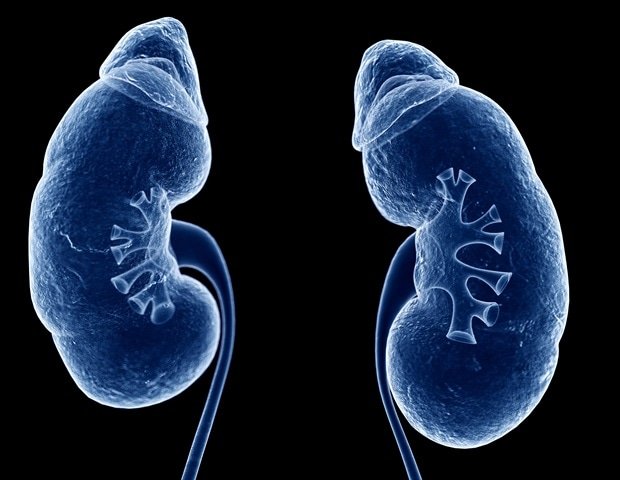
An international research team coordinated by the Medical University of Vienna has demonstrated in a clinical trial that administering torquetenovirus-induced immunosuppressants to kidney transplant recipients is safe. The results of the TTVguideIT study, recently presented at the annual meeting of the European Society of Nephrology, suggest that in the future immunosuppressive therapy may become more individualized, reducing treatment doses in certain patient groups. This study forms the central conclusion of the EU project TTVguideTX, coordinated by Gregor Bond from the Department of Nephrology and Dialysis, 3rd Faculty of Medicine, MedUni Vienna.
After a kidney transplant, patients must take long-term medications that suppress the immune system. This immunosuppression protects the transplanted organ from rejection. However, if it is too strong, the risk of infection increases. Too weak can lead to organ damage or loss. To date, dosage has typically been controlled based on fixed target drug concentrations in the blood. However, these values provide limited insight into how strongly an individual’s immune system is actually suppressed.
The TTVguideIT study investigated whether Torque-Teno virus (TTV for short) could act as a biomarker to help manage immunosuppression more individually. TTV is present in many people, does not cause disease, and allows conclusions to be drawn about the activity of the immune system. Low TTV levels may indicate an overactive immune system, while high TTV levels may indicate an underactive immune system.
Our aim was to adjust immunosuppression not only according to fixed drug levels, but also more closely to the patient’s actual immunological status. This study shows that it was safely possible to adjust the dose of the immunosuppressant tacrolimus based on TTV in the patient group studied. ”
Mr. Gregor Bond, General Project Coordinator
260 patients in 13 centers in Europe
This randomized controlled phase II trial enrolled 260 stable adult kidney transplant recipients with low immunological and infectious risk. The study was conducted at 13 academic centers in Austria, Germany, France, the Czech Republic, the Netherlands and Spain. Four months after transplantation, patients were randomized to receive either tacrolimus or standard treatment based on TTV.
Primary endpoints consisted of infection, graft rejection, graft loss, or death. In the TTV-guided group, this composite endpoint occurred in 35 percent of patients, compared with 38 percent in the control group. Therefore, this study achieved the objective of demonstrating noninferiority of TTV-based dosing compared with standard treatment. Rejection rates at 12-month protocol biopsies were similar in both groups.
At the same time, patients in the TTV-guided group had lower tacrolimus concentrations and lower daily doses. This study did not demonstrate a statistically significant reduction in infections. However, the results suggest that in stable, low-risk patients, immunosuppression may be reduced without compromising the safety of the transplanted organ.
“This result is an important step toward personalized transplant medicine,” Bond said. “TTV measurements have been approved for clinical use, are cost-effective, easy to measure, and easy to standardize. Therefore, this approach could be widely used in future clinical trials, and then perhaps in routine clinical practice.”
Academic transplant research milestones
The TTVguideIT study was part of the EU-funded Horizon 2020 project TTVguideTX. The project was coordinated by MedUni Vienna and received over 6 million euros in funding over five and a half years. A total of 20 partners participated, including university transplant centers from 10 European countries, virology, research coordination, ethics, biostatistics, and industry partners.
From an Austrian perspective, the project was also structurally important. At the time, it was Austria’s largest investigator-initiated randomized clinical trial. For the first time, all four Austrian transplant centers collaborated in a randomized clinical trial. Additionally, TTVguideIT was the first academic study submitted to the EU Clinical Trials Information System.
Scientifically, this research represents several steps into a new field. This is the first study in which immunosuppression after organ transplantation was controlled using biomarkers, and the first multicenter biomarker study to achieve the primary endpoint in the field of organ transplantation.
Further research is already underway
The findings of this study initially apply to stable, low-risk adult kidney transplant recipients during the first year posttransplant. Whether and how this approach can be applied to other patient groups, later stages after transplantation, or to other organ transplants needs to be investigated in further studies.
A follow-up multicenter study is currently underway in France. We are studying the TTV-guided approach in patients from 2 years post-transplant onwards. The aim is to determine whether individualized management of immunosuppression can provide additional benefits also in the late post-transplant period.
About TTVguideTX
TTVguideTX is a research project funded by the European Union under Horizon 2020 to develop and conduct clinical trials new tools for managing immunosuppression after kidney transplantation. This approach is based on the measurement of torquetenovirus in the blood. The aim was to better assess the balance between adequate protection against organ rejection and the lowest possible risk of infection.
sauce:
Medical University of Vienna
Reference magazines:
Herkner, F. Others. (2025). Statistical Analysis Plan for TTVguideIT – A multicenter, patient- and rater-blinded, non-inferiority, randomized controlled phase II study comparing standard immunosuppression and Torque Teno virus-induced immunosuppression in kidney transplant recipients 1 year post-kidney transplant. ordeal. DOI: 10.1186/s13063-025-09119-8. https://link.springer.com/article/10.1186/s13063-025-09119-8
