


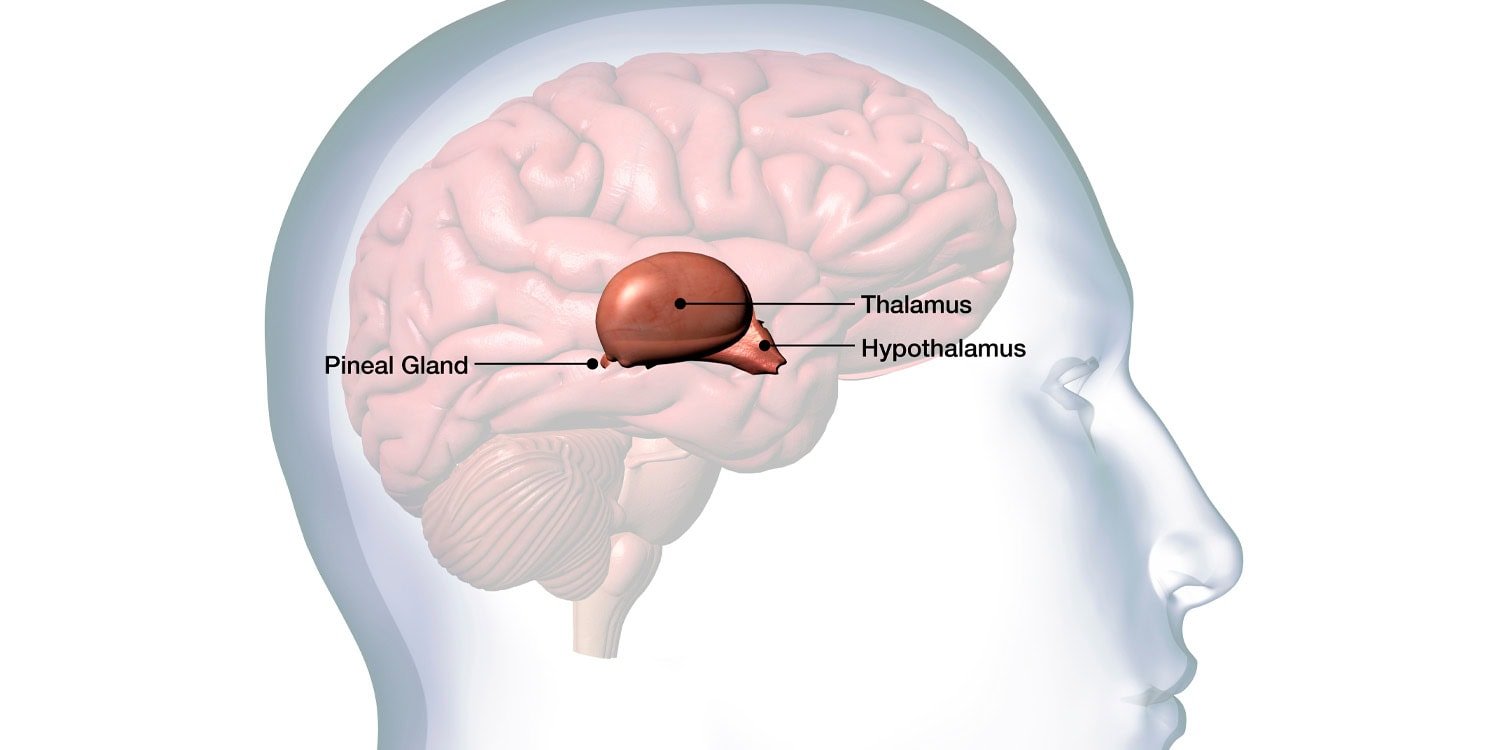
Some people develop mental health conditions such as post-traumatic stress disorder and clinical depression after traumatic events, and these conditions may be related to the size of a brain region called the thalamus. A recent study found that the volume of specific parts of the thalamus varies depending on a person’s exact psychiatric diagnosis, the severity of their symptoms, and the type of adversity they experienced in childhood. This research Biological psychiatry: cognitive neuroscience and neuroimaging.
Up to 85 percent of the general population will experience a traumatic event at some point in their lives. Although many people recover on their own over time, many develop chronic mental health conditions in the aftermath. Two of the most common conditions after exposure to trauma are post-traumatic stress disorder and major depressive disorder.
Medical researchers have spent decades studying how traumatic events change the physical structure of the human brain. Much of this past research focused on areas known to manage fear and memory, such as the amygdala and hippocampus. The thalamus has historically received little attention in the context of mental illness. This situation is changing as scientists learn more about its wide range of functions.
The thalamus is located deep in the center of the brain. It is often described as the central relay station of the human nervous system. Almost all sensory information passes through the thalamus before reaching the outer layers of the brain where it is fully processed. Acts as a visual, auditory, and physical sensory traffic director.
The thalamus is not a single homogeneous mass of tissue. It is actually made up of many small parts called nuclei. Each of these small nuclei has a specialized job in the brain. Some nuclei are directly wired to the sensory and motor systems, while others are deeply connected to the emotional and memory centers of the brain.
Previous studies assessing thalamic size in trauma survivors have had confusingly mixed results. Some older studies have suggested that trauma is associated with a smaller thalamus, while others have found that affected patients have larger thalamus. Most of these early projects relied on relatively small groups of participants. Small sample sizes often introduce statistical variability and make results difficult to reproduce.
Lead author Nick Steele, a researcher at Duke University and the Department of Veterans Affairs, wanted to clarify these contradictory records. Steele collaborated with an international team of scientists connected to the ENIGMA Post-Traumatic Stress Disorder Working Group. This collaboration allowed the team to pool brain scans and patient assessments from 20 different research facilities around the world.
The research team analyzed structural magnetic resonance imaging brain scans of 2,058 participants. This imaging technique uses powerful magnetic fields to map the precise physical dimensions of brain tissue. Participants included 1,018 people who had experienced trauma but did not develop a mental illness. The remaining 1,040 participants had post-traumatic stress disorder, major depressive disorder, or a combination of both conditions.
Approximately half of patients diagnosed with post-traumatic stress disorder also suffer from clinical depression. This combination usually causes more severe behavioral symptoms, making it very difficult to find effective treatments. By taking this combined group into account, researchers were able to assess the worst cases of post-traumatic mental illness.
The researchers measured the total volume of the left and right thalamus in each scan using specific imaging software. They also isolated and measured the volume of 25 different small nuclei within each side of the structure. The researchers compared these sizes across different participant groups while controlling for demographic variables. They factored the participants’ age, biological sex, and total skull size into their formula.
Participants diagnosed with post-traumatic stress disorder alone tended to have smaller volumes in several thalamic nuclei compared to controls. The affected areas in these patients are primarily involved in processing sensory and motor information. This structural difference may explain why people with a history of trauma often exhibit heightened or decreased physical responses to incoming sensory sights and sounds.
In contrast, people diagnosed with major depressive disorder had smaller dorsal nucleus volumes. These specific subregions are deeply connected to the hippocampus and are deeply involved in learning, memory, and emotional regulation. Participants with both post-traumatic stress disorder and depression also had smaller sizes of the same emotion-focused subregions.
Researchers noticed an unusual pattern when looking at overall symptom severity. Mild to moderate symptoms of both conditions correlated with smaller overall thalamic size. People experiencing very severe symptoms of both post-traumatic stress disorder and depression at the same time actually showed larger thalamic volumes.
This particular observation regarding severe symptoms may help explain the contradictory results of older studies. Mild psychological distress reduces expected volumetric measurements, whereas extreme distress and multiple diagnoses combine to increase measurements. Researchers suggest that differences in biological mechanisms may shape the brain as mental illness worsens.
Breaking down the distinct symptoms of post-traumatic stress disorder also reveals complex relationships. Symptoms are classified as re-experiencing the trauma, or persistent negative mood, and are tracked along with a small volume in the thalamus. Conversely, symptoms involving physical hyperarousal and avoidance of trauma reminders tracked in parallel with larger thalamic volumes.
The team also assessed the participants’ childhood trauma history. Childhood adversity is a known risk factor for developing mental illness in adulthood. The developing brain is highly sensitive to environmental stress and early life threats.
When researchers separated different types of childhood trauma, they found that maltreatment was inversely correlated with brain volume. A history of physical abuse in childhood was associated with increased left thalamic volume in adulthood. On the other hand, a history of childhood emotional abuse was associated with decreased left thalamus volume. Indicators of emotional abuse are specifically tracked in the small limbic nucleus that drives the brain’s emotional circuitry.
The researchers pointed out several caveats regarding observational work. This study lacked complete information on other underlying diseases across patients. The research team also did not have complete data on participants’ drug history or use of psychiatric medications, although many individual study sites automatically excluded drug users.
The participant groups were also unequal in size, with numbers heavily skewed toward the healthy control group. Researchers did not have a standardized measure to calculate the total amount of trauma each person experiences over their lifetime. It remains possible that vast differences in traumatic events, as well as psychiatric conditions, influenced the results.
Because this study focused on a single time point, it remains unclear whether thalamic size acts as a pre-existing risk factor for psychiatric disorders or arises as a result of psychiatric symptoms themselves. Future research will need to follow individuals over long periods of time to see how their brains change in real time. Tracking patients as they undergo treatment could reveal how the thalamus adapts to recovery.
The study, “Volume differences in thalamic nuclei are associated with posttraumatic psychopathology,” was authored by Nick Steele, Ahmed Hussein, C. Lexi Baird, Courtney C. Haswell, Delin Sun, Leonel Rangel-Jimenez, Chadi G. Abdallah, Michael Angstadt, Jeffrey May, Hannah Berg, Jennifer U. Blackford, and Josh M. Justin. Sisler, Judith K. Daniels, Nicholas D. Davenport, Richard J. Davidson, Maria Densmore, Seth G. Disner, Wissam Elhage, Amit Etkin, Negar Fani, Jesse L. Fryling, Evan M. Gordon, Daniel W. Group, Ryan J. Herringa, Anna R. Hudson, Neda Jahanshad, Tanja Jovanovic, Anthony King, Saski. A B.J. Koch, Ruth Lanius, Amit Lazarov, Geng Li, Israel Liberzon, Shmuel Lisek, Guangming Lu, Antje Mansey, Adi Maron-Katz, Laura Nawin, Steven M. Nelson, Yuval Neria, Richard W.J. Neufeld, Jack B. Nitsche, Bunmi O. Olatunji, Miranda Orff, Matthew Peverill, Yankide, Oren Ravid , Gopalkumar Rakesh, Kelly Ressler, Marisa Ross, Kelly Sambrook, Anika Seek, Scott R. Sponheim, Jennifer Stevens, Benjamin Suarez-Jiménez, Jean Theberge, Sanne J. H. van Rooy, Mirjam van Zuyden, Dick J. Veltman, Robert RJM Vermeiren, Henrik Walter, Liwan, Xi Zhu, Ye Ju -, Sigal Zircha-Mano, Christine Larson, Terry A. DeLune-Cassini, Carissa W. Thomas, Jacquelyn M. Fitzgerald, Andrew S. Cotton, Erin N. O’Leary, Hong Shih, Xin Wang, Emily L. Dennis, David F. Tate, David X. Schiff, William C. Walker, Elizabeth A. Wilde, Paul M. Thompson and Rajendra A. Morley.
